

2027 Polaris RZR Pro R Boost Is An Off-Road Cheat Code
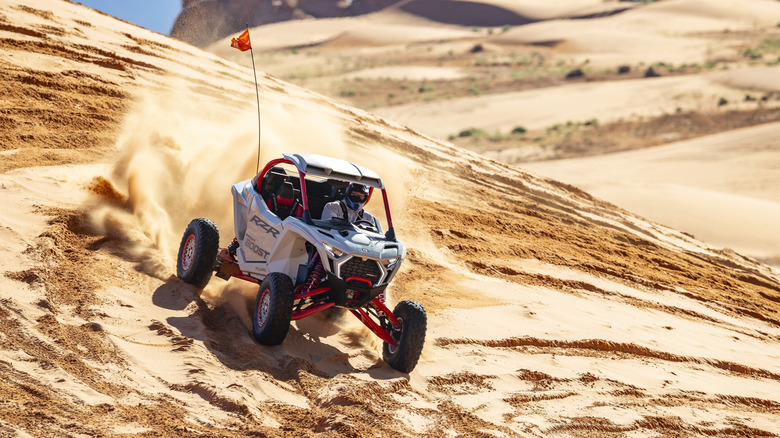
A cool morning breeze blows across the southern Utah desert, the previous night's rainfall having turned the surrounding sand dunes from a light dust to a thicker tack. The cloud cover hasn't yet burned off, preventing the sun from drying the ground and warming the air. The cool wet air is more oxygen rich, giving the 2.0-liter turbocharged inline-4 mounted behind me even more to work with, and the packed-down ground provides more traction for its 275 horsepower to dig into and blast away. I'm in the new Polaris RZR Pro R Boost, and this is turbo weather. Let's frickin' go!
I am not without experience when it comes to fast side-by-sides, as I have had plenty of opportunity to push the limits with the best from Polaris, Can Am, and others. When the naturally aspirated RZR Pro R came to market with 225 horsepower, it was by far the most powerful machine on the market, but it's been since surpassed by Can Am's Maverick R (240 horsepower) and Kawasaki's Teryx H2 (250 horsepower). What choice, then, did Polaris have but to bolt a turbocharger to the side of its two-liter heater and pump that output number up to an impressive 275 ponies. Yeah, I'll take a 22% jump in power, why not?
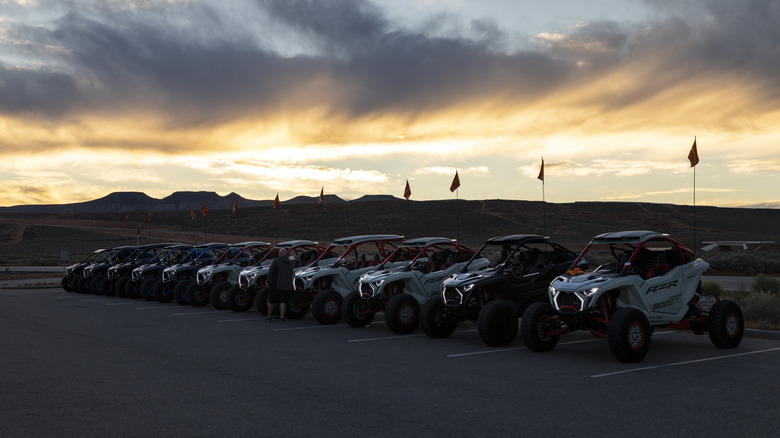
Full disclosure: Polaris flew me to St. George, Utah and put me up in a nice hotel near Sand Mountain OHV park for a day ripping in a 2027 RZR Pro R Boost. They also fed me some really good food and picked up the bar tab.
 Bradley Brownell/Jalopnik
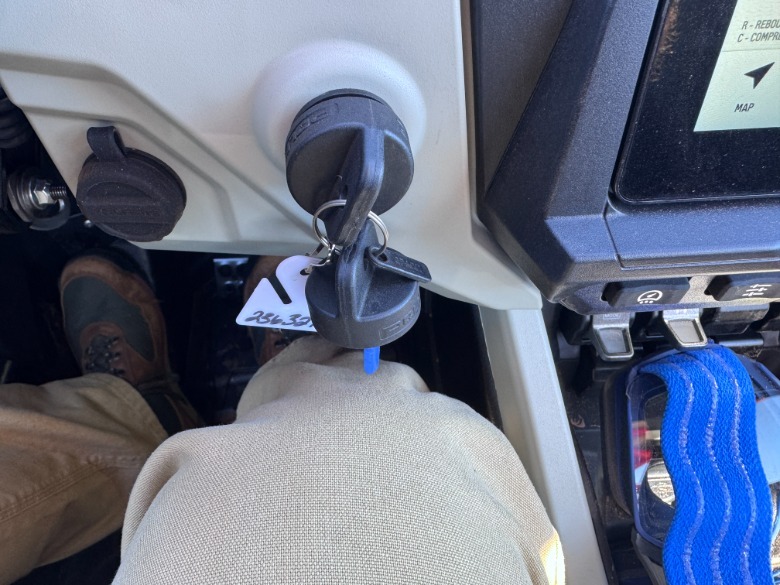
Slide behind the wheel and it's a familiar experience to anyone who has been in an RZR. I'm a big guy at 6-foot-2 and 290 pounds, but I fit in this machine just fine. My right knee occasionally finds contact with the center console (some padding would not go unwanted here) and the ignition key (perhaps a bigger concern) in some of the bumpier sections, but otherwise I find the cockpit quite comfortable. I'll put up with a few bumps and bruises after a hard day on the trails, especially if it means I can go this fast.
The tech behind the terror
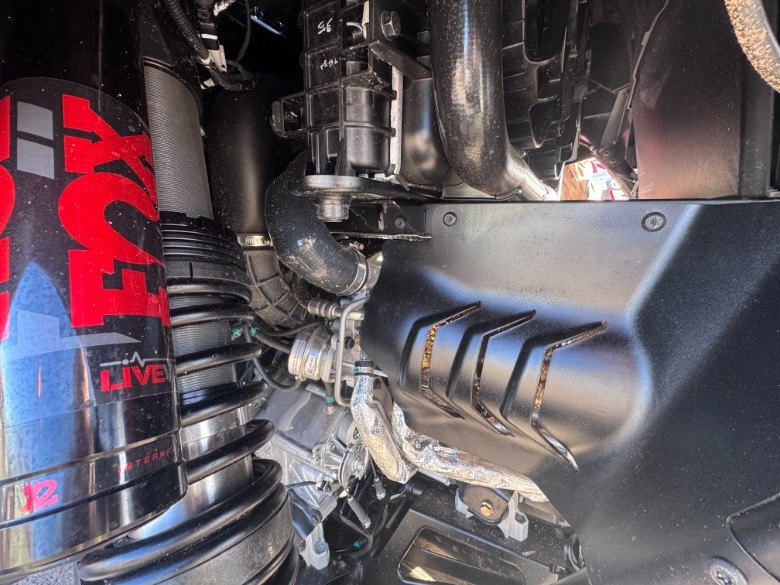
That 275 horsepower number is important for selling machines, because buyers in this segment will see a big number and click the buy-it-now button. Infinitely more important for off-road riding, however, is useable power and torque. The new ProStar Fury 2.0 turbo will rev all the way out to over 8,000 rpm. Peak torque of 223 pound-feet comes early at 6,000 rpm, but you can access 215 lb-ft from as early as 4,000 rpm, and it stays table flat through most of the rev range. That makes powerful climbing and quick acceleration much more realistic than the peaky and rev-happy competition. Polaris also worked with Garrett to optimize the 60mm turbocharger design and integrate it with the exhaust manifold to help maintain peak power outputs up to 10,000 feet above sea level and 115 degrees ambient without derating. Useful.
The RZR Pro R Boost is more than just a new engine, though, don'tcha know? That extra power comes with improvements to just about every other system on the machine. In order to deal with more oomph, Polaris developed a new heavy duty clutch package and redesigned the housing to incorporate more cooling fins and better airflow, reducing heat and extending the expected life cycle of the clutch and drive belt. More power also means Polaris had to redesign the front drive system, the continuously variable transmission, and even the halfshafts to handle everything the ProStar Fury could throw at it.
 Bradley Brownell/Jalopnik
My favorite piece of tech is actually found in the roof. Instead of being just a static sunshade, Polaris incorporated a roof scoop into the top of the Pro R Boost. There isn't a physical connection between the roof and the engine's intake or radiators, as that would block rearward visibility and airflow to the driver compartment, but the scoop shoves high-velocity air downward toward the intake. Short of a wind tunnel, I don't know how I could test its functionality, but Polaris says it helps funnel air into the rear-mounted radiators and the engine's intake tract. It's rather inconsequential how it works, but even if doesn't do much at all, it's still cool as heck. I love a good scoop.
In addition to the extra power of the turbocharged engine, adding that exhaust turbine helps quiet down the engine a little more than the naturally aspirated Pro R, making your ride more comfortable and less disruptive to the environment around you. It isn't exactly quiet, but it's a nice few decibels less than its little brother. I found that I could ride around all day without getting the ringy ear feeling, which is a welcome improvement. The Pro R Boost also features improvements to engine isolation, both improving responsiveness and reducing cabin vibrations. Don't worry, you won't feel like you're driving around in a cocoon, it's still got plenty of braap for all but the most X-games of tastes, and there's still a cup holder for your White Monster, Kyle.
It's an off-road supercar
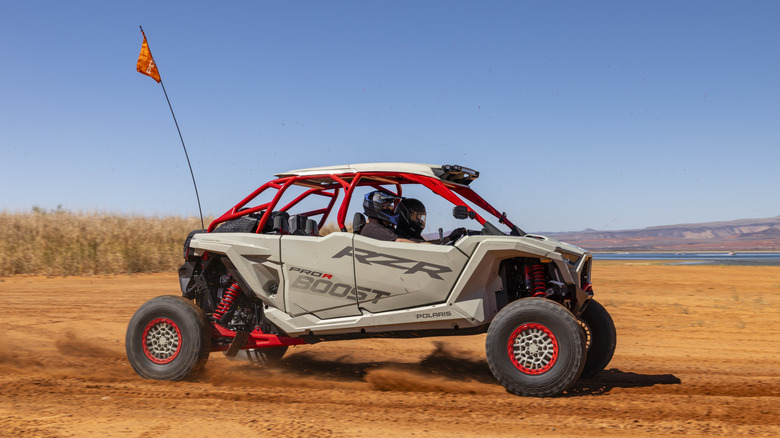
I feel like I've found myself in a pickle. I'm a dyed-in-the-wool automobile fanatic with a penchant for low and fast sports cars on curvy paved surfaces. Unfortunately for me, I've never had as much fun in any car as I've had in the driver's seat of this turbocharged desert-slaying mech suit on wheels. This is fun on a whole other planet, delivering instant response speed, direct connection steering, roll and yaw influence with a dip of the brakes, a flick of the steering wheel, and a stomp on the throttle in quick succession. If you're buying a supercar, you're wasting your money. This is easily ten times as much fun as any big-power street peacock for a fifth the price.
In order to get the most fun and enjoyment from a sports car, I find the need to enter a track day or autocross. All else equal on costs, from fuel and tires to entry fees and travel, I'd rather spend a day ripping around in the sand for as long as I want versus a 20-minute track session. The level of seat time, approachability, and camaraderie is unmatched for a weekend at the dunes. Despite their reputation for being dangerous and difficult, I'd argue a side by side is potentially even safer than your Miata at a track day. The RZR has factory-fitted six-point harnesses, an integrated roll structure, and much lower speeds. Slam into the wall at three-digit speeds in your MX-5 and there's a high likelihood that you're ending up in the hospital. Tip into a slow roll in an RZR and provided you keep your arms inside the ride, you're probably getting out without a scratch. You can probably winch the thing back upright and ride away with it, too, if you're lucky.
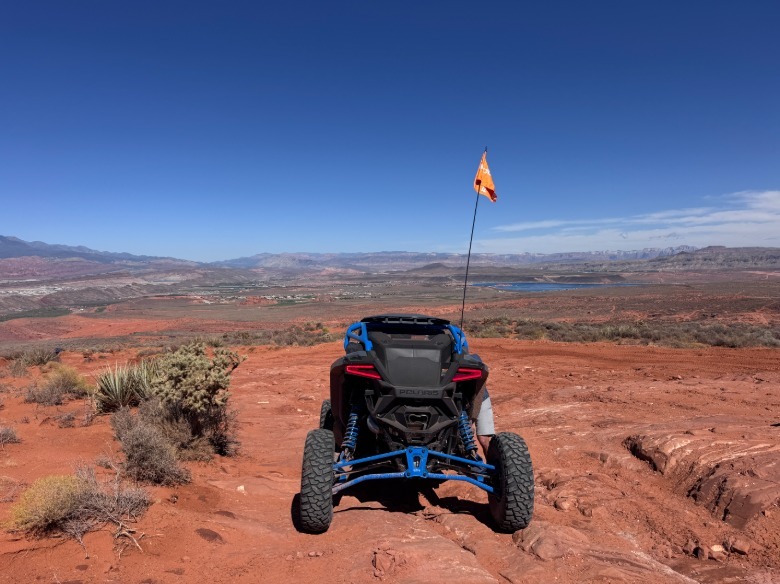 Bradley Brownell/Jalopnik
If you're trying to decide where to spend your fun money these days, the tech and capability of a side by side simply can't be beat. To get anywhere near this level of adrenaline in a street car or motorcycle, you're risking life and limb with the speedometer buried on the right. Meanwhile I found myself cackling with joy in my helmet with the speedo showing single digits. Even at its fastest, I don't think I saw anything over 50 mph all day, and I came back to camp at the end of the day sweaty, exhausted, and begging for a few more hours.
Does it all
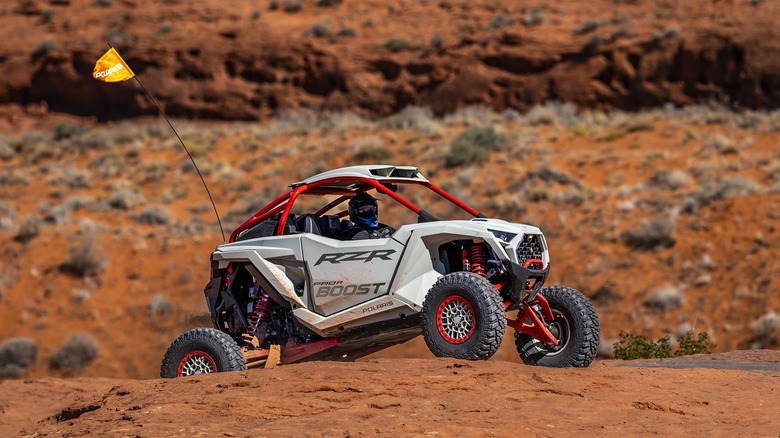
Polaris, wanting to show off the wide variety of capabilities of its newest machine, split the day into two halves. In the morning I was escorted out in a lead-follow fashion to some of the best dune and trail riding that southern Utah has to offer. The afternoon session saw a series of rocky trails and slow-motion crag and outcropping crawling. None of this was particularly taxing for the vehicle or rider, telling me that a better rider with more experience could take this vehicle well beyond anything I'd feel comfortable doing. Unless you're a true pro SXS desert racer or rock bouncer, you're probably going to meet your limit well before the machine does.
Right out of the box, even with its factory-fitment tires, this is a seriously capable dune rider. It would have been faster and more fun with paddle tires, but I never got stuck or dug in even without them, and the paddles would have been insufferable on the trail out to the sand. Better an all-rounder than a master of a single discipline, if you ask me. Keep your momentum up and even the deepest of rutted sand stands no chance of slowing you down.
Once we left the dunes for a series of winding rocky and craggy trails, a quick switch of the buttons controlling the suspension and throttle maps is all it takes to convert the Pro R Boost from one discipline to another. Calming the throttle by putting it in rock mode, and switching the suspension controls into comfort, I was able to bounce and buck around over some pretty harsh drops and bumps while feeling hardly any of it. Without even airing down the tires, the machine felt like it was a magic carpet gliding smooth several inches over the rough terrain. There's so much suspension travel and ride height that I never had to worry about picking my lines, just point and go.
The afternoon section of the ride was much rockier and navigated through some slick red rock steps and shelves up the side of a small mountain. There were a few moments, driving up to a ledge that was both taller than my tires, and worn rounded by decades of previous rock crawlers' attacks, I wasn't convinced the machine could handle what I was throwing at it. A quick blip of the throttle, however, and I was up and over the lip, ready to zip over the next. With this level of power, control, and grip, Polaris figured out the off-road cheat code. Up, up, down, down, left, right, left, right, A, B, select, start. Now you can drive over anything.
Conclusion
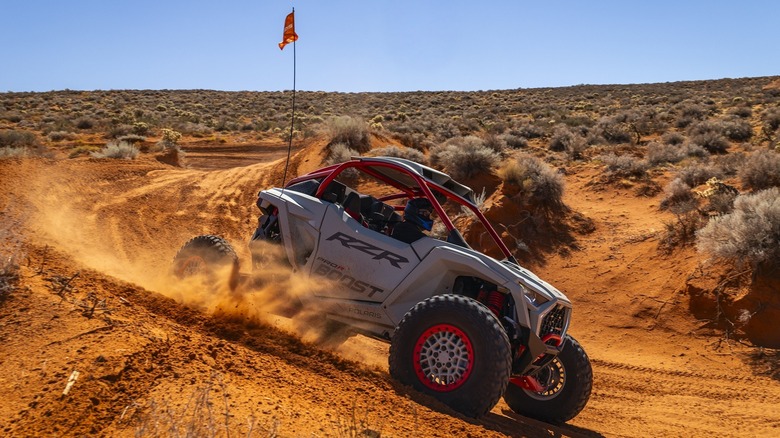
Let's get the most obvious gripe out of the way first. This thing is expensive, making it little more than a wealthy person's toy. The Polaris RZR Pro R Boost doesn't really compete with other side-by-sides so much as it competes with other hobbies for your limited weekend time. You buy this instead of a boat or a track day car, if spending the weekend exploring the desert or a two-track trail deep in the woods is your idea of fun. With a starting price of $50,000 for the two-seat Boost, if you can afford this, you probably already have the boat and the track day car, but spend too much time at the office to enjoy any of them. Unless you personally have a hundreds of acres of property to explore, you're going to need to trailer this somewhere to make any kind of use of it.
Yes, this machine costs more than many brand new cars and lacks most of the amenities. The RZR is not even legal to drive on the street in most states, but it excels at digging into the dirt and going fast. $50,000 is a lot of money, certainly more than I have to spend on an oversized toy, but it's a damn sight less expensive than building your SUV or truck of choice into a pre-runner, a rock crawler, or a trail rig. Not only that, but it'll go farther and faster at any one of those off-road disciplines than a dedicated machine would.
If you already have a Polaris RZR Pro R, I'm not sure I could find the justification to upgrade to the turbocharged version, it's a lot of extra money for 50 extra horsepower. If you're jumping into the off-road game and you want the best of the best, though, you'd be hard pressed to find a better machine for the task. Until the next hot thing hits the market, this is the most powerful and best-driving off-roader for the job. If you've got a spare $50,000 in this economy, and a truck and trailer to haul it, and a few spare weekends per year to screw around shooting rooster tails in the sand, you have earned my envy.