

What's The Difference Between Hybrid And Regular Motor Oil?
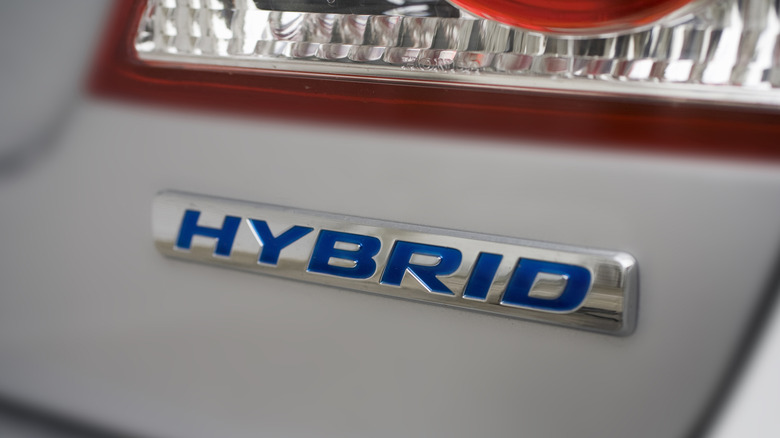
Motor oil is essential to keeping a vehicle running. This mixture of base oil and additives reduces friction and heat within the engine to protect components, keep them cool, and maintain functionality. Its purpose is the same in every vehicle with an internal combustion engine (ICE), and oil changes are conducted similarly regardless of powertrain. However, it's the kind of oil used that matters.
The basic motor oil types are conventional, full-synthetic, synthetic blend, and high-mileage. But hybrid engines have a few special idiosyncrasies, and hybrid motor oil is specifically formulated to address them, such as by using lower viscosities and more additives. In a hybrid vehicle, the engine isn't continuously working like in a traditional ICE. At slower speeds, propulsion is provided by the electric motor, and the gasoline engine takes over upon acceleration or when traveling at higher speeds. Because of this frequent start-stop cycle between electric and gas power, a different kind of strain is put on the hybrid engine. However, unlike what happens when you put diesel in a gas car and vice versa, regular motor oil will not harm a hybrid engine.
How are hybrid motor oils formulated for hybrid cars?

Hybrids are cool, literally. They run at lower temperatures than an ICE-equipped car, and so they don't always reach the proper temperatures to completely burn off water condensation that gathered in the oil while the engine was off. Although the cooler operation is a plus for fuel economy, the inability to burn off contaminants can dilute the oil and reduce its lubricating efficacy, which inevitably leads to corrosion, sludge, and diminished engine life.
Regular motor oil also tends to have a higher viscosity than what is needed for a hybrid vehicle. When it comes to deciphering motor oil viscosity grades, the numbers denote low- and high-temperature viscosities. Of course, Low-viscosity oils are thinner and flow through the engine better, aiding in fuel efficiency. In hybrids, however, the lower viscosity also means consistent lubrication at each restart. Using a higher viscosity might sound like a good idea for a more greased-up engine, but with a hybrid's repeated cold starts, the oil simply won't heat up quickly enough.
You'll also find that hybrid oils are almost exclusively of the full-synthetic variety. Where viscosity refers to the thickness of the oil, the viscosity index(which you'll rarely find on the bottle) indicates how the fluid physically changes as its temperature does. A high index means the viscosity will remain consistent over a wide range of temperatures. With a lower rating, the fluid will thicken when cold and thin out when hot. Synthetics have a higher index compared to conventional oil, and their stability makes them better suited for hybrids. There are more additives and antioxidants added to hybrid motor oil as well to keep the engine clean and combat the trapped moisture.
Who sells hybrid motor oil?
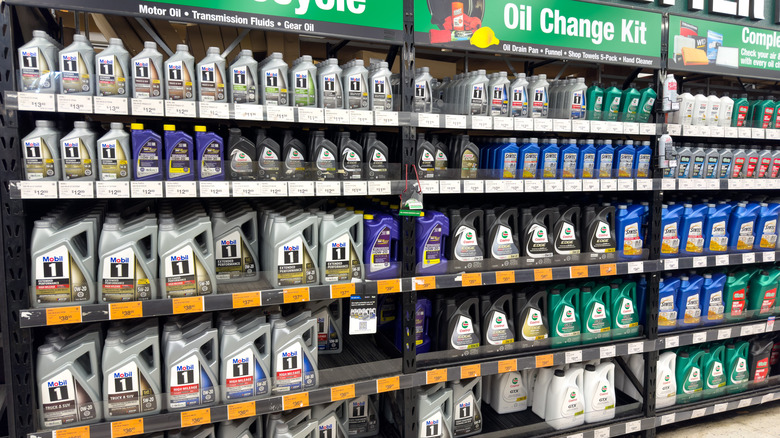
Interestingly, hybrid motor oils are a relatively new venture, despite the fact that the first hybrid sold in the U.S. launched in 1999. It wasn't until 2016 that Motul launched the first hybrid-dedicated motor oil, with brands like Valvoline (2019) and Mobil 1 (2023) soon bringing their own versions to market. Triax also offers a hybrid engine-specific oil, while Lucas Oil sells a specially formulated additive oil treatment, but only since 2025.
While there's no shortage of hybrids, plug-ins, and EVs to choose from today, hybrid motor oil selection is still slim pickings considering how prolific the vehicles are these days. But if your favorite brand doesn't offer a hybrid-specific product, you can stick with full-synthetic oils that have a low viscosity grade and high viscosity index, but always consult the owner's manual first.
The good news for hybrid owners is that, when it comes to oil changes, hybrids don't require any special treatment, and the recommended mileage intervals between a hybrid's oil changes are generally the same as with a regular ICE car. In fact, manufacturers such as Triax, Mobil1, and Amsoil claim their premium hybrid oils are good for up to 15,000 miles of protection between oil changes, which is more than what the average American drives annually.