

Williams Wants F1 Backmarkers Allowed To Spend More Money Than Their Faster Rivals
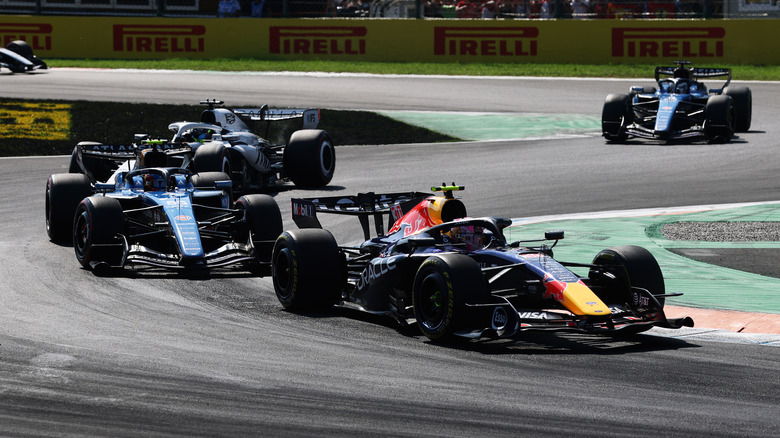
If you started a space program in your backyard, then raced NASA to low Earth orbit on a fixed budget of $400 million, NASA would still win every time. No equal spending cap could eliminate the built-in advantages of America's space program, with its existing facilities and institutional knowledge. While Formula 1 doesn't feature such an extreme disparity, Williams team principal James Vowles is proposing significant changes to the championship's cost cap to favor the teams at the back of the grid. The ambitious rules tweak could be introduced as early as the 2027 season.
F1 first introduced a spending cap in 2021, set at $215 million this year. The cap accounts for nearly all of a team's expenditure, from technical development and trackside operations to staff salaries and equipment. The major exceptions to the cap are driver salaries, the salaries of the three highest-paid staff members, as well as hospitality, marketing and legal costs. Power unit development is covered under a separate $190 million cost cap. And the exceptions make sense. Butter-soaked lobsters don't win races; computational fluid dynamics do.
Previously, there was an allowance for capital expenditure on facilities and factory infrastructure. It was scrapped for the 2026 season. Teams were effectively locked into whatever factory setup they had.
Vowles is looking for an elephant to balance F1's scales
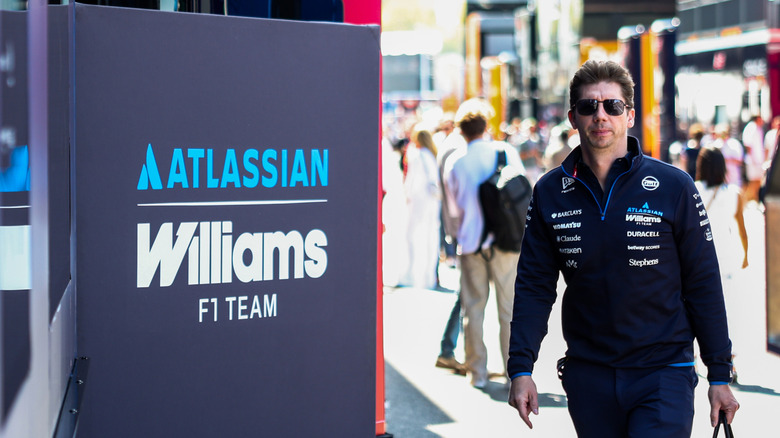
Vowles wants the cost cap to be on a sliding scale that allows teams to spend more based on how low they are in the constructors' championship order, according to The Race. The Williams team boss wants F1 to directly tackle the competitive moat built by the Big Four teams: Mercedes, Ferrari, Red Bull and McLaren. The immediate parallel most Americans will be able to draw is with the NFL Draft, where the draft order is based on the previous season's standings. The worst-performing NFL team gets the opportunity to draft the best college football player to improve their roster.
American sports fans might fear that tanking could come to F1, a derided practice where teams intentionally perform poorly for better draft picks. In this case, teams could purposely fail to score points to spend big in the next season. The exact details of the sliding scale have yet to be revealed, but a proposed addition would tie benefits to a points-margin threshold. The cap would increase only for teams more than 100 points behind the top four in the standings. Coincidentally, the first team past the threshold last season would have been Williams, fifth place in the constructors' championship.
F1 has already introduced a sliding scale for aerodynamic development, granting teams more wind tunnel and CFD hours based on championship order. It clearly hasn't made enough of a dent. The championship also introduced Additional Development and Upgrade Opportunities, a catch-up mechanism for power unit development. While parity rules take time to bed in, some in the sport are demanding that they drop the deft touch and rock the boat.