

The Differences Between Transmission And Hydraulic Fluid (And Why They Matter)
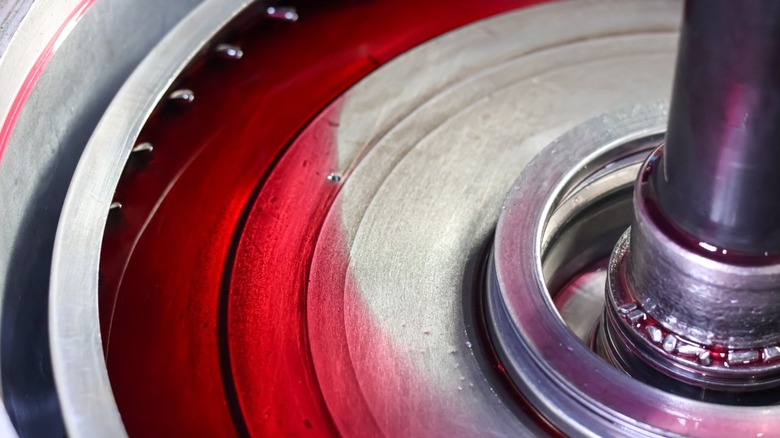
What's the difference between hydraulic fluid and transmission fluid, besides how they're labeled? You may be interested to know — since you clicked on to this article — that transmission fluid is actually a type of hydraulic fluid. At least, it acts as a hydraulic fluid in some respects. There are other types of system-specific hydraulic fluid as well, including brake fluid and power steering fluid. Does that mean that transmission fluid and hydraulic fluid are interchangeable? No. While some ATFs may be used in certain parts other than transmissions, it does not go the other way. That is, pure hydraulic fluid should not be used in transmissions.
Therein lies the difference. Transmission fluid is specially formulated and contains specific additives that are included to aid in the various functions of your car's transmission. In fact, there are even different kinds of transmission fluids for different kinds of transmissions.
Why do the differences between hydraulic and transmission fluid matter? Well, as we said, we wouldn't pour hydraulic fluid into a vehicle transmission, and these differences show why. Even using the wrong transmission fluid could shorten the life of your transmission. Using the wrong fluid in your transmission can cause clutch slip, problems with shifting, overheating, and premature wearing of the gears. All kinds of bad things can happen if you use the wrong transmission fluid.
How transmission fluid differentiates itself from other hydraulic fluids
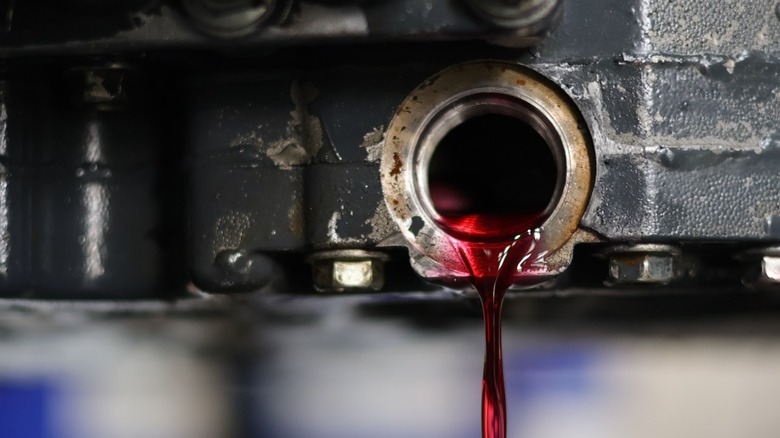
Hydraulic fluid does a lot of things. For instance, the pressurized fluid transmits energy through the system, putting parts that are supposed to move in motion. Hydraulic fluid also transfers heat, helps prevent damage from contamination, and lubricates the parts of a system. A transmission fluid does all of these things and then some.
Transmissions have to be able to work well in both extreme heat and extreme cold. Those extremes in temperatures have different friction requirements. The same transmission fluid will contain additives designed to control friction at lower speeds and higher speeds, as well as at different temperature ranges. That's something that regular hydraulic fluid just can't do. And, oddly enough, in the case of automatic transmissions with torque converters, ATF keeps the engine and transmission from physically touching each other, which is why automatic transmissions are often called slushboxes.
It's the additives that make the most difference between transmission fluid and regular hydraulic fluid. Mobil Type F ATF, for example, contains additives that improve the viscosity index, combat rust, reduce wear, and eliminate foam. That's on top of the additives that control friction as the temperature changes. Viscosity also differentiates the fluids, as automatic transmission fluid is typically thinner for a freer flow. It goes deeper that, though, because additives in transmission fluid enable it to maintain consistent viscosity through a broad range of temperatures.
The different types of transmission fluid and what they do

Not all transmission fluids are made the same. Manual and automatic transmissions obviously have different needs, so they require different fluids. Manual transmission fluid has a higher viscosity than automatic transmission fluid and contains different additives designed for higher friction and pressure. There are different kinds of automatic transmission fluid, too, including dual clutch transmission fluid, continuously variable transmission fluid, and step-type transmission fluid.
If you want to break it down even further, each major automaker uses its own flavor of transmission fluid. GM uses various iterations of Dexron, with Dexron VI being one of the most recent versions for the latest GM models. Ford's versions are Mercon for its current models and Type F for older Ford classics. Chrysler uses ATF +4. There are also multi-vehicle ATFs that can be used across various brands, including Japanese and European carmakers. That said, you should probably avoid multi-vehicle fluid if you have access to the specific transmission fluid for your car.
Adding to the complexity is that ATF can sometimes be used in applications other than automobile transmissions, such as power steering pumps, off-highway transmissions, and hydraulic farm equipment. John Deere even makes a hydraulic/transmission mix that can be used in multiple tractor parts and systems, including wet brakes and clutches.