

7 SUVs That Depreciated Surprisingly Fast Over 5 Years
Depreciation hits some vehicles harder than others. The good folks at iSeeCars called this out in a study released in early 2026, with EVs as the worst offenders, averaging 57.2% of value loss over five years. The numbers get even more interesting with SUVs. Despite these vehicles accounting for almost two-thirds of all new vehicle registrations, they have the second-highest five-year depreciation as a group at 44.9% for the 2026 model year.
However, beyond the averages, you'll see that depreciation (high or low) often depends on the brand or model rather than the vehicle type. SUVs like the Toyota RAV4 and Honda CR-V are among the top vehicles for lowest depreciation (less than 30% over five years). If you're shopping for a used SUV bargain or are worried you already have an SUV in the driveway that's bleeding money daily, we pulled the worst seven from the iSeeCars research. Pickup owners aren't exempt, as these trucks have terrible five-year depreciation. To cross-check iSeeCars' findings on SUV depreciation, we've also looked at data from CarEdge.
For simplicity, and because EVs have their own valuation issues, we focused on gas-powered and electrified SUVs, including the Infiniti QX80, Land Rover Range Rover, Infiniti QX60, Land Rover Range Rover Sport, Audi Q5 Hybrid, Land Rover Discovery, and Audi Q7, mostly all from the 2021 model year. We'll cover iSeeCars' findings on how much these SUVs have depreciated, then compare them with current dealer asking prices. All MSRPs mentioned here include factory destination charges, and used SUV pricing (from CarGurus or Autotrader) covers examples with clean history (no accidents or title issues) and average or better mileage (around 65,000 miles or less).
Infiniti QX80
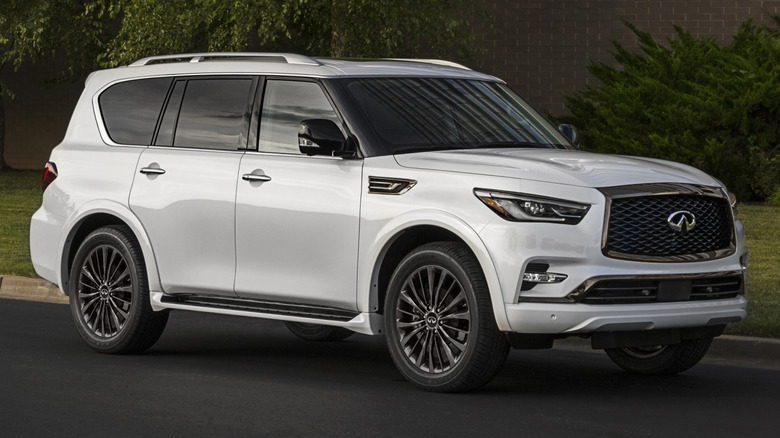
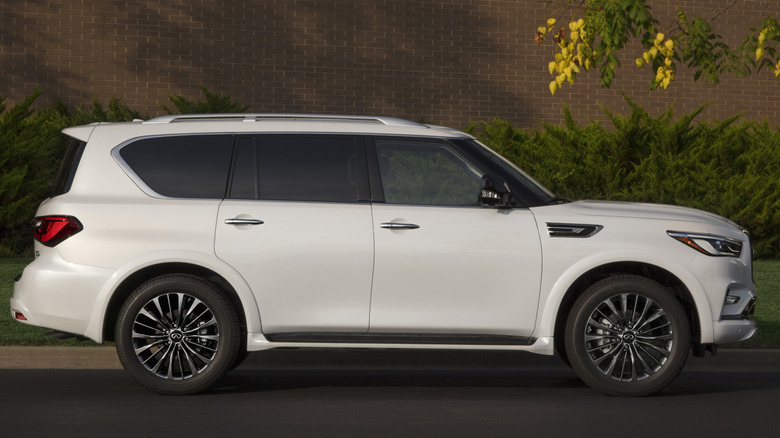
Infiniti redesigned the QX80 for 2025, switching to a twin-turbo V6 engine, but the previous V8-powered edition is among the worst for holding value. With an eye-popping 62.8% depreciation rate over five years per iSeeCars, the 2021 Infiniti QX80 stands as the biggest hit to an SUV owner's wallet, or, depending on your point of view, one of the best values for a used utility. However, marketplace research by CarEdge says 57.4% is the more likely depreciation result.
In 2021, the big, brash QX80 started at $73,645 for the base Luxe trim with rear-wheel drive. By iSeeCars' math, this entry-level grade should be worth about $27,400. Examples now list for around $29,000, about 60.6% below the Luxe's original MSRP. That percentage falls between the figures from iSeeCars and CarEdge, although their calculations differ.
At around $30,000, options include all-wheel drive or lower-mileage units. Higher trims will push the budget closer to $35,000. A combined fuel economy rating of 15 mpg is the price to pay for the 400-horsepower 5.6-liter V8 engine, but an 8,500-pound towing capacity could be useful.
Land Rover Range Rover
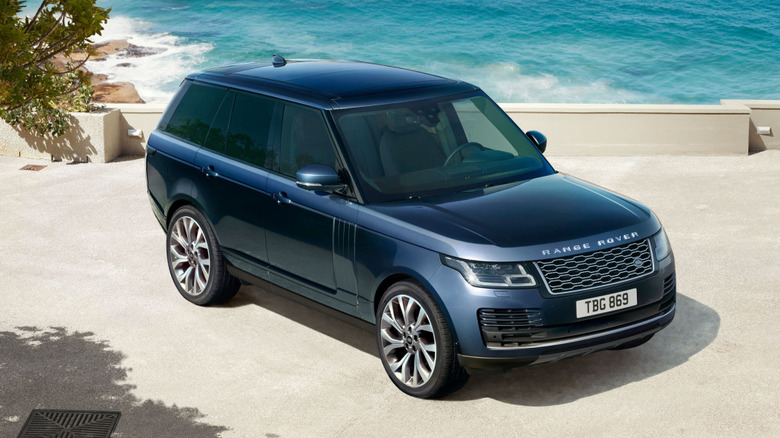
Speaking of flagships with depreciation issues, the Land Rover Range Rover is another SUV with a plunging valuation. iSeeCars found that the Range Rover lost an average of 61.7% of its value over five years. With the least expensive version at an MSRP of $94,450 and the top-end trim at $212,350, depreciation can be significant. Applying that average depreciation rate to the base P360's original MSRP works out to over $58,000 in lost value, or almost $1,000 per month over five years. The same calculation puts the loss at more than double that for the king-of-the-hill P525 SVAutobiography LWB trim. CarEdge takes an even harsher view on Range Rover depreciation, with its analysis at 70.2% for the 2021 edition.
With over a dozen trims offered for that model year, nailing down marketplace offerings can be challenging, but let's focus on the P400 HSE Westminster, which had an MSRP of $105,950. This version sits in the middle of the model's output range, with a turbocharged 3.0-liter inline-6 engine making 395 horsepower. As a used vehicle, pricing settles in around $35,000 (with some outliers above and below this amount). Using this number puts the Range Rover's actual depreciation (at least for this trim) closer to 67%, which tilts closer to the CarEdge number.
Infiniti QX60
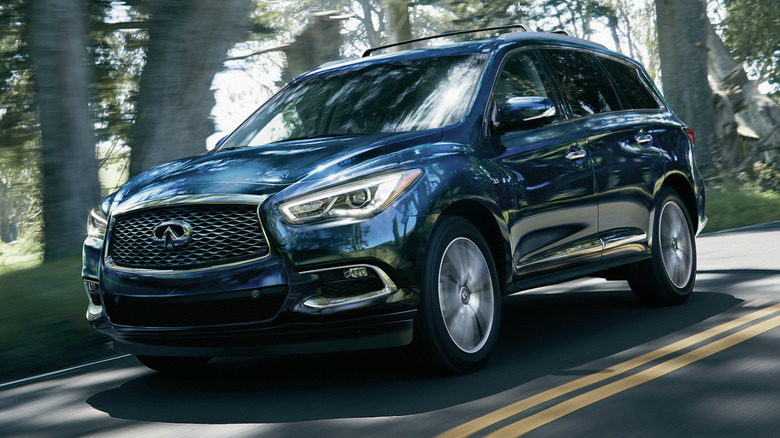
Infiniti's best-seller, the QX60, also makes the list of worst-depreciating SUVs. This three-row crossover loses 58.3% of its original value over half a decade. With the switch to a new generation for the 2022 model year, Infiniti didn't make the QX60 in 2021, so we'll default to the 2020 edition for number crunching. The mid-grade Luxe trim with front-wheel drive (all-wheel drive was optional) stickered at $49,175. Dealers are asking around $20,000, roughly 59% below that original MSRP. However, you might come across options that are $1,000 to $2,000 less.
Most for-sale examples have all-wheel drive, but the extra equipment doesn't appear to drive pricing up by more than $1,000. For used car shoppers, the real value comes from the Signature Edition trim, which had an MSRP of $53,275. Although not plentiful on the used market, this top-tier grade is priced around $21,000, which is 60.6% depreciation. That calculation sits between iSeeCars' 58.3% finding and CarEdge's 62.5% estimate for the 2020 model.
Land Rover Range Rover Sport
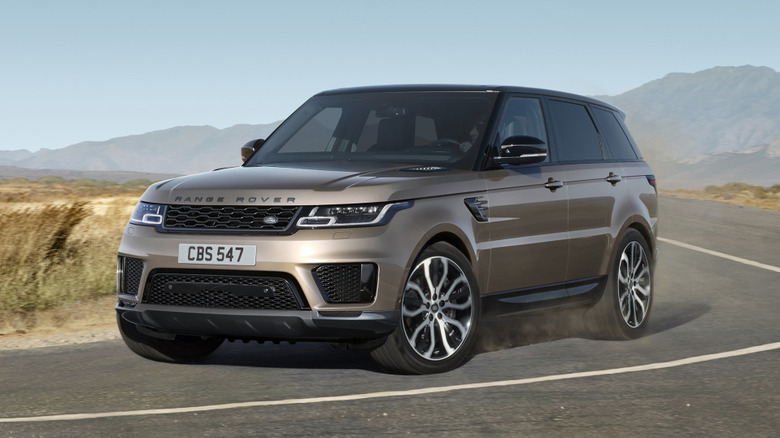
Land Rover isn't limited to one Range Rover model with over-the-top depreciation. The Land Rover Range Rover Sport is saddled with a five-year valuation loss from iSeeCars that matches the QX60 at 58.3%. Meanwhile, CarEdge says the depreciation decline is 63.5%. Like its larger, more expensive stablemate, the Range Rover Sport comes in a dizzying array of trims, starting at $72,180 for the 2021 model year and topping out at $131,150. The mid-grade HST trim originally stickered at $85,530, while current examples list for about $35,600, a decline of roughly 58%.
This model uses the same 395-horsepower turbocharged 3.0-liter inline-6 engine as the larger Land Rover. If you don't mind stepping down to a detuned version of the same engine with an output of 355 horsepower, the HSE Silver Edition trim may offer even better depreciation opportunities. Originally priced from $79,850, examples now list for around $32,000, representing a roughly 60% loss in value, leaning closer to the iSeeCars estimate, but still near the middle ground.
Audi Q5 Plug-In Hybrid
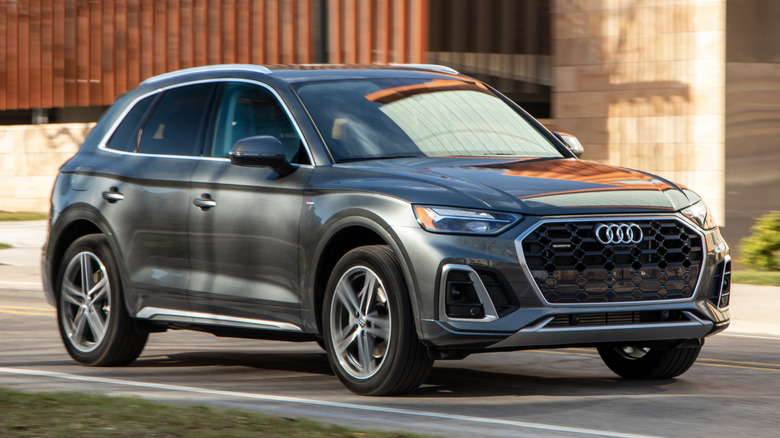
While the 2021 Q5 was produced with a mild-hybrid system, the plug-in hybrid (PHEV) variant's value takes a particularly big hit: 58.2% over five years, just behind the QX60 and Range Rover Sport. It's the PHEV version that gets flagged by iSeeCars, which estimates depreciation for the standard Q5 at 55.1% over the same period. To put that number in perspective, a Toyota RAV4 loses 25.2% of its original value over five years. CarEdge doesn't break out Q5 depreciation by power train, but values the 2021 Q5 at about 49.3% of its original price, a 50.7% decline.
The base Q5 PHEV MSRP started at $54,445, an $8,600 upcharge over the regular Q5. It offers a significant increase in output (362 horsepower and 369 lb-ft of torque) from the electrified version of the turbocharged 2.0-liter four-cylinder engine that makes 261 horsepower and 273 lb-ft of torque in the mild-hybrid version. The top-end Prestige trim had a window sticker starting at $62,795. On the used car side, a 2021 Q5 PHEV has a $23,000 sweet spot, mostly for the mid-grade Premium Plus (MSRP: $57,845), which raises real-world depreciation to about 60%.
Land Rover Discovery
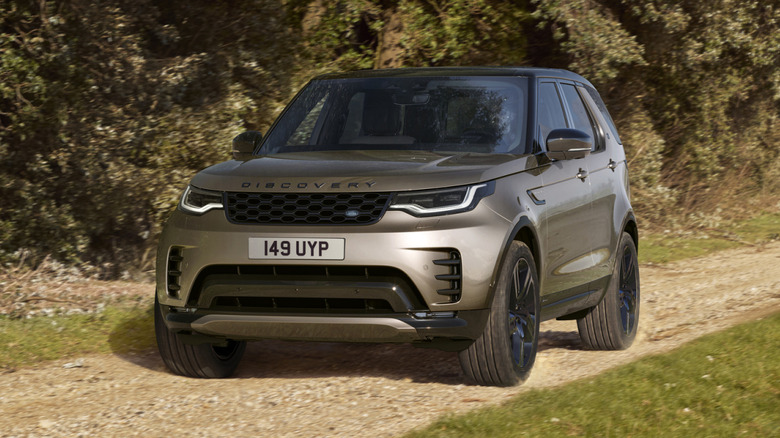
Land Rover's pattern of plunging resale values continues with the 2021 Discovery, which gets hit with 57.9% depreciation over five years, according to iSeeCars. In contrast, CarEdge says the valuation loss is 50.9%, which still is high. Think about that for a moment: three of the seven vehicles mentioned here come from Land Rover. That could hurt if you already have one in the garage. Otherwise, the potential bargains continue. Unlike the full-on Range Rover, the Discovery's base trim starts with the P300 S, which originally cost $55,250. Meanwhile, the P360, which starts the Range Rover's lineup, is the high-end for the Discovery, with the P360 HSE R-Dynamic variant that stickered at $70,250.
While the second-hand market for the 2021 Discovery is slim, it's mostly occupied by P360-trim variants, with the HSE R-Dynamic grade priced at about $29,000. This 58.7% depreciation is close to the iSeeCars findings and noticeably different from the CarEdge data. Dealer asking prices for the low-end P300 are harder to pin down, but $24,000 seems to be what's out there for the P300 S R-Dynamic, which had a $57,750 MSRP and a similar depreciation rate of 58.4%.
Audi Q7
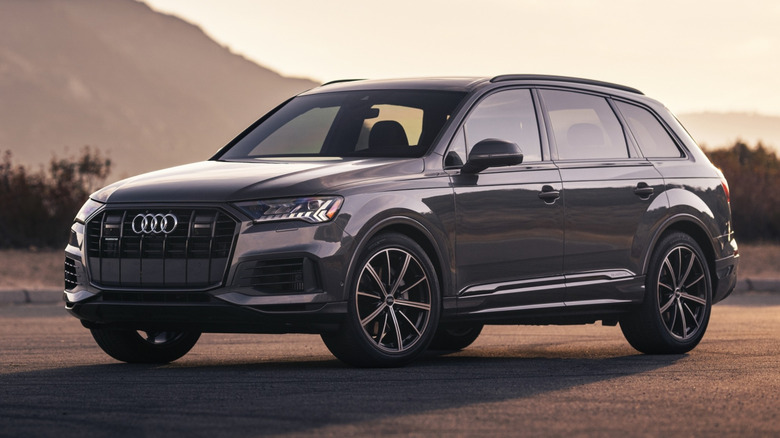
The Q5 PHEV gets company thanks to the 2021 Q7's sinking valuation: 57.2% from iSeeCars. That's still well above the SUV category's average five-year depreciation of 44.9% (from iSeeCars) and the 50.6% valuation loss from CarEdge. This model year is part of the long-in-the-tooth second generation that first reached the U.S. market in 2017. The third-generation Q7 hits the streets for the 2027 model year. The 2021 Q7 was available with a 248-horsepower version of Audi's turbo 2.0-liter four-cylinder engine (tagged the 45 TFSI) or the 329-horsepower turbocharged V6 engine (the 55 TFSI); depreciation is still severe regardless of what's under the hood.
The entry-level Premium 45 TFSI had an original MSRP of $56,045, which translates into current mid-range market pricing of around $24,000, which is 57.6% depreciation after half a decade and falls in line with the iSeeCars estimate. Stepping up to the highest-tier Prestige 55 TFSI could mean spending $29,000, which reflects a 60.3% decline from the initial selling price of $73,095.