

The Differences Between Marine And Car Batteries (And Why They Matter)
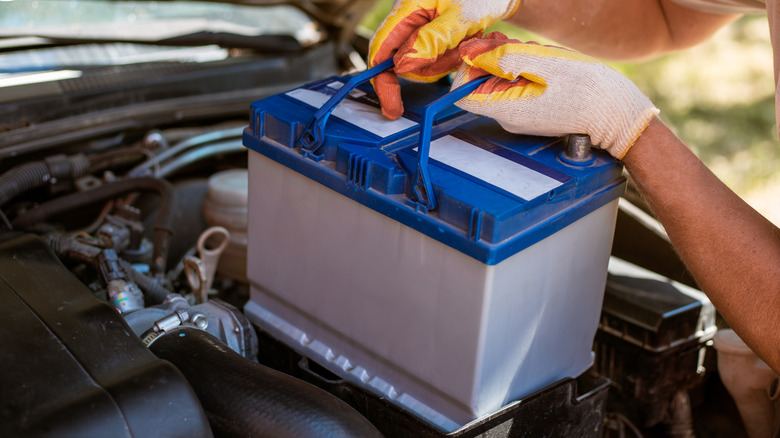
Car and marine batteries look the same, seem like they can fit in the same space, and provide power for engines. But are they really the same? Is it possible that they can be used interchangeably? The answer is a resounding "Dear God, no," but we should take a look as to why these batteries don't cross over.
Car batteries are designed to give an initial burst of power to start an engine. The power rating is called Cold Cranking Amps (CCA). This rating specifies the ability of a car battery to supply a specific amount of amps for 30 seconds at zero degrees Fahrenheit, while providing at least 7.2 volts. After this initial burst of energy, the alternator takes over and begins to supply the power and energy needed to run the car.
Deep cycle marine batteries give a steady flow of power, and are able to have deep discharges: They can be drained of power down to even 20% of capacity without hurting the battery. Instead of CCA, the deep cycle battery is measured in amp-hours, or Ah, and is designed to give power over an extended period of time. The power from this battery is used to run all the electronics and accessories needed to power the boat while out on the water. So there are already important differences in the design of the power delivery for each, but the disparity goes deeper.
What are these deeper differences?
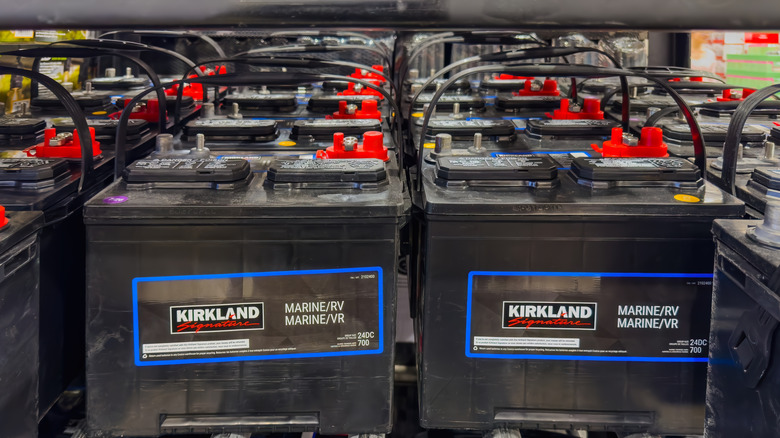
For starters, ahem, the car battery really isn't made to continually drain power. It's designed to deliver short spikes of power to get the starter motor firing up the engine. Once started, the alternator takes care of the rest. If you ever just sat listening to the radio while your car is turned off, you are draining your battery, fast.
So what's the difference with a deep cycle marine battery? These marine batteries are built to sustain continuous power drain over long periods of time before charging. Hence the name, deep cycle. If a car battery is repeatedly deeply drained by letting it sit, or using accessories when the vehicle engine is off, and then you continually recharge it, either through driving or using a charger, you may shorten that expected three- to five-year lifespan.
The construction for marine batteries is also different. Car batteries are made with thin lead plates and are not expected to face the rigors of marine life. Marine batteries are more rugged, have thicker lead plates, with internal support to resist the constant movement, vibrations, and shock of water and waves.
But can they be swapped?
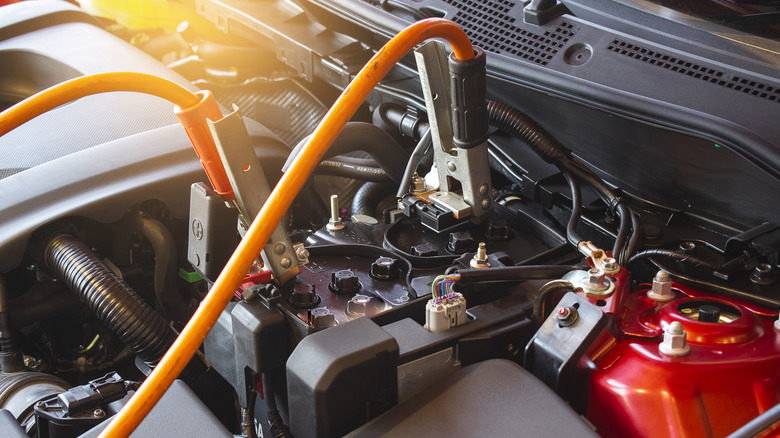
If you haven't figured it out by now, these batteries are similar, but have different uses and purposes. So can you replace a car battery for a marine deep cycle, or the reverse? Maybe you can figure out if the marine battery has enough cranking amps, but will it last through sustained starts? How will your alternator work with it? If you have a relatively modern car, will your electronics freak out and throw diagnostic trouble codes everywhere? Will it be like connecting your car battery backward?
Maybe not, but this doesn't sound like a good idea. Car battery construction is different from that for a battery created for a boat because the operating conditions are so different. Using one made for the wrong environment makes it highly likely that you'll have more frequent battery replacements. Use the battery designed for your particular use case, either for car or boat. Otherwise, none of this is recommended.