

7 Of The Largest New SUVs Available With Four-Cylinder Engines
The early crop of family-friendly SUVs from the 1990s that helped popularize the body style didn't shy away from larger engines. For its debut for the 1991 model year, the Ford Explorer came with a 4.0-liter V6 powerplant. In 1993, Jeep launched the Grand Cherokee with a standard 4.0-liter or optional 5.2-liter V8. Three years later, Ford joined in by offering a 5.0-liter V8 engine in the Explorer. In short, the more cylinders, the merrier.
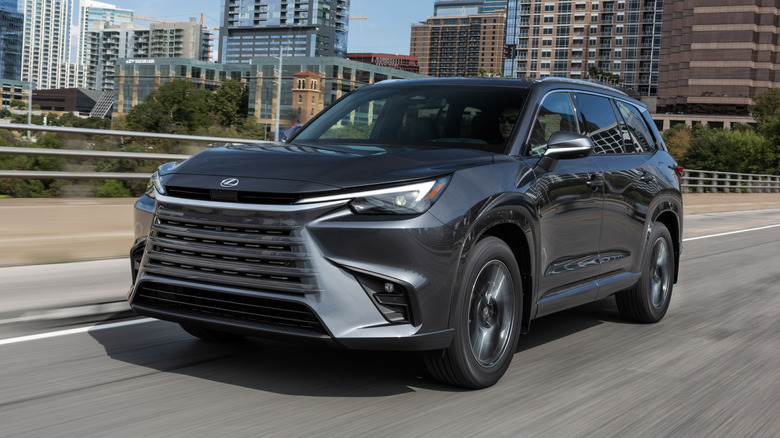
Fast forward to today, and over 20 three-row midsize SUVs (call some of them crossovers, if you want to get technical) from both mainstream and premium brands now offer four-cylinder mills under the hood. A few still have V6s, even fewer have V8s, like the new Dodge Durango. And the crop of full-sized SUVs still on the market have yet to downsize the engine bay. But those are the exceptions, not the rule these days. So, if a three-row SUV is on your horizon, you might want to know what's the largest one you can get with a four-cylinder engine, which translates to a bigger street presence and potentially more cabin space along with good fuel economy. Your options include everything from the Buick Enclave and Hyundai Palisade to the refined Audi Q7 and Lexus TX.
We'll rank these large SUVs by total length, from longest to shortest, because that's easier to nail down and compare than passenger or cargo volume, which can be harder to judge because of sunroofs and other equipment. We'll cover the least expensive 2026 trim for each four-cylinder model, yet this isn't meant to be an exhaustive list. All MSRPs include factory destination charges, passenger/seating counts include the driver, and fuel economy ratings cover the standard four-cylinder configuration (usually with front-wheel drive). To avoid duplicating information, we'll skip platform mates of the featured SUVs, such as the Toyota Grand Highlander alongside the Lexus TX.
2026 Buick Enclave
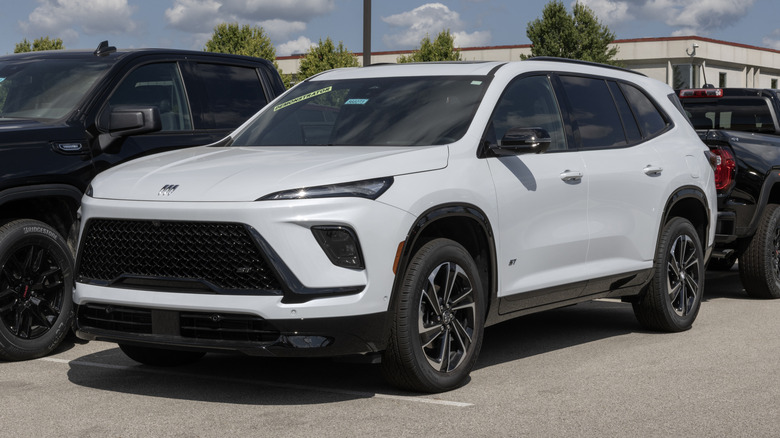
Although the seven-seat Buick Enclave shares a platform with the Chevrolet Traverse and GMC Acadia, it's the most stretched out of the trio with a front-to-back measurement of 207.6 inches. That's just 3.7 inches short of a full-size Chevy Tahoe and the longest of any of the SUVs in this comparison. With both back rows folded, the Enclave offers 97.5 cubic feet of cargo room, putting it among the 2026 SUVs with the largest cargo capacity. Because few people complain about front-row legroom, we'll look at how much space there is to stretch out in the rear. For this Buick, that means 41.4 inches in the middle row — the most of any model on this list — and 32.1 inches in the back.
The Enclave (along with the Traverse and Acadia) earns extra bragging rights: at 328 horsepower, it has more than any other non-hybrid four-cylinder competitor in its class. That output comes from a turbocharged 2.5-liter engine, which also produces 326 lb-ft of torque. The base Preferred trim with standard front-wheel drive (FWD) has an MSRP of $48,395. In this configuration, the Enclave is EPA-rated for a combined fuel economy of 22 mpg.
2026 Jeep Grand Cherokee L
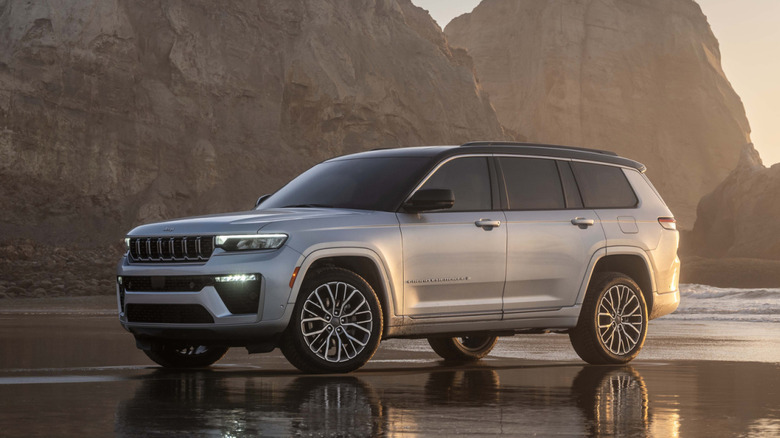
Although the Grand Cherokee helped usher in the SUV craze, it wasn't available in three-row form until 2021. Meanwhile, 2026 marks the first year of the Grand Cherokee L with a four-cylinder powerplant. The base engine remains the 293-horsepower 3.6-liter V6 engine because Jeep treats the turbocharged 2.0-liter Hurricane 4 engine as an upgrade, so buyers have to at least step up to the Limited trim for output that increases to 324 horsepower and 332 lb-ft of torque. In this case, the price of entry begins at $48,315 for a rear-wheel-drive Limited or $48,355 for a Laredo Altitude with a 2.0-liter Hurricane 4. The engine remains the sole powerplant for all of the higher grades, up to the Summit. It gives this Jeep a fuel economy rating of 23 mpg. Sadly, the once-available 5.7-liter V8 engine was dropped in 2024 because of low demand.
The stretched-out Grand Cherokee measures 204.9 inches, which translates into a maximum cargo capacity of 84.6 cubic feet. Second-row passengers will find 39.4 inches of legroom compared to 30.3 inches for the folks at the back of the bus. Depending on the trim, the Grand Cherokee L can hold six or seven people in total.
2026 Lexus TX 350
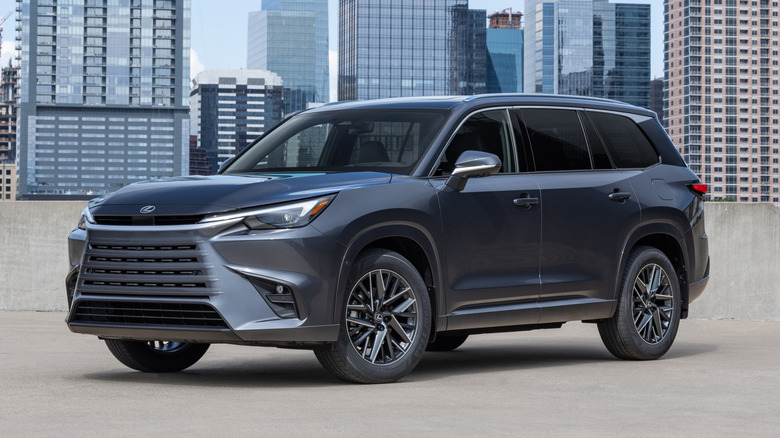
Although the Lexus TX 350 and Toyota Grand Highlander share the same platform, these crossover SUVs aren't identical. The Lexus is 203.2 inches long, compared with 201.4 inches for the Toyota, which is why we've decided to focus on the TX here. The standard turbocharged 2.4-liter four-cylinder engine delivers 275 horsepower and 317 lb-ft of torque. If you're curious, the same unit in the Grand Highlander is detuned to 265 horsepower and 310 lb-ft of torque.
The TX flexes its size on the inside too, with 97 cubic feet of maximum cargo space. That almost matches the Enclave, which is over 4 inches longer. Second-row legroom is 39.5 inches, which is an above-average measurement for this group, but a third row with 33.5 inches puts the TX ahead of the Buick and most others. Seating capacity ranges from six to seven, depending on the trim. With FWD, the base TX 350 edition costs $57,890 and gets 23 mpg combined.
2026 Volkswagen Atlas
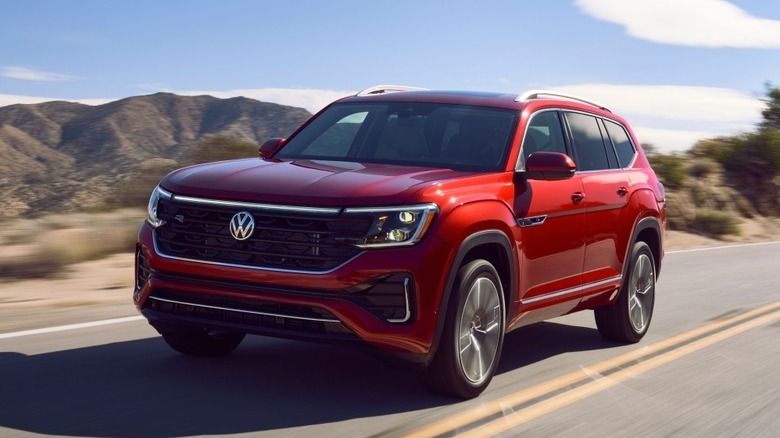
Although an all-new VW Atlas will hit the streets for 2027, the 2026 edition is still a spacious machine at 200.7 inches long. The automaker's cabin formula emphasized generous cargo space (96.6 cubic feet) and a best-of-the-list 33.7 inches of third-row legroom. The trade-off is a second row with slightly subpar 37.6 inches of legroom and near bottom-of-the-barrel standing. Still, despite being 2.5 inches shorter than the Lexus TX, the Atlas has almost as much maximum cargo space, falling short by just 0.4 cubic feet, and it always offers seven-passenger seating, regardless of trim.
With a starting price of $43,135, the starter version, an SE trim with front-wheel drive, is among the least expensive options for a spacious three-row crossover. Under the hood is a familiar Volkswagen setup: a turbocharged 2.0-liter four-cylinder engine. In this application, this unit produces 269 horsepower and 273 lb-ft of torque. Fuel economy falls in line with the other SUVs on this list at a respectable 23 mpg combined.
2026 Audi Q7
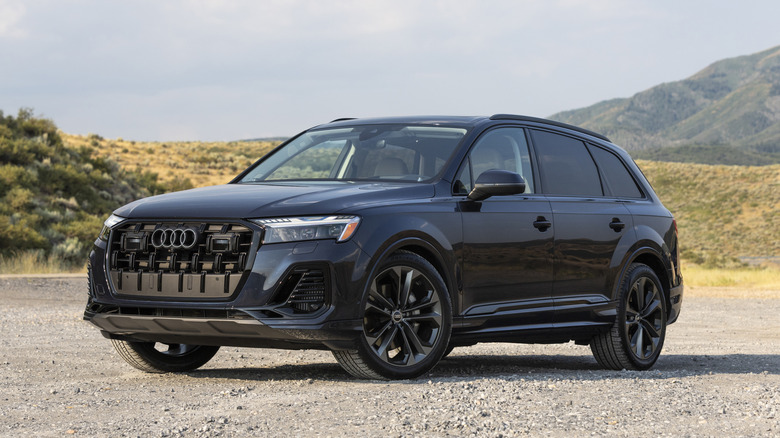
The Atlas' upscale cousin, the Audi Q7, also makes the list of larger SUVs with four-cylinder power, although the two models don't share the same platform. However, thanks to its shorter overall length (199.6 inches), the Q7 offers the least maximum cargo room (68.1 cubic feet) and the tightest third-row fit (29.2 inches of legroom). The cargo gap with the Atlas is striking for SUVs separated by just 1.1 inches in length: With both rear rows folded, the VW holds 28.5 cubic feet more. Meanwhile, 38.8 inches of second-row legroom provide more stretch-out room than the Atlas, but still trail most of the competitors covered here. Luckily, all 2026 Q7s have seven-passenger seating.
With a starting price of $63,295, the 2026 Q7 is the most expensive member of the group. That's for the core Premium trim with the ubiquitous turbocharged 2.0-liter engine producing 261 horsepower and 273 lb-ft of torque. That horsepower rating is the lowest among this gang of seven SUVs, though the higher price is somewhat offset by standard all-wheel drive. Combined fuel economy for this base engine is rated at 22 mpg.
2026 Hyundai Palisade Hybrid
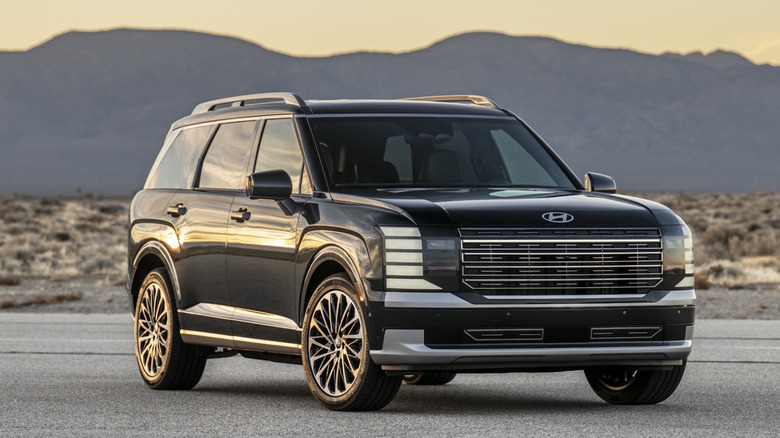
The standard 2026 Hyundai Palisade doesn't make the cut because of the V6 power, but the hybrid version does. Its 2.5-liter four-cylinder engine combines turbocharging and a hybrid setup for combined output of 329 horsepower and 339 lb-ft of torque, edging out the Enclave. With the standard FWD configuration, the Palisade Hybrid starts at $45,760 for the Blue SEL trim. Thanks to hybrid technology, fuel economy is leaps and bounds above the others, with combined fuel economy at 31 to 34 mpg, depending on the trim.
Most editions seat seven, but lower grades offer an eight-passenger option. Lengthwise, the Palisade Hybrid sits on the shorter side, measuring 199.2 inches front to back. However, 41.4 inches of second-row legroom places this Hyundai near the top. It's more in the middle, with 32.1 inches of third-row legroom and 86.7 cubic feet of maximum cargo space.
2026 Ford Explorer
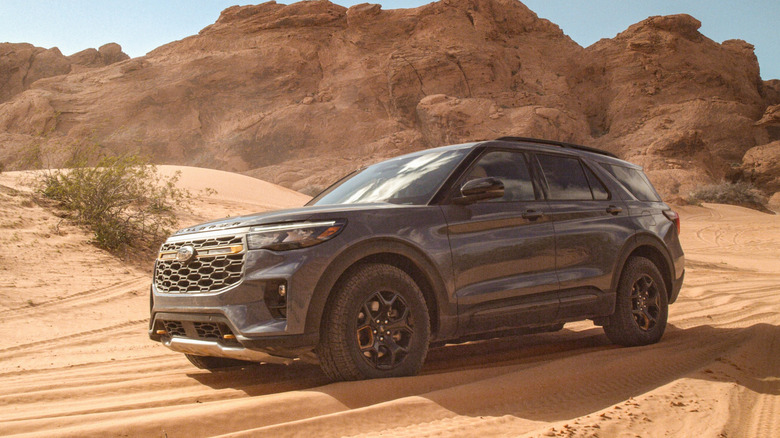
At 198.7 inches long, the 2026 Ford Explorer is the shortest SUV covered here. This is reflected in modest second-row legroom of 37 inches — the least of any of the seven listed) and below-average third-row legroom (31.8 inches). Its 85.8 cubic feet of cargo capacity also puts the Explorer at the lower end of the range. This three-row Ford can seat six or seven people, depending on the trim.
The Explorer stands out for its architecture. Like the Grand Cherokee L, it offers standard RWD, amid a sea of FWD or AWD competitors. However, unlike the Jeep, it comes standard with turbocharged four-cylinder power. In this case, it uses a 2.3-liter EcoBoost engine that makes 300 horsepower and 310 lb-ft of torque. And along with ample power, with a combined fuel economy rating of 24 mpg, the base Explorer ekes out slightly better efficiency than most of its rivals. The entry-level Active trim has an MSRP of $40,260, making the Explorer the cheapest model on the list.