

Baseball Fans Rejoice, AM Radio For Every Vehicle Act Passes House
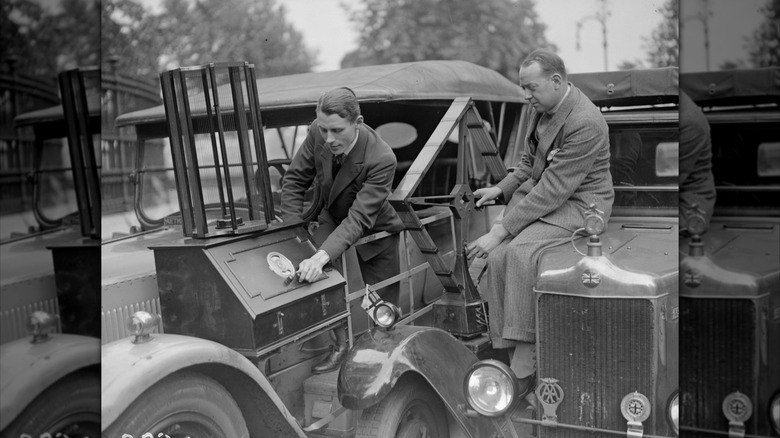
There's nothing quite like the classic crackly sound of a baseball announcer's play-by-play coming through an AM radio, especially if you were born long ago, like in the 1900s. And for what may be the first time ever, it seems that the U.S. Congress agrees with Jalopnik about cars, passing the AM Radio for Every Vehicle Act, reports RadioWorld.
The act would require every car sold in the U.S. to be equipped with an AM radio within one year of being signed into law. This may seem a bit silly, since every car most of us have ever owned has come with a radio (unless it's a project car and/or theft victim that had its radio removed). But lately, some manufacturers have eliminated AM radios in certain models, particularly EVs. Their large motors and other systems generate electromagnetic interference that comes across as static on the AM bands, similar to the way lightning causes a static crash.
The real fix for this is to add shielding to the components that cause and receive the interference, as well as filters that allow the desired signals to pass through while keeping the static out. Digital signal processors and active noise cancelation can also help. But since doing this could cost automakers billions, what they've actually done is simply remove AM radios from their cars, because who listens to that old stuff anyway?
When all else fails
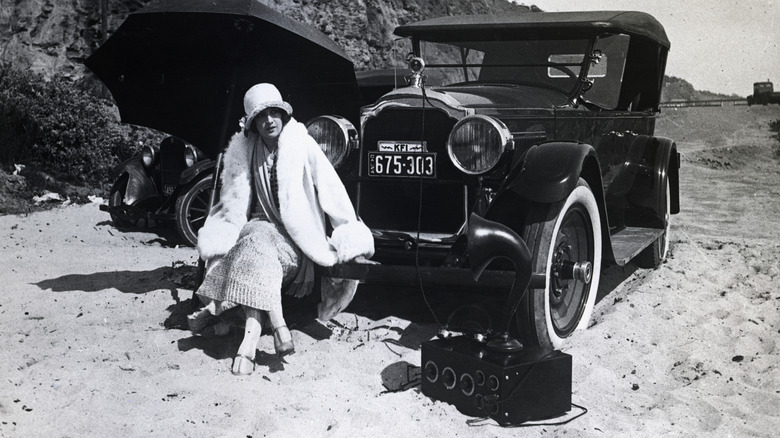
It turns out that more people still listen to the radio than you might think. Even today, more than half of our in-car audio time is still AM/FM radio. PBS News reports an even higher figure, that over 80% of Americans listen to the radio at least once a week, and 20% still listen to AM, particularly older listeners.
The AM Radio for Every Vehicle Act does not exist to preserve the broadcasts of baseball, religious programming, or right wing talk shows that you commonly hear on the airwaves, but as a vital communication link in the event of an emergency. AM broadcast radio can travel long distances, particularly at night. It is invulnerable to internet or cellular outages, requiring little more than a generator, transmitter, and antenna to stay on the air even during a catastrophe. Unlike most services these days, you don't even need to pay a subscription fee to listen to it.
That's why it's an integral part of FEMA's Integrated Public Alert and Warning System (IPAWS). Much of rural America still does not have reliable cell coverage, so those jump-scare emergency alerts from your phone may not get through in time to warn you that a tornado's about to strike. Many people in these areas rely on AM radio for such information. Unlike your phone, it's also safe and legal to use while driving.
Despite this, automakers still dispute the modern relevance of AM radio. Some even claim that if they are forced to accommodate it as the act would require, they would have to eliminate certain safety features to do it, according to Automotive News. If the act passes the Senate, they may have no choice but to make it work anyway. In a rare show of bipartisanship, Senators Ed Markey of Massachusetts and Ted Cruz of Texas are co-sponsoring it, so it seems likely to pass. President Trump has also indicated his willingness to sign it into law, which would ensure that you can keep listening to baseball games on your new car's AM radio for at least the next ten years.