

Why Hasn't America Produced An International Racing Legend In At Least 30 Years?
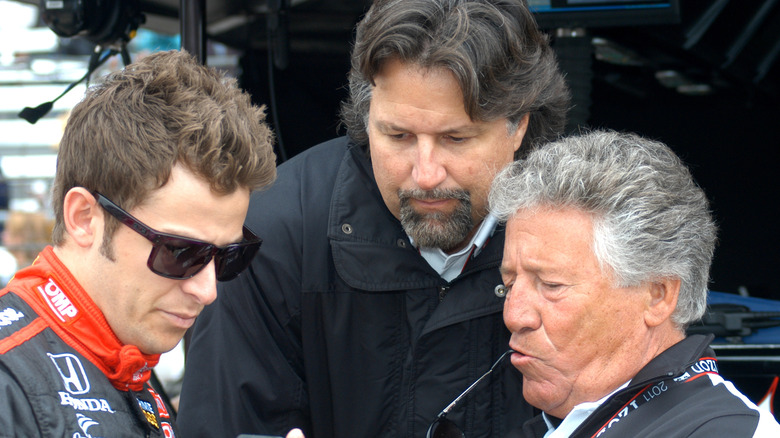
Many years have passed since the greatest drivers in the world counted at least a few Americans amongst them. Long gone are the days of immigrant legend Mario Andretti, F1 champ Phil Hill, and the revered Dan Gurney; there have been just four Americans in Formula 1 in my lifetime (I was born in 1987). Mario Andretti was the last American to win in F1, and both his son and grandson have already retired from racing. Heck, an American hasn't won the Le Mans 24 overall since Davy Jones won with the Joest team in 1996. No American driver has ever won a World Rally Championship (WRC) event. Even domestically, only three American drivers (Sam Hornish Jr., Ryan Hunter-Reay, and Josef Newgarden) have won an IndyCar championship since 2000.
If Americans aren't winning on the world stage, or even in our domestic open-wheel series, where are we winning? How did a founding global superpower of motorsport fall from grace this hard? At one time the world of motorsport was mostly America versus Germany, England, Italy, and France, with a few interlopers (Bruce McLaren, for example) from the Antipodes. Those European nations are still involved in international racing, and have been joined by other Euro nations to become the region from which most world champions arrive.
As the U.S. continues to throw away its soft power internationally, investing in our motorsport pyramid and taking back our place on the circuit could help revive that and bridge some gaps between us and our allies and trading partners. I lived in Spain when Fernando Alonso won his first F1 world title, and the country felt positively electric as a result. Perhaps an American winning in F1 or WRC could unite us all.
The increased popularity of NASCAR
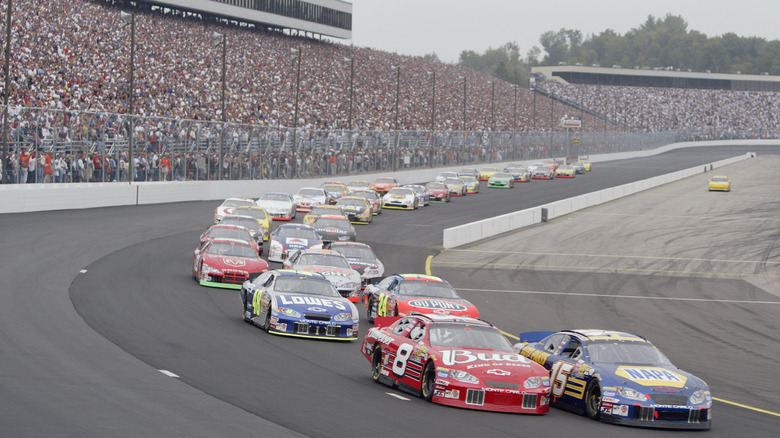
Think back to the mid-1990s, and where motorsport was in the national consciousness. In 1996, American open-wheel was cleft in twain with the Split, not only pulling teams, budgets, and talent in two directions, but playing down its importance altogether. This schism tamped down the American open-wheel development ladder, giving less incentive to young drivers to pursue a career, and opening the door for another motorsport to grow into the space vacated.
Through the late 1990s and into the early 2000s, NASCAR went on a growth tear. It evolved from a regional sport into a national behemoth, drawing sponsorship dollars that had never before considered racing. With this popularity came paydays, and drivers near the top touted multimillion-dollar salaries. Not only did America's young racers grow up seeing NASCAR as the place to make their living, but the series cultivated that desire with an inexpensive ladder to climb up to your position in Cup. Hundreds of local tracks funneled their best and fastest young drivers into regional NASCAR-sanctioned championships, and up into Automobile Racing Club of America (ARCA), Trucks, and Grand National before getting to the top to fight with the best of the best.
Access, affordability, and potential superstardom pushed lots of young American drivers into the NASCAR funnel instead of moving over to sports cars or open-wheel. Take current American youth racer Connor Zilisch, for example, who cut his teeth in sports cars as an MX-5 Cup winner. He could easily have continued on his sports car trajectory and be racing at Le Mans (he has class wins at the Daytona 24 and Sebring 12 Hour). He turned his focus toward circle track racing instead, and just signed a 2028 deal with Hendrick to drive the No. 48 Chevrolet.
The increased cost of racing

One major reason American drivers aren't jumping into international series, and instead stick close to home: We just don't have the exposure to international racing the Euros do. Formula 1 has traditionally been a Euro-centric series with its own open-wheel ladder of spec racer classes largely competing in continental Europe. Despite some excitement among Americans when Ford won Le Mans in the 1960s, we've always held the race in France at arm's length. As it turns out, it's really expensive to send your kid to Europe to start an open-wheel racing career, much more costly than getting them a Legends car or a go-kart and signing them up for a league at the small regional track 20 miles away.
Even with a booming national sports car series in the International Motor Sports Association (IMSA) SportsCar Championship, it's hard to find Americans in the winner's circle. Of the eight rounds held thus far in 2026, only one race, the Road America round, was won by an American driver (Ricky Taylor, paired with Portuguese driver Filipe Albuquerque in a Cadillac). And only one American, Colin Braun racing for Acura (paired with British driver Tom Blomqvist), found victory lane in 2025. There's a robust sports car ladder for young drivers to climb, but with a season of MX-5 Cup running into the hundreds of thousands of dollars, it's hardly easy to reach even the bottom rung unless you were born into generational wealth.
Maybe things would be different if, instead of racing around in circles at Daytona Beach, the American bootleggers had turned driving against the clock on dirt roads into a sport. If the so-called good old boys had invented rally instead of NASCAR, there might be an American in the WRC history books.