

How Much Do You Care About Branding If The Car Is Really Good?
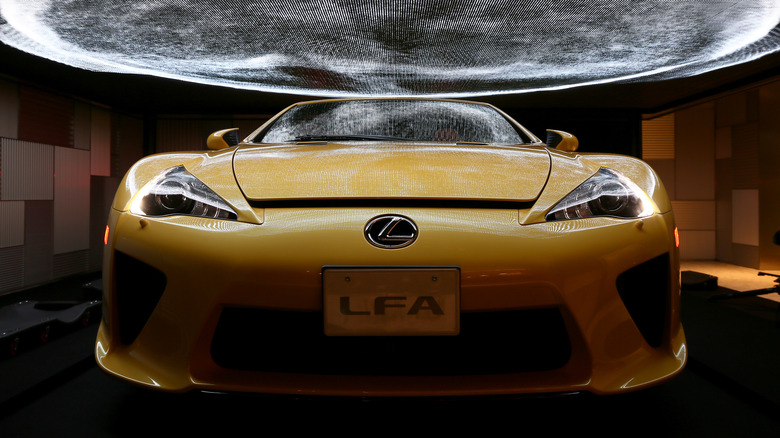
Here's a thought experiment for you. If a new brand were to launch today with no prior marketing and no ties to any existing brand, you know nothing about them, how much are you willing to throw your money in their pocket if the product is really good. There are some similar historical analogues, like the Lexus LS400 winning over Mercedes-Benz buyers in the early 1990s, or the Acura NSX pushing Ferrari back to the drawing board. While both of those brands had ties to existing brands, they were effectively brand new to the game, as Toyota had never built a hyper luxury car before, and Honda was new to the mid-engine supercar world. Lexus did it again in the 2000s with the much-respected LFA, making an exciting supercar that nobody thought was possible. Maybe Tesla is a better one for this, as it launched the original (and only) Roadster with an unproven brand, then-unproven technology, and basically built a brand new market from the ground up. Did you trust these new brands then, and do you trust them now?
This is a knock-on question from last Saturday's QOTD when I asked you to tell me all your thoughts on Chinese cars. Let's kick it up a notch. Let's say some Chinese brand was able to build exactly the vehicle you wanted for less than a U.S. brand could ever compete with. Maybe a competent F-150 competitor for $25,000 or a new Miata-beating two-seater for nineteen grand. Would you care what name or badge was on the car? All else being equal, how much does the brand name matter to you?
For some readers, I'm sure it's a dealbreaker. You're a long-time Mazda fan, or you have a Blue Oval tattoo, or your dad was a UAW man and you wouldn't be caught dead driving something built by a non-union shop. Cars are rarely purchased purely by what makes sense, we're all emotional animals, and we care about what we care about. How much cheaper (or better for the same money) would a competitor have to be in order for you to shift your buying preference from a trusted brand to a new as-yet-unknown manufacturer. What about Scout, Slate, REO or any number of other micro startups. Did you buy a Japanese car new in the 1960s? Did you buy a Korean car new in the 1990s? I want to hear about it.
Sound off in the comments below with your thoughts on brand loyalty and we'll discuss it. Then I'll pick a few of my favorites to recap for everyone else.
What's new is different
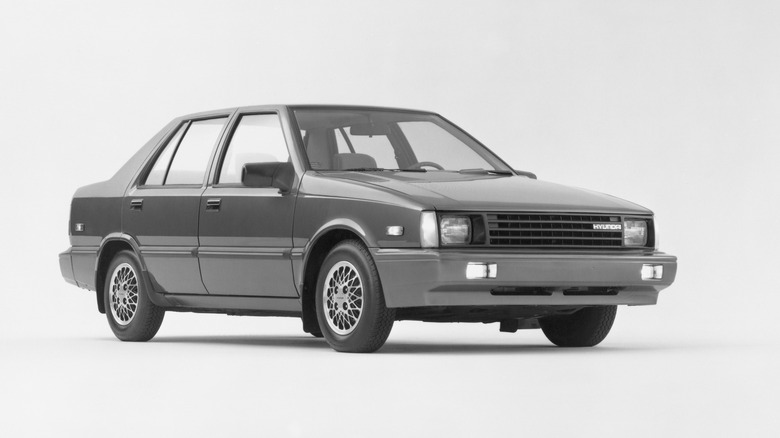
I want to leave you with an excerpt from a blog post Hyundai posted back in 2010, regarding its entry into the U.S. market with the then-new 1986 Excel subcompact.
The timing of Hyundai's entry into the U.S. market in 1986 was ideal. At that time, most automobile manufacturers had abandoned the entry-level market in favor of high-end, high-priced vehicles, leaving a large void in the market. First-time car buyers such as college students and young families were not able to find adequate, value-equipped cars that met their needs, yet were priced within their economic means.
In February 1986, Hyundai launched its subcompact Excel model in the U.S. market. Customer response was immediate; in just seven months Hyundai Motor America had sold its 100,000th Excel. Total 1986 sales numbered 168,882 – an industry record for an import car distributor in its first year.
Forty years later and we're right back where we started. Most automobile manufacturers have abandoned the entry-level market in favor of high-end, high-priced vehicles, leaving a large void in the market. With no real value-focused cars available at dealerships right now, it leaves the door wide open for a new entry to the U.S. market. From those humble beginnings Hyundai now owns an astonishing 11.8% of the United States new car market. This says to me that American car buyers are extremely cost conscious, and a new company with a cheap car, even if it's somewhat inferior product, could really come in and clean up the abandoned inexpensive car market.
Will anyone actually take that opportunity and attempt to make up for a tiny profit margin with huge volume? Time will only tell, but that seems like the perfect opportunity for a new unknown to make a splash, or maybe a long-forgotten brand to make a return. Should Isuzu or Suzuki make a run at the U.S. market again? Let me know what you think in the comments.