

The Ford Fathom Furthers FoMoCo's Fascination With Alliterative Names
Folks with an eye for history — and an ear for alliteration — probably thought "Fathom" was a fine fit for Ford's first truck built on a dedicated EV platform. After all, many of the brand's past vehicles have been brought to you by the letter "F", and at one point, the Ford Motor Co. even tried the alliteration trick with the Mercury division. When the company rolled out its so-called F strategy in the early 2000s — with cars like the Ford Five Hundred — it also premiered rides like the Mercury Montego, the Five Hundred's badge-engineered sibling. Even SUVs followed an alliterative strategy, albeit with Ford names beginning with an "E." Examples include the Ford Explorer, the Expedition, Excursion, and the compact model almost called the Excape.
Well, it turns out that the concept actually has some scientific basis. Studies cited by the Association for Psychological Science say that people remembered more of the text they read when it's alliterative than when it's not. So it's no surprise that other automakers have used alliteration as well, from the Dodge Dart to the Porsche Panamera.
Yet Ford seems most committed to the idea. True, there hasn't been a Ford car with an F designation since the Fusion was cancelled in 2020, but the F-Series counts as an example of "visual alliteration." This is when the first letters of words are the same even if the first sounds of the words are different. With that in mind, Ford has been alliterating its vehicle names since 1905, when Henry himself introduced the Model F.
What was the first Ford with an actual F name?
Technically, the title could go to the Ford Model 50 pickup, as the F-Series predecessor debuted in 1935, and "50" is as much a word as "Five Hundred." But the first Ford with a traditional name that began with "F," and not a number or individual letter, was the 1955 Ford Fairlane. The primary reason behind the choice, however, was a connection with the Ford family. "Fair Lane" was the name of his massive 1,300-acre estate in Dearborn, Mich. The location was no doubt convenient, as it's close to the automaker's River Rouge plant – once the world's largest factory. You'll soon be able to see Fair Lane for yourself, too, since it's scheduled to open to the public in 2027.
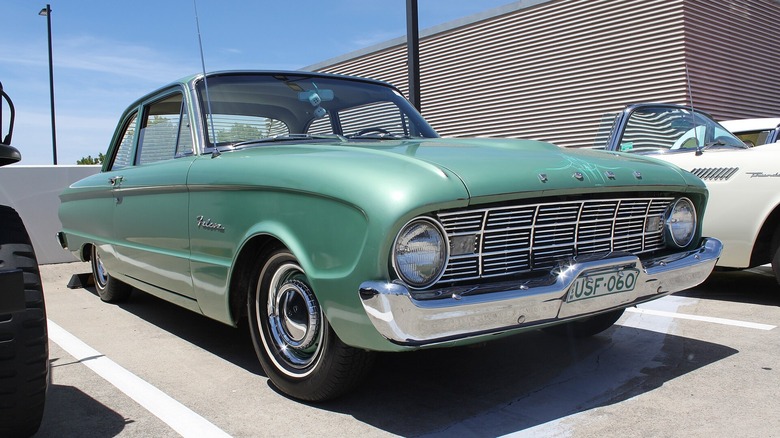
Ford again turned to the sixth letter of the alphabet to name the 1960 Ford Falcon, although it was a close call. Chrysler, which had shown a Falcon concept in 1955 to target the Ford Thunderbird, was considering carrying that name into a production model. According to one story, right before Chrysler was going to register the "Falcon" designation with the industry group in charge of such things, Ford independently and coincidentally claimed the name instead.
It was the launch of the European Ford Fiesta in 1976 that really set off the effing deluge. In the years since, Ford has released production vehicles such as the Fox-bodied Fairmont (1978), Ford Festiva (1986), Ford Focus (1998 in Europe and 1999 in the U.S.), Ford Freestar (2004), Ford Freestyle (2005), Ford Five Hundred (2005), Ford Fusion (2006), and Ford Flex (2009).
The official reason Ford picked Fathom for its new pickup truck
When it came time to pick a name for the new truck, according to the automaker, the gestation process took an appropriate nine months. And yes, that did include some time spent considering the Ranchero — a popular choice among the dopest cars we've found for sale online. In the end, the Ford team went at it the other way around. They listed the ideas they wanted the name to get across first, then went looking for the word that best represented those concepts.
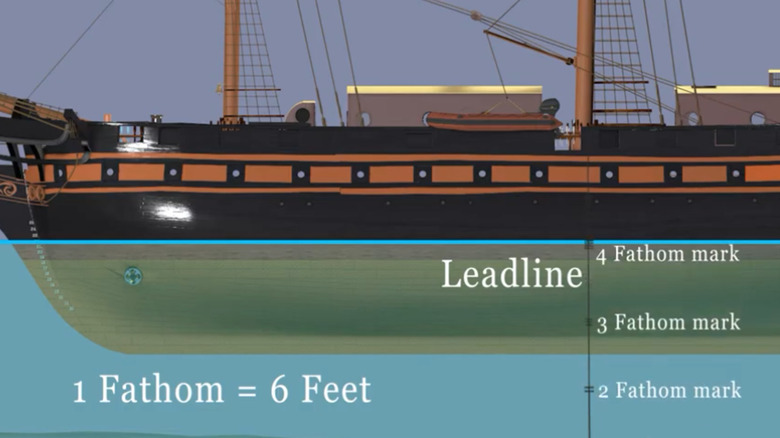
Keeping in mind this is all right from the horse's mouth — or the automaker's marketing materials, to be exact — that word was "fathom." Now, its dictionary definitions refer to either a unit of measurement for water depth or as a sort of synonym of the verb "to understand." But in Ford marketing-speak, the word "communicates depth below the surface" and "an emotional feeling of a vehicle that's more than it appears to be." That went right along with their decision to skip an alphanumeric code such as "F-150." Again quoting from Ford, a name would "give the vehicle personality, a soul, and make it a character in our customer's life."
Critics are already weighing in: We think the truck itself will be successful enough to kill off its erstwhile rival, the Slate truck, while naming experts are still up in the air about what it's called.