

Why Motorcycles With Single-Cylinder Engines Are Called 'Thumpers' (It's Not Because Of Bambi)
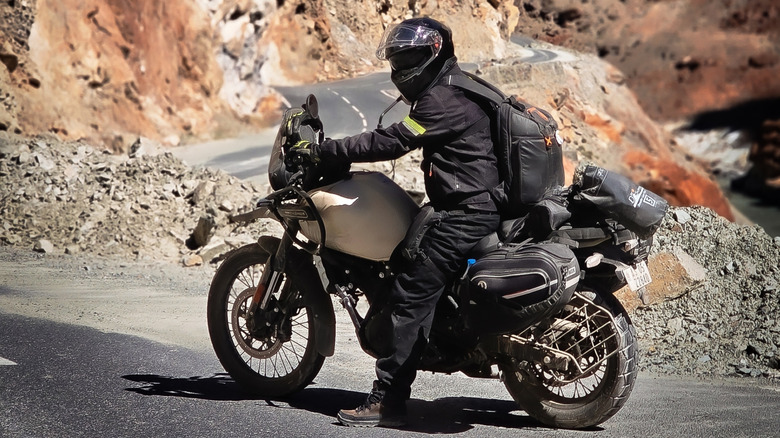
You can be forgiven if you have no clue what or who the Thumper character was from the original "Bambi" Disney film from 1942. TLDR: Thumper was a bunny rabbit and Bambi's pal. The thumpers in question for this story, however, are single-cylinder motorcycles. That vernacular is based on the term's onomatopoeic quality. Just saying thump-thump-thump echoes the noise that a single-cylinder engine makes. The bikes are often beloved for that sound — although some dislike single cylinders for that same reason, as well as because thumpers tend to vibrate more than multi-cylinder bikes. And there are a few reasons for this that we'll dig into further below.
However, there are also various advantages to singles. For one, they tend to be affordable. Caveat: If they're the world's most powerful single-cylinder engine made by Ducati, they won't necessarily be cheap.
But, in general, thumpers are cheaper because they require fewer parts on the initial build — and, therefore, there fewer parts to maintain and replace. Singles have one cylinder, a single valve train, one exhaust system, and a single carburetor (if they're fuel-injected, that's only a single injector). They also tend to be smaller in displacement and lighter, which makes singles ideal for off-roading, when balancing a heavier bike is harder.
Thumpers have displacement limits
Most current moto engines tend to have four engine strokes: intake, compression, combustion, and exhaust. So, a modern, single-cylinder engine — setting aside two strokes — is only spending 180 degrees out of 720 degrees actually making power during combustion. This makes thumpers advantageous for riding in the dirt. When you're off-roading and trying to maintain momentum, that pulse of power isn't constantly overwhelming the tire and ripping away grip. Yes, there are plenty of twin-engine off-roaders, but these tend to increase in displacement, which makes them heavier and harder to handle.
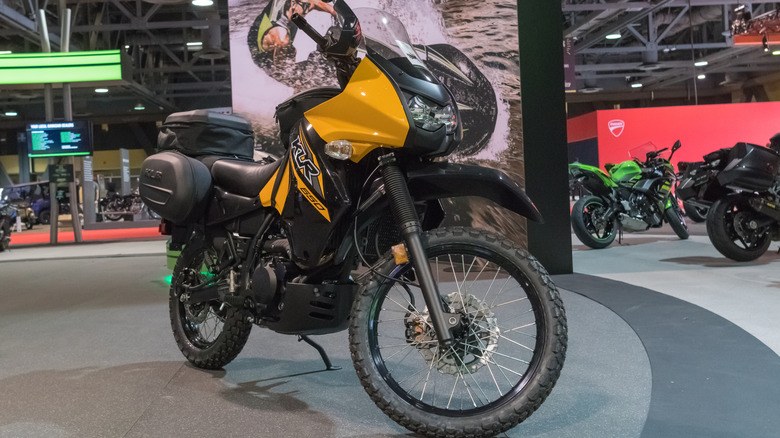
However, there are the downsides to sticking with single-cylinder propulsion. All those vibrations don't just make the riding experience hard on your, uh, nether regions and hands. There are literal physical limits on the displacement of single-cylinder engines before those vibrations become overwhelming for the rider and the engine. One stalwart big single is the 650cc Kawasaki KLR, which is still in production and began life in the mid-1980s.
In the late 1980s to 1990s Suzuki pushed the limits further than Kawasaki, producing what's believed to be the largest-displacement production single, the DR800S, also known simply as the DR Big. But because of all that reciprocating mass and the extraneous motion it produces, to generate more power that's smoother, manufacturers have mostly kept their singles small and, for more power, moved to twins and beyond, because they can rev higher — and don't sound like lawnmowers.
Old thumpers may increase in value
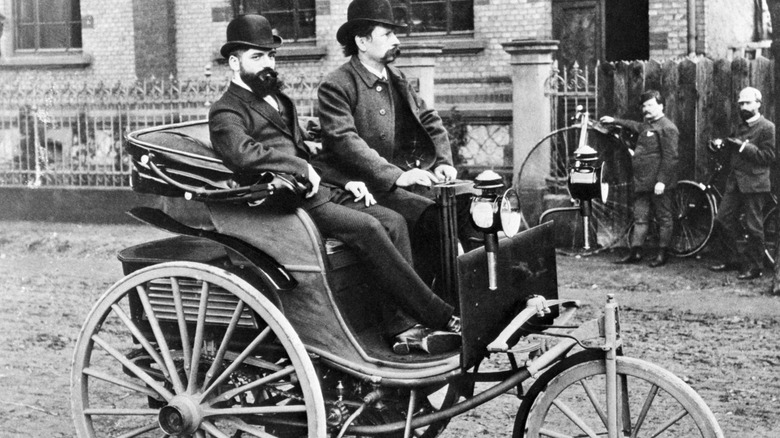
Thumpers go way back — like, way, way back. One of the first automobiles was made by Carl Benz (yeah, that Benz) and was a one-cylinder two-stroke that he cranked over on New Year's Eve, 1879. You can bet it thumped.
Somewhat more modern thumpers are becoming a bit popular as collectibles, according to Hagerty. A mid-1970s Honda MT125 two-stroke dirt bike has shot up 40% in value this year — but that still means paying no more than $5,000 for one. Sure, that may sound like a lot, but you'd be ripping around on a half-century-old Honda that gets more than 100 miles to the gallon! Furthermore, unlike some modern cars, you could actually work on the thing yourself.
If you'd like a bigger ride with more power, there's the 1970s XR500, a Honda that's fallen in value in collectors' eyes. But unlike the MT125, it's a four-stroke, so it'll be less environmentally unfriendly and deliver 36 horsepower, which is enough to keep up with traffic — and you may struggle to do that with the 13-horsepower MT125. Also, if Hagerty's right that the XR500 costs $3,400, it's a relative bargain. Neither of those old Honda thumpers is quite as collectible as that O.G. Benz, but we'll bet that in the 90-year interval, single-cylinder engines got just a tad more reliable.