

Inflation In Action: How Much A Porsche 911 Turbo Cost In 1976 Vs. 2026
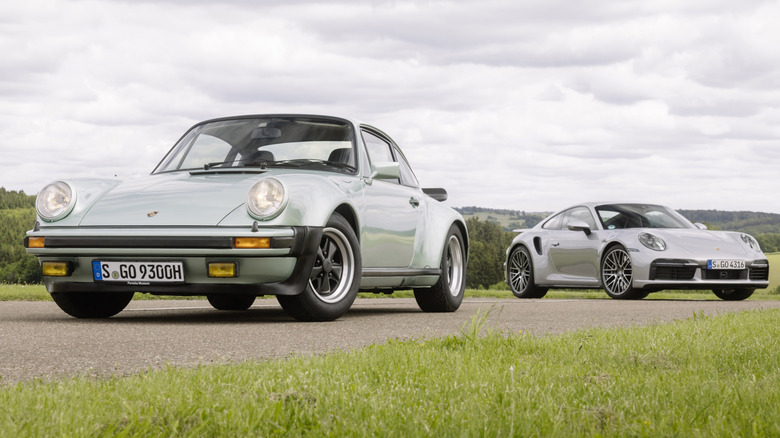
It's been a long time since 1976. Porsche's 911 Turbo has dominated the forced-induction speed conversation for 51 years as the Stuttgart automaker continues to introduce new technology. Each successive generation of 911 Turbo has become faster, quicker, and more. They've also gotten shockingly expensive in recent years as Porsche continues its long charge upmarket, pushing into Ferrari territory. For the 2026 model year the 992-generation Turbo S is exclusively available with a hybrid drivetrain and costs over $270,000 with no options. This car has come a long way from its "doctor killer" manual transmission and snap-oversteer roots.
With inflation what it's been over the last few years, seeing that starting price raises the question of whether this was a pretty normal progression of car-per-dollar since 1975, when the 1976 model debuted, or if Porsche has been pumping the numbers up. A 911 Turbo has traditionally been the kind of car that someone in the upper middle class of America could stretch to afford. It was the plaything of doctors and dentists rather than captains of industry or day traders on a crypto come-up.
The cost of a brand new 911 Turbo in 1975 was a mere $25,975. According to U.S. Census data, the 1975 median family income was $13,720. These days a 911 Turbo S starts at a massive $272,650 delivered, while the median family income is about $83,730 as of the most recent information from the Census. So it used to be that two years of income would buy you a 911 Turbo, but these days it would take more than 3¼ years to make the money a 911 Turbo costs. Adjusted for inflation, that $25,975 911 Turbo in 1976 equates to just $166,495 in 2026 dollars, over $100,000 less than today's price. What happened? How did we get here?
Why so much?
Porsche's 911 Turbo has always come at a pretty hefty premium. Even in the case of that original Turbo back in 1975 it was more or less double the cost of a standard non-Turbo 911, which started at $12,835. Today's standard Carrera 2 is $137,850, by way of comparison. So the Turbo-to-base-911 ratio has remained the same at roughly double; it's just that both have seen a 10x increase in price. Let's compare specs to find out more.
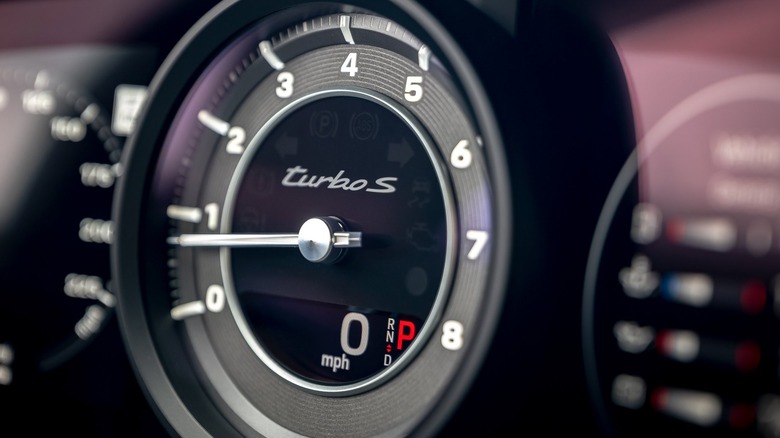
The current 911 Turbo S is a technological powerhouse, incorporating hybrid technology for 701 peak horsepower and 590 lb-ft of torque, all-wheel drive traction, and an incredibly quick PDK double-clutch transmission for maximum acceleration force. A 0-60 run comes in just 2.2 seconds, per Car and Driver, while a quarter-mile run is just 10.0 seconds. Porsche says its top speed is 200 mph. Four decades ago Porsche needed to build a dedicated supercar to even come close to touching that kind of speed, and 50 years ago it was basically untouchable outside of an unrestricted race car.
Back in 1975, the Porsche 911 Turbo didn't even come with an intercooler. That early 3.0-liter non-intercooled aircooled flat-6 engine produced just 256 horsepower, but that seemed like a lot back then. Looking just at acceleration data, the 911 Turbo used to be a lot slower than it is today, running a 5.4-second 0-60 time and a 13.9-second quarter mile. That lack of power and comparatively rudimentary understanding of aerodynamics meant the 1975 car was only capable of a 157 mph top speed.
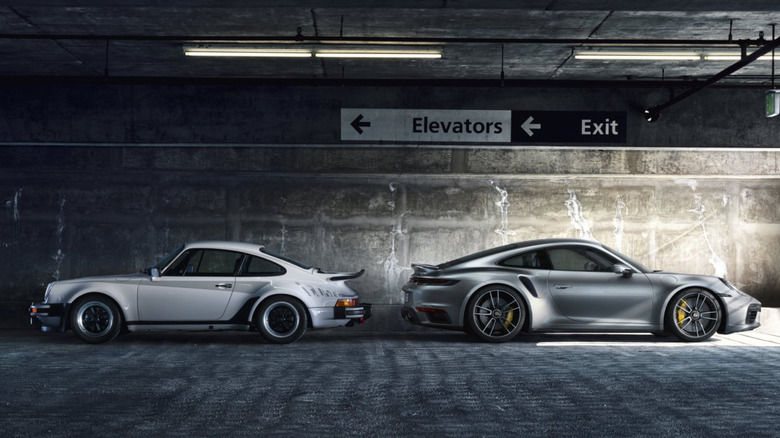
Another reason the new car costs more? There's just more car there. The current 911 Turbo S weighs almost 1,200 pounds more. It's over 10 inches longer and 5 inches wider.
Has it always been this way?
Let's run down what a 911 Turbo cost in each decade when they were new. The 911 Turbo was banned from U.S. sale between 1979 and 1986 because it couldn't pass American emissions regulations. By the end of the 1980s it was already getting expensive with a 1989 model retailing at $71,630. Prices continued up through the 1990s with the 3.6-liter Turbo priced at $99,725 in 1994. The 993 Turbo, now with all-wheel drive, ballooned up to $105,745 by 1997. My beloved 996-generation Turbo, the first of the water-cooled models, would have cost you $119,165 in 2004. The 997-generation Turbo started at $137,500 in 2012. In 2016 when the 991-generation ended, the Turbo was up to $151,100.
By the 2025 model year, before Porsche introduced the hybrid gubbins to the 992.2 911 Turbo S, a standard Turbo coupe had become $197,200, while a Turbo S (non-hybrid) was $230,400. Porsche hasn't launched the non-S 992.2 Turbo yet, so expect the cost of entry into 911 Turbodom to come down when it does.
That's a lot of words to say that a 911 Turbo has gotten expensive over the years, and average American wage growth hasn't kept up with inflation for decades. Then again, it seems like a lot of cars are around 10 times more expensive than they were in 1975. A base Corvette back then was $6,550, while a new C8 Stingray will run you $73,495 delivered. Similarly a base model Mustang II was $3,801 and today an Ecoboost with no options is $34,990. Maybe it's not Porsche's fault that its cars have gotten so pricey.