

What 'Adopt-A-Highway' Actually Means
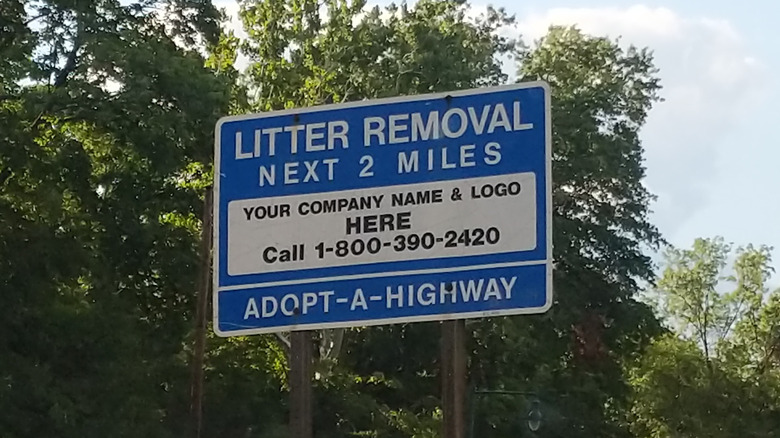
Those roadside signs crediting a local business or civic group for a stretch of pavement aren't purely goodwill gestures. They're the visible end of a program that has saved state governments millions of dollars in cleanup costs and turned highway maintenance into a form of community participation — one that also carries its own set of legal complications nobody talks about.
The first Adopt-A-Highway sign went up on Highway 69 in Tyler, Texas on March 9, 1985, a year after the state's program started. The concept stemmed from a Texas DOT employee who attempted to organize volunteers to handle litter pickup on stretches of state highway that would otherwise require paid crews. States quickly recognized the cost savings and replicated the structure. The program eventually spread to all 50 states, including countries like Australia, most of Canada's 10 provinces, and even Japan during their Road Appreciation Month.
Domestically, the mechanics are consistent across most states. For example, in Texas, a group applies to adopt a minimum two-mile stretch of highway for a two-year period, commits to conducting litter pickup at least four times per year, and in return, receives recognition on a roadside sign. State agencies typically supply reflective vests and trash bags. Texas Adopt-A-Highway and annual Trash-Off event volunteers removed nearly 76,000 pounds of litter from state roads in 2025. Adopt-A-Highway volunteers in other states like Michigan collect more than 60,000 bags of trash annually.
America's extensive interstate highways and high-volume roads are generally excluded from volunteer adoption due to safety concerns. Some states run parallel Sponsor-A-Highway programs for busier roads, where organizations pay professional contractors to handle cleanup rather than sending their own people onto fast-moving traffic.
What you actually get through Adopt-A-Highway
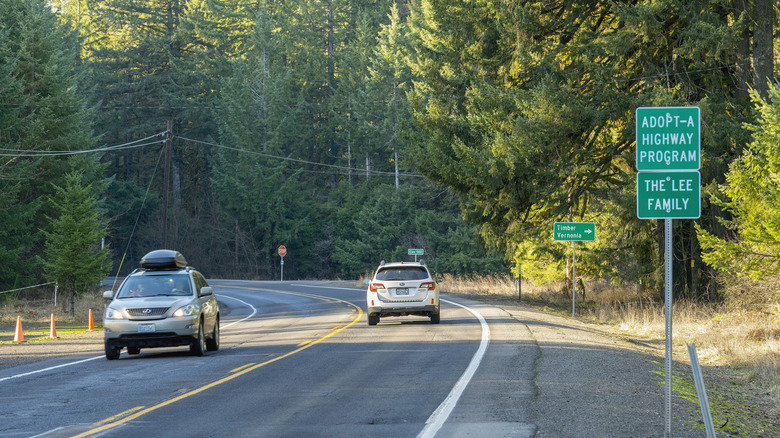
For civic groups and nonprofits, the benefit of Adopt-A-Highway is public recognition tied to a tangible community contribution. For businesses, it functions closer to targeted outdoor advertising: a sign with the company's name in a fixed location, seen by every driver on that stretch, at a fraction of the cost of a roadside billboard. Some Adopt-A-Highway organizations have noted that on a per-impression basis, an adoption sign can trump traditional billboard advertising for local businesses since it comes with the reputational benefit of visible community investment in a less cluttered space.
The program's openness is also the source of its most notable controversies. Because Adopt-A-Highway programs are generally open to any qualifying organization, they've become testing grounds for First Amendment law. The KKK argued for — and won — the right to adopt a stretch of Missouri highway, a legal battle that went to the Supreme Court. The section was subsequently renamed the Rosa Parks Freeway.
A Pittsburgh strip club also adopted a portion of Parkways East and West in 2012, which Pennsylvania's ever-precise DOT permitted on the grounds that it kept the roads clean and reduced taxpayer costs regardless of the sponsor's business. South Dakota eventually removed names from its signs altogether rather than continue adjudicating which organizations the state was comfortable publicly recognizing.
The program works. It saves money, reduces litter, and gives organizations a low-effort way to contribute to public infrastructure — and you might even be able to buy a retired adopt-a-highway sign. However, who gets to adopt-a-highway can get considerably more contentious.