

Performance EVs That Have Depreciated Faster Than The Ford Mustang Mach-E Over 5 Years
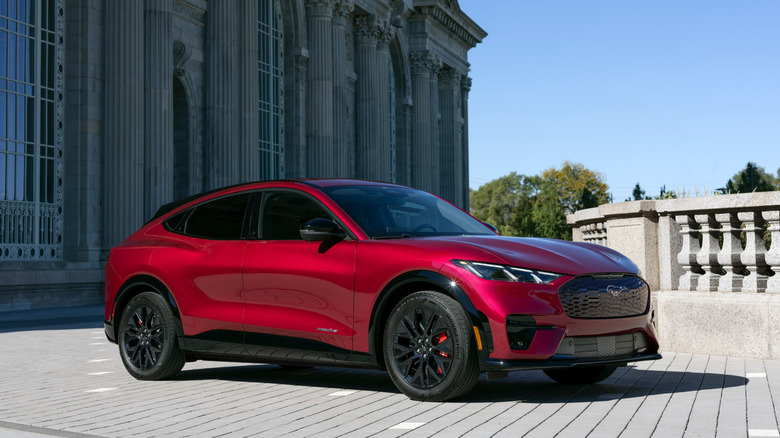
There are some cars that we wish would just hurry up and depreciate faster, and then there are cars that really do not need any encouragement to shed their value. The Ford Mustang Mach-E falls into the latter camp, losing 57% of its value within the first five years alone, according to CarEdge, and that's based on a good-condition example covering a fairly typical 13,500 miles per annum. It's a similar story from iSeeCars, which predicts the Mach-E loses a whopping 60.9% during that same timeframe.
So the moral of the story is clear: no matter where the facts are from, the Mach-E is a poor performer when it comes down to residual values. However, it's not the worst depreciating car out there. In fact, it's not even the worst performer in its performance EV sector.
A luxuriously finished Jaguar I-Pace makes the Mach-E's depreciation patterns look almost tame, as does the Tesla Model X. The former sports almost 400 horsepower, while the latter kicks out north of 1,000 in certain trims, so it's easy to argue they fall into the same performance EV category as the Mach-E. The Audi RS e-tron GT does, too, despite straying away from the more obvious and sometimes devoid-of-character fast-EV SUV recipe.
Here's how these performance EVs depreciate
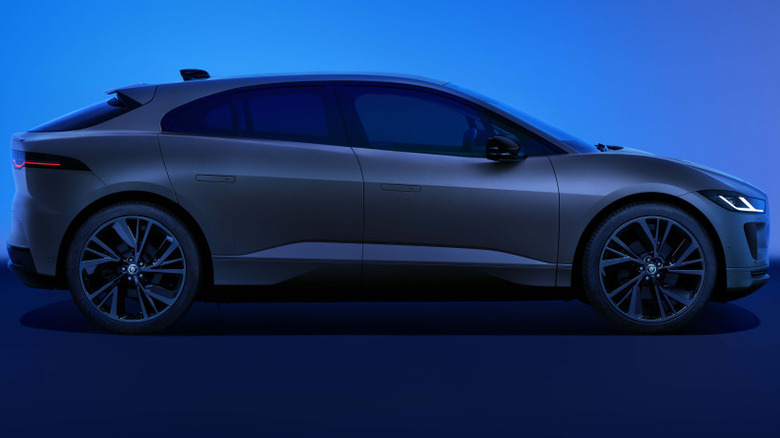
Starting with the Jaguar I-Pace, it's probably no surprise to read that it loses value faster than the Blue Oval. After all, the British entry has received more than its fair share of bad press over the years, perhaps most notably due to fire-risk recalls. According to CarEdge, the Jag depreciates by a huge 71% throughout the first five years of ownership, eclipsing the Mach-E's 57%. Further, data from iSeeCars showed this Jaguar depreciating faster than any other vehicle in the last five years. The iSeeCars study analyzed over 800,000 five-year-old used cars sold from March 2024 to February 2025. The I-Pace would move aside after its 2024 model year, making way for Jaguar's controversial rebrand.
As for the Tesla Model X, it doesn't fare quite as poorly as the Jaguar. However, it isn't plagued by the I-Pace's fire-risk recalls, so perhaps it has less of an excuse for its poor pricing behavior. Once again, the Mach-E's depreciation looks almost tolerable in comparison, at 57% lost over 5 years against the Model X's 67%, per CarEdge. To put that into perspective, the data predicts a 2021 model with a starting value of $95,755 would now be worth only $31,254.
Kelley Blue Book (KBB) findings are slightly more favorable, but ultimately similar. KBB reports a Fair Purchase Price (FPP) of only $37,700 for the Model X Long Range Plus Sport Utility 4D ($81,190 original MSRP), reflecting 54% depreciation.
Experts at KBB also highlight $41,400 as the FPP of the Model X Performance Sport Utility 4D trim, with the original MSRP being $101,190. Those Performance Sport Utility 4D figures detail a harrowing 59% depreciation. Price cuts a few years ago are partly to blame for the Model X's steep depreciation, as lower new model costs naturally reduce used values. Still, simply belonging to the premium EV sector is damning enough for resale prospects.
Audi's electrified flagship is another heavy depreciator
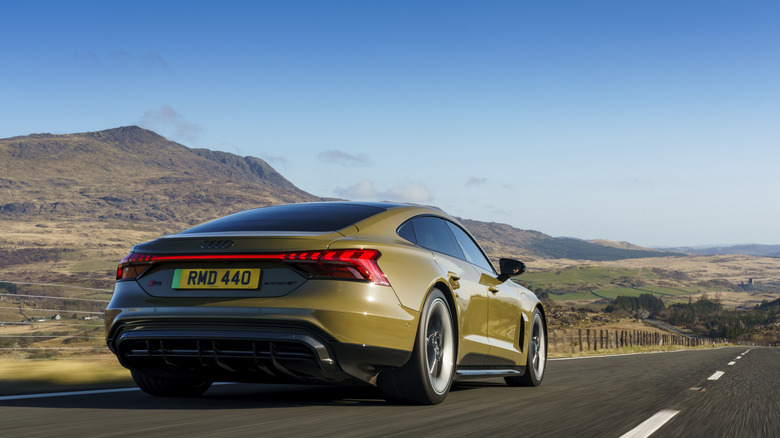
The most heavily depreciated examples we've highlighted so far have been crossover SUVs. Audi's RS e-tron GT changes the formula, sporting a low-slung sedan body style, very similar to that of the Taycan, with which it shares a platform.
Porsche's Taycan depreciates by 55% within the first 5 years of ownership, according to iSeeCars. Hardly great news for first owners, but better than the aforementioned models, and most crucially, an improvement over the Mach-E. Swap the Porsche emblem out for Audi's four rings, and the picture changes. The RS e-tron GT drops a staggering 63% of its value within that same time period.
Even 637 horsepower and a 0 to 60 mph time of 2.9 seconds isn't fast enough for the Audi to escape the trap of premium EV depreciation. The earliest models from the 2022 model year are just approaching 5 years old now. When new, they sported a $143,895 sticker, but the cheapest examples now sit perilously close to $50,000. Shedding almost $100,000 in 5 years is some seriously impressive depreciation, and it quickly overshadows the cash lost by Mach-E owners.