

The Jaguar I-Pace Has Depreciated Faster Than Any Other Car Over 5 Years
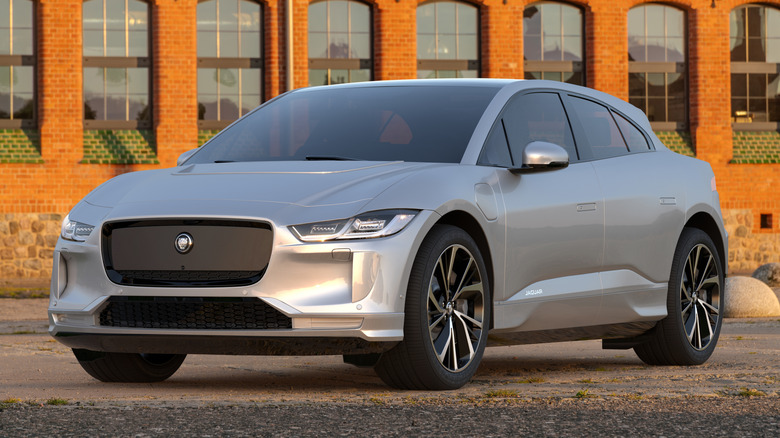
Jaguar launched the all-electric I-Pace in 2018 with a dual-motor setup offering 394 horsepower and 513 pound-feet of torque. Its best year came almost immediately in 2019, when the brand sold more than 17,000 examples. In America, however, that figure was just 2,594, with a total tally of less than 12,000 across its production run — a volume that says a lot about its popularity among buyers. Today, the model sits at the top of our own list of the fastest-depreciating cars, and for a good reason. Working from sales that ran March 2024 through February 2025, iSeeCars looked at 800,000 cars — each exactly five years old — matching their current prices against what those cars had originally stickered for. The I-Pace finished last, with an average loss of $51,953, or 72.2% of its original MSRP.
That result is especially staggering when put into a broader market context. iSeeCars measured an average depreciation of 45.6% across every vehicle in the study, and 58.8% across electric models alone. Ranked second on the same table, the BMW 7 Series sedan depreciated 67.1% — the closest any car came to matching the Jaguar. That's still a solid 5 percentage points less than the Jaguar. For scale, while iSeeCars measured a typical five-year-old car losing $17,395 in value — the Jaguar shed roughly three times as much. Here's the bigger picture on Jaguar I-Pace depreciation and why it tops the charts.
A closer look at the Jaguar I-Pace value loss
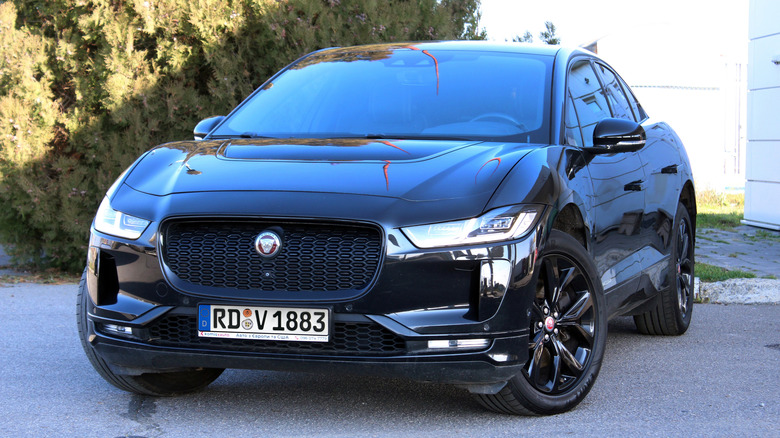
The valuation books tell a similar story about the I-Pace's depreciation, but with slightly different math. CarEdge lands on 71% over five years, leaving $21,598 of the Jaguar's original MSRP. Its projection is built on a $73,688 purchase price and 13,500 annual miles, with the car assumed to be well-kept. By CarEdge's ranking, a 2020 example is the pick of the range — buyers are paying roughly 29% of what it stickered for when it was new. Kelley Blue Book's (KBB) read on individual model years is bleaker still. Three years have taken $19,775 off a 2020 I-Pace's price — a 53% slide. What is left comes to a $16,900 total resale value, or $15,300 on trade. KBB drops that car into the worst quartile of all 2020 SUVs for value retention, with an average annual loss of roughly $6,591.
Auction results put a face on those projections. In May 2024, The Autopian covered a 2019 example with 98,000 miles and two prior owners that crossed Cars & Bids at $16,250 — $71,269 below what it cost new. This is high mileage, so it's not representative of the average, but it gives a better idea of where the floor sits. Two years ago, we covered how you can get a $90,000 I-Pace for less than a Toyota Camry — a 2019 First Edition that had already given up 63% of its $89,794 sticker. Newer examples have not been spared either. KBB now has the 2024 models down to just 48% of their original value after two years. This equates to $35,675 lost, with the resale value sitting at $37,600 and trade-in value at $35,000. That works out to $17,837 a year, against $6,591 for the 2020 — suggesting most of the depreciation happens in those first few years.
Why does the Jaguar I-Pace depreciate so much
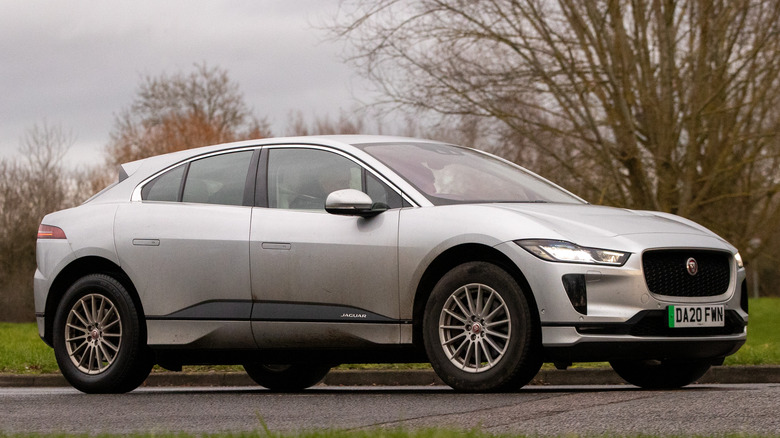
None of this happened by accident. The I-Pace shipped with a 90 kWh battery, 246 miles of EPA range, and topped out at 100 kW on a DC fast charger – numbers that looked strong in 2018 and ordinary by the time the car went away in 2024. EV technology moves fast, especially where range is concerned, and this is where the I-Pace simply can't keep pace with newer EVs. The Porsche Macan Electric, a changed car for changing times, carries a similarly sized pack — 100 kWh gross, and roughly 95 usable – and returns between 288 and 315 miles on that same EPA cycle. Peak charging climbs from 100 kW to 270 kW — almost three times faster than the I-Pace. Jaguar Land Rover shut the line at Magna Steyr's Graz plant in December 2024, and the recall history did not help either.
In June 2023, Jaguar called back 6,367 cars spanning model years 2019 through 2024, after eight fires were reported in the US. Software updates didn't close it out: By the end of 2024, 2,794 examples of the 2019 model year were headed for buyback (via Green Car Reports), and NHTSA recall 26V067 in February 2026 pulled in another 2,278 cars from 2020 and 2021. A permanent remedy still doesn't exist. In the meantime, affected cars run on a software patch that limits charging to 90% — a notable compromise for a car with already limited range. Taken together, the aging charging hardware, repeated battery recalls, and end of production give used buyers plenty of reasons to be cautious — and the market has priced the I-Pace accordingly.