

Science Explains Why Driving Can Feel So Thrilling
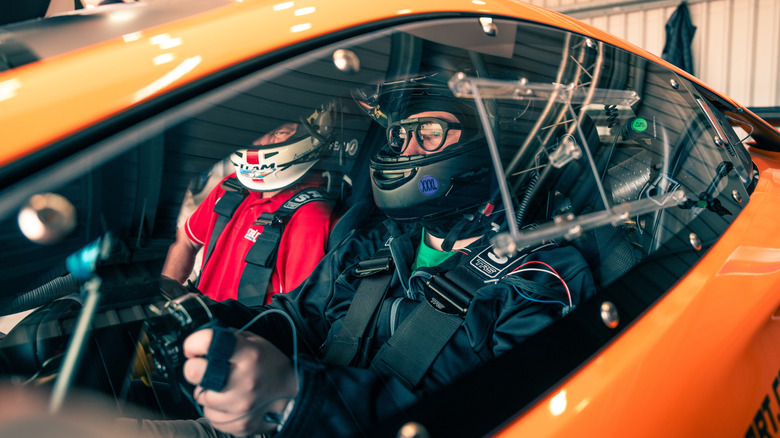
The thrill of driving doesn't need an explanation, but Castrol commissioned a study to try to explain it anyway. The results likely won't surprise any driving enthusiast, but they do explain why we feel the way we do when we get that thrill behind the wheel.
Test subjects were fitted with numerous sensors, including heart, skin, and eye sensors, plus an EEG to record brain activity. Then they took part in various automotive activities, from an off-road drive in Land Rovers to karting to driving a McLaren on a track. Brainbox, a neuroscience research company in the UK, analyzed the data and came up with some concrete answers about what, exactly, gives us that thrill. From PR Newswire:
...driving thrill comes from the convergence of three key factors in an elevated state: visceral (intense state of mental and physical stimulation), intellectual (how engaged the mind is on the given task) and emotional (identifying the balance of excitement versus fear).
If any of these three factors go beyond a level that feels manageable for the individual driver (and this can differ substantially from one individual to the next), they can become overwhelmed by the different external stimuli and the experience tips from thrill into a state of fear.
Note that raw speed is not one of these factors. Anyone who's done autocross understands how thrilling it can be to push your car to (or beyond) its limits at the same speeds you drove safely on the street to get to the event. The tight, twisty course through cones keeps the speed relatively low, but challenges you to drive 100% anyway.
The same goes for karting, where the speeds and ground clearance are low, but the excitement is high, especially with traffic in the mix. This is also why many say it's more fun to drive a slow car fast than drive a fast car slow, and I agree.
A convergence of factors
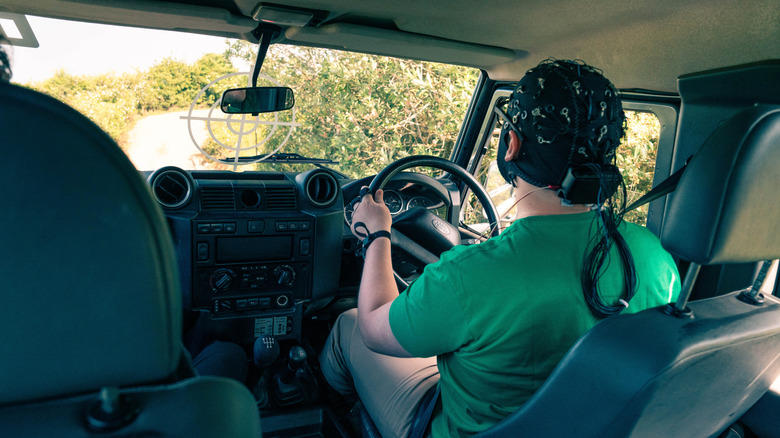
All three types of stimulation — visceral, intellectual, and emotional — must be present to give us that thrill we crave. The off-road drive in the Castrol study was fun, and picking the best line through tricky terrain certainly engages the brain. But unless you're racing the Baja 1000, it's not usually an intense experience, either. You take as much time as you need to negotiate obstacles on your own terms. It's certainly enjoyable in its own right, but it doesn't give you that same thrill.
On the opposite extreme, the test subjects took rides on the track with professional drivers and became more anxious than when they were driving the car themselves. They weren't in control, and without the intellectual task of driving to keep them focused, it was all about the feelings of going faster than they could drive themselves, which made them more than a little nervous.
The neurophysiological flow state described in the study is where you feel locked in and one with the road. You can achieve it even in a low-powered sports car, like a Miata or GR86. I would argue it's much of the reason why I love motorcycling so much. A vehicle with no body and two fewer wheels provides far more sensory input than even an open car. You have to keep your mind on what you're doing, or you could crash just from tipping over, something a vehicle with more wheels won't do.
While speed isn't required, it is fun, and even a small engine gets such a small vehicle up to speed satisfyingly quickly. It's easy for me to find that "flow" state on a bike without even exceeding the speed limit (usually). I've tried and enjoyed many forms of motorsport, but even with all those experiences in mind, I'd rather just go for a bike ride to relax and blow off some steam.