

This US City Bans Running Out Of Gas, So Make Sure You Fill Up
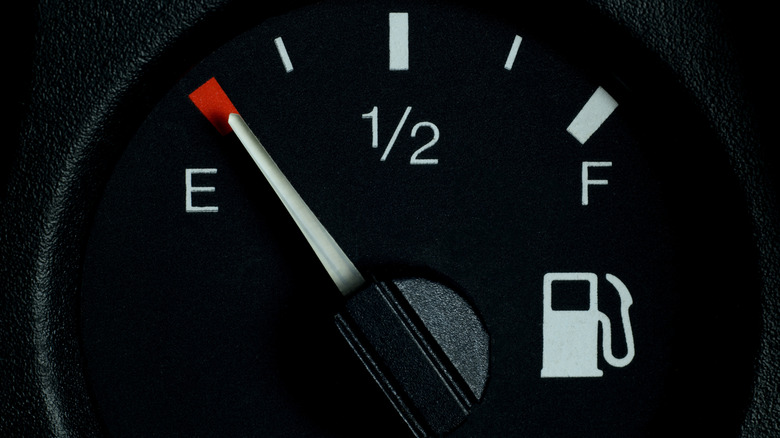
The price of gas varies from state to state, but have you ever wondered what would happen if you drove until you ran out of gas? Naturally, curiosity might tempt you to find out, but in one U.S. city, letting your car completely hit zero on the fuel gauge could actually land you in trouble with the law.
Youngstown, Ohio, has a law prohibiting drivers from allowing their vehicles to run out of gas. This ordinance applies specifically in crowded, bustling zones because the worst outcome for you is being stuck in the middle of a busy road with traffic jams and an ever-greater risk of crashes.
Under Youngstown Ordinance 331.44, the law states: "No person shall operate or permit to be operated any vehicle within the congested district bounded by Chestnut, Walnut, Boardman and Commerce Streets without sufficient fuel to drive the vehicle from the district. Whoever violates any provision of this section is guilty of a minor misdemeanor on a first offense; on a second offense within one year after the first offense, the person is guilty of a misdemeanor of the fourth degree; on each subsequent offense within one year after the first offense, the person is guilty of a misdemeanor of the third degree."
The potential financial penalty therefore depends on the classification of the offense. According to Ohio's 2025 Revised Code, the maximum fine is $150 fine for a first offense, $250 for the second offense within one year, and $500 for each subsequent offense within one year of the first. If a person fails to pay, the court may require community service instead.
Gas prices increase push drivers to empty
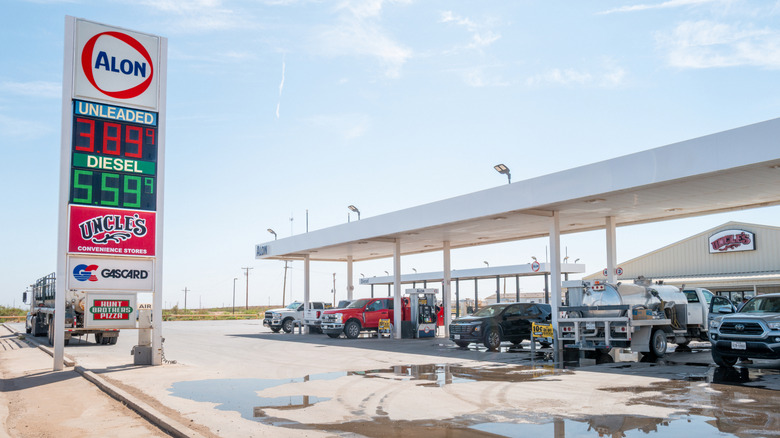
Running out of gas is something to avoid as it can have serious consequences for your car, particularly if it happens on multiple occasions. While it's understandable to try and maximize every mile for the most fuel-efficient drive, the effects on your engine could be catastrophic. A lack of fuel can cause the engine to misfire, damage the catalytic converter, and put unwanted strain on the fuel pump. The effects can result in your car experiencing engine malfunctions and, consequently, severe internal damage.
A 2018 study by AAA concluded that 24 million Americans continue to drive even after the low gas warning light turns on. How far you can drive after your car's low-gas warning light comes on varies by the make and model, but Tank on Empty provides a useful estimate of how many miles you might have left.
To combat gas prices increasing due to the U.S-Iran conflict, a AAA survey from 2026 noted, 47% of 5,000 Michigan drivers willingly let their gas tank fall closer to empty than usual before filling up. This method could be seen as a way to save money by filling up less frequently, but AAA warns that damage to the fuel pump could lead to repairs setting you back $1,000 or more.
Ultimately, squeezing every last mile out of your car's tank isn't worth the risk. Gas prices are higher, but the worst outcome is repeatedly pushing your car's limits.