

New 50% Vehicle Levy Part Of Escalating Trade War Between U.S. And Canada Sparked By Old Auto Tariff Holdups
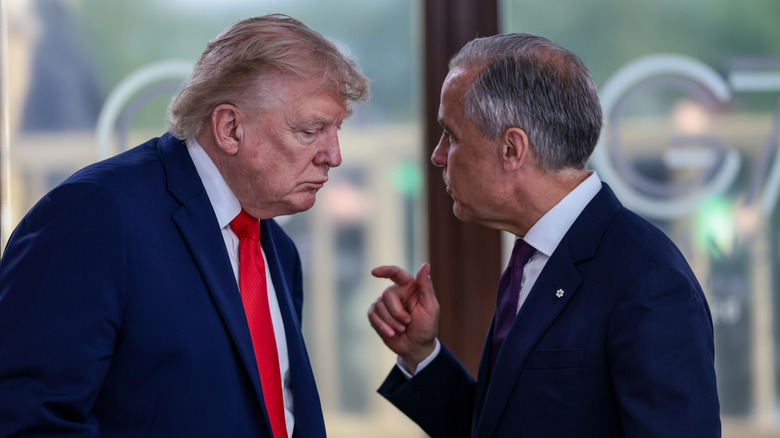
Trade talks between the U.S. and Canada have collapsed, and the two North American countries are now on a collision course to an even fiercer trade war than the one they were already going through — exactly what we needed at a time when consumer prices were reaching unparalleled levels. You can thank a couple of unresolved issues in the automotive trade for the collapse of talks that had led to new 50% tariffs on roughly $20 billion in Canadian exports. Thank you, President Trump!!!!!!
Tariff relief for Canada was limited to only light-duty vehicles — not medium or heavy-duty trucks. Additionally, Washington, D.C. and Ottawa disagreed over an exemption for Canadian auto parts that would have significantly lowered duty rates, which were key issues that derailed the deal between the two nations, Canadian Prime Minister Mark Carney said. It wasn't just cars that mucked up the deal, according to Automotive News. Carney said some U.S. demands would have limited Canada's ability to strike trade deals with other countries, and they would have undercut French language protection.
In recent days, the United States proposed new terms that were uneconomic, unfair, and undermined the net benefits for Canada, and called into question the reliability of any deal," Carney said during a news conference, reported by CNN. In short, they asked too much, and they offered too little."
What went wrong
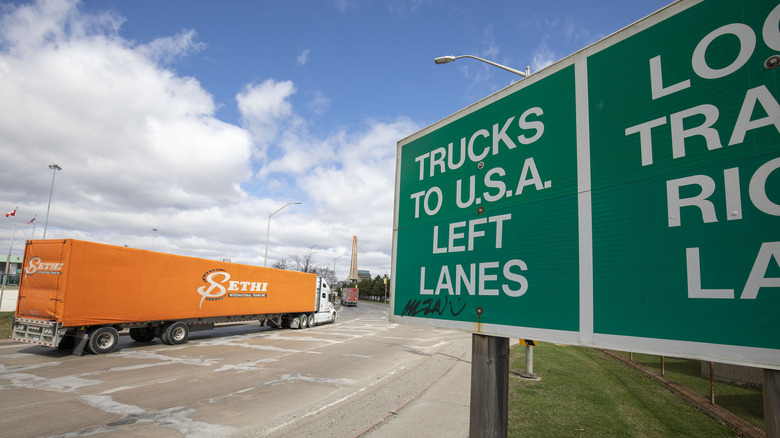
Had the agreement gone through, it would have reduced or eliminated the two-way tariffs on vehicles that have been in place since April of 2025, Auto News reports. That's when Trump imposed a 25% tariff on Canadian-made vehicles, thus violating the terms of the now-dead U.S.-Mexico-Canada Agreement. Canada responded in kind a few days later with tariffs on U.S.-made vehicles.
Here's a little more on the exact issues facing medium- and heavy-duty trucks, according to Automotive News:
According to Carney, U.S. negotiators pushed late in the discussions to restrict tariff relief only to light-duty vehicles, a move that would have left the nominal 25-per-cent U.S. tariffs on heavy pickups and commercial trucks.
[...]
The change would have made Canadian production for the two automakers "more uneconomic over time," Carney said.
White House sources, meantime, told Politico, among other publications, that Canadian negotiators raised the heavy-truck issue as a last-minute demand, which prompted talks to unravel.
Carney denied outright that Canada made any late-game demands.
It wasn't just medium- and heavy-duty trucks. The problems the tariff agreement faced were twofold, with the other component being autoparts:
While the U.S. and Canadian tariffs enacted last year were nominally set to 25 per cent, both include an exemption for parts.
The U.S. duties are not applied to U.S. parts content in Canadian-made vehicles, lowering the effective tariff rate to about 12.5 per cent, as half the parts in Canadian-built vehicles typically come from the United States. Canada's tariffs exempt Canadian and Mexican parts content, lowering the default rate on U.S.-made vehicles to 21.25 per cent.
But during the latest talks in Washington, Canadian negotiators pressed for the U.S. parts exemption to be widened to include parts from Canada and Mexico. The change was a source of disagreement throughout the talks.
It all sounds a bit confusing, but basically, if the parts exemption continued to apply only to U.S. parts, the effective tariff rate on Canadian vehicles shipped to the U.S. would have dropped to somewhere around 7.5%, compared to about 3.5%, if the parts exemption was widened.
"We were not prepared to compromise Canada's sovereignty or to undermine our key industries," Carney told reporters over the weekend.
Tariff hell for you and me
It's a mess, folks.
As Marlo Stanfield put it, "Price of the brick going up." With talks dead, the U.S. and President Trump have decided to impose a 50% tariff on all sorts of things, but we're mainly concerned with the "all Cars, Trucks, both large and small, Automotive Parts, and Steel" section of Trump's Truth Social post from Monday morning.
Those impacted products are part of an estimated $20 to $28 billion in goods that are now affected by these cockamamie tariffs, according to Motor1. Canada, for its part, is apparently at the ready to match those duties on appliances, dairy, electronics, farm equipment, furniture, steel, wine and other goods starting on September 8.
It also creates a very strange position for automakers that have operations in both the U.S. and Canada. They now face higher costs on every single truck and SUV built by our neighbors up north. Those costs, as you may have guessed, will end up on the window sticker of the car you go to buy.