

Not New York, Not Los Angeles, This Was The First City To Install Parking Meters
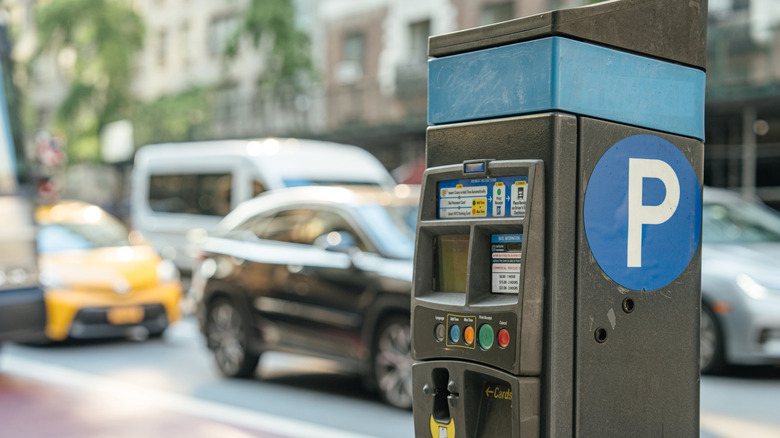
When you imagine parking meters, you might think of scrambling to find parking on the busy streets of a major metropolis like Los Angeles or New York City. Cars whizzing by, angry cabbies yelling, the stress of trying to scoop the last spot and collect enough change to cover the next couple hours. The whole shebang. Or if you're like me, you can only flash back to every time you've had to sprint back to your car to stop a nosy meter maid from ticketing you for being two minutes late. But though parking meters can cause drama, their origins are humble. And what's more: New York City is trading its street parking to make space for more trash bins, so you have to strike the Big Apple from your mental map of American parking meters anyway.
Perhaps surprisingly, parking meters aren't the invention of a sadistic big-city business man. Rather, they were introduced to American life in Oklahoma City in 1935 and have been ruining people's days ever since. In truth, these parking meters weren't all that different from the ones we have today. There were no apps, no windshield tags, and no credit card readers, but otherwise the design would be easily recognizable to the average driver. The meters consisted of a pole a foot high and a built-in clock. Parking cost 5 cents an hour, payable by nickel, and when you put the nickel in the meter, the meter would start the clock and raise a flag, visibly marking that the spot had been paid for. When time ran out, the flag fell, and parked cars were liable to get ticketed.
Why did Oklahoma City need parking meters anyway?
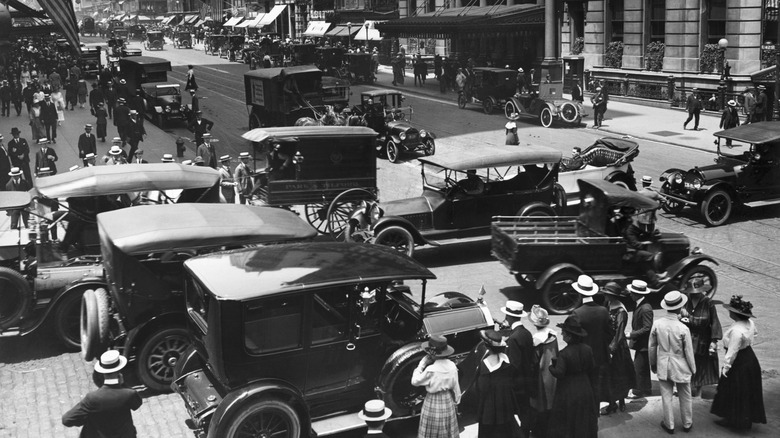
As car ownership became more widespread in the 1930s, Oklahoma City — along with many other cities in the U.S. — found its street parking filling up, as is happening with street parking today in North Korea. Without parking regulations, people would park in desirable spots and leave their cars there all day. In a then-thriving city like OKC, this meant that customers struggled to find parking near the business district, which had a negative economic impact on the growing city.
Oklahoma City tried enforcing parking limitations earlier and had police mark tires with chalk to keep track of how long a car had been in one place — a strategy still used by some municipalities for unmetered street parking, such as in residential areas — but that had the same problem it has now: it's hard to enforce and easy to subvert. The new parking meter system encouraged drivers to move their cars out of an area as soon as their business there was done, which meant an area could have higher turnover. By some counts, this allowed a street to park 10 cars per parking spot throughout the course of a day.
It's easy to see how that kind of turnaround would make businesses more accessible to customers and how that translates to a more useful urban area. However, the idea wasn't initially popular among drivers. I still hate paying for parking and avoid it whenever I can. After all, America has some 2 billion parking spots to choose from, only a fraction of them metered. But even a parking curmudgeon like me has to admit that the meters are doing their job and doing it well.
Cities love parking meters because they're lucrative, too
Yes, parking meters discourage overstaying and thereby make business access easier for consumers, but that's not the only reason cities adopted them rapidly after the first parking meters were installed in Oklahoma City in 1935. Dallas, Texas was another early adopter of the parking meter, and the city reported an income from parking meters of $120,000 in 1936, from which the meters paid back their installation costs within six months. Today, the figures look even wilder. The New York City Comptroller reported $228 million in revenue from parking meters in 2018. That's just for proper payment. Parking citations are also lucrative for cities, with the City of Los Angeles expecting to bring in over $100 million in just parking fines in 2026, almost double their expected parking meter revenue of $55 million.
At least this money goes toward making the city a better place, right? Maybe a place that's easier to drive in? Or maybe it goes toward funding safe infrastructure for cyclists and pedestrians to reduce traffic deaths? Well, that all depends on where you live. In some sane places, like San Diego, parking meter revenue is indeed directed back toward the communities the meters are in, paying for infrastructure like sidewalk repairs and improved safety. In other places — cough Chicago cough – parking meters are run by private companies with 75-year leases that expire in 2083 and have already made over $2 billion that the city never gets to see. You win some, you lose some.