

Your LED Light Bar Is Ugly, Get Vintage Halogen Fog Lamps Instead
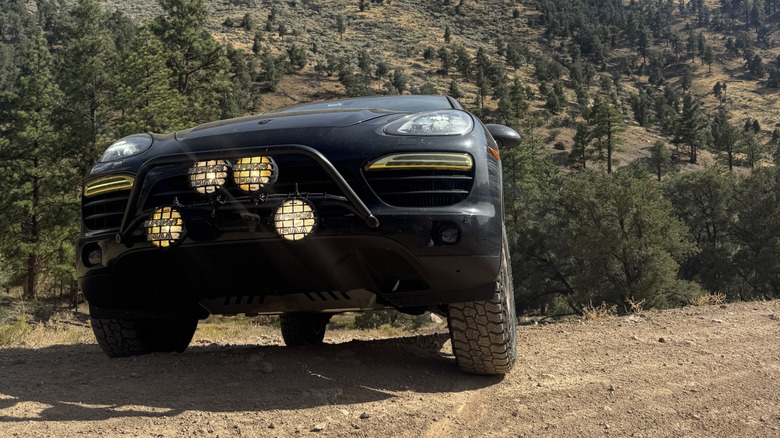
LED light bars look terrible. That's not to say they don't have their place, because they definitely do. I've worked on Baja 1000 crews, and I've seen first hand how a good light bar can illuminate the night desert like it's noon time. If you're entered in off-road competition and it takes place at night, you'd be silly to use anything else. For the rest of us, who mostly drive our off-road vehicles on paved roads to get groceries, and do most of our dirt driving in the middle of the day, light bars are overkill.
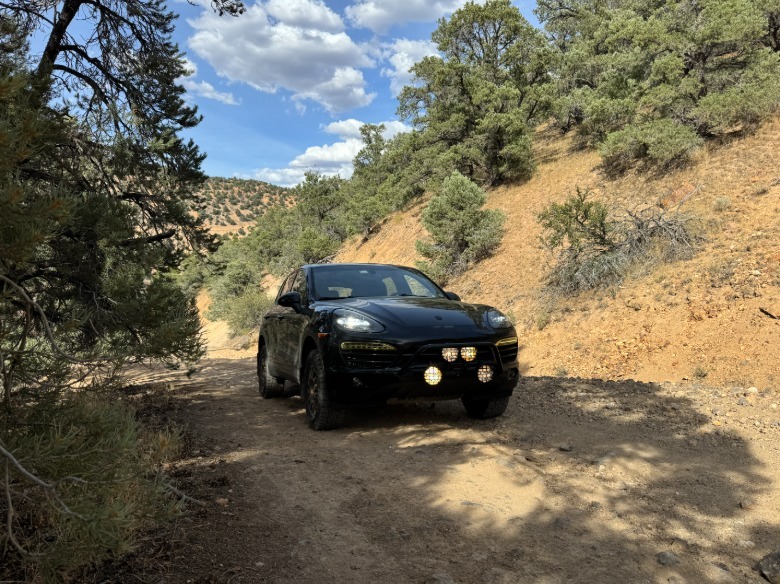
Car enthusiast modification is far more about style points than it is any competitive advantage, and I'm not too proud to admit I built my Porsche Cayenne Diesel this way because I think it looks cool. That's why I went with an old-school vintage set of halogen PIAA 4x4 lights instead of modern LED monstrosities. Well, that and sticking to a tight budget.
With just a few weeks until I leave to drive this rig up to the Arctic Circle on the 2026 Alcan 5000, I started the search for a nice set of auxiliary lights. Within minutes of searching for a set of Baja Designs, Rough Country, or Rigid Industries light pods, I started to crash out over the incredibly high prices these things demand. With prices exceeding $300 per light, I was looking at around $1500 for a set of lights, wiring, switches, and relays. I just couldn't justify that, so I went off to eBay to look for something used and fell immediately in love with this vintage set of SUPER4x4 lights. At just $379.63 delivered to my door from Japan, I could hardly afford not to buy them, so I clicked the button and made it happen.
The install
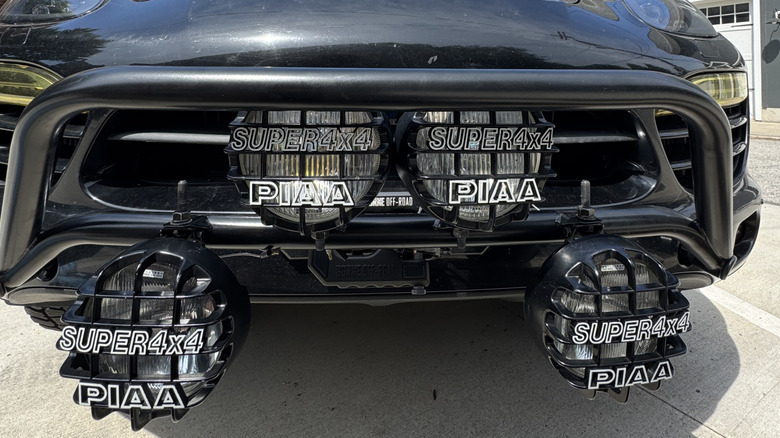
Within minutes of the package arriving on my doorstep, I tore it open and had the lights mocked up to the previously installed brush bar. Even though they weren't functional, they already made the Porsche look ten steps cooler than it did before. There is a level of gravitas added to an off-road rig when it gets a set of lights, whether the driver ever intends to take the vehicle off pavement or not. The lights lend an air of credibility to its dirt driving chops. Rally cars and Dakar monsters have used auxiliary lighting for decades, and it makes them look hard as heck. My Cayenne is now cooler by association.
Because car projects are always more fun with friends, and because automotive wiring is something of a dark art to my written-word-focused brain, I called my buddy Patrick to give me a hand on the electrical part. I could have done this left to my own devices, in theory, but my finished work would be sloppier looking, and I might have mis-read the headlight wiring diagram. I'm very grateful for Patrick's assist, and bought him lunch as a thank you.
 Bradley Brownell/Jalopnik
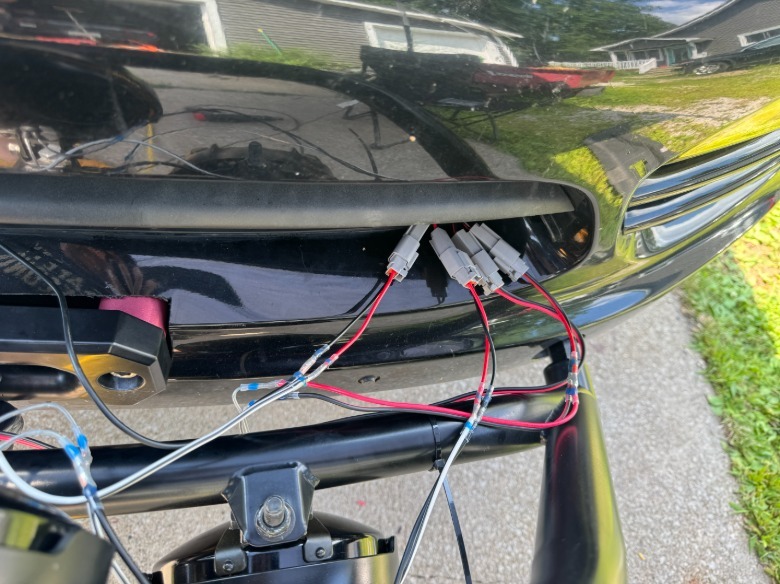
Over the course of about four hours in the middle of a hot and humid Ohio afternoon, Patrick and I devised mounting points, wire routing, and built wiring harnesses to make all of this work without burning the car down. Using a pair of relays and a pair of fuse blocks, we wired the lights in pairs of two and built a convenient waterproof connection hub that hides inside the bumper, allowing the removal of the lights without cutting anything.
Tapping in
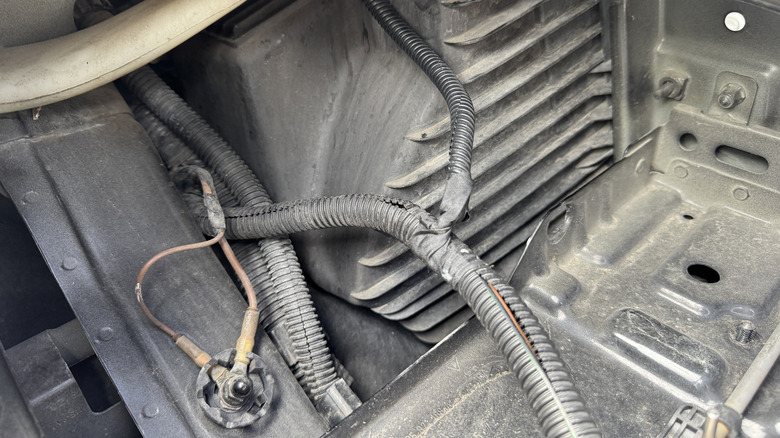
Rather than using a stand-alone switch and routing wiring into the cabin, where we would have a hard time finding anywhere to mount said switch, we decided to go a different route. Tapping the trigger wire for the relays into the passenger headlight harness allowed us to put the auxiliary lights on the same switch as the vehicle's high beams. This was an easy and clean way to do exactly what I needed. Now, when I flash the high beams, the road ahead is illuminated in a bright and magnificent blend of OEM white and aftermarket warm yellow, with hardly anywhere for the errant wildlife of Canada's Yukon and Alaska to hide.
I'll admit, I don't expect to be doing much night driving on the Alcan 5000, as the route averages around 500 miles per day and the sun should be up from about 7:30 AM to about 10PM when we're up there in early September. In the event that we do have a breakdown or delay, however, it'll be nice to be prepared for the worst. I'd hate to be running late for a checkpoint, try to over-drive the lights, and run headlong into a Grizzly or Caribou.
 Bradley Brownell/Jalopnik
I haven't yet had much opportunity to test out these lights, as I live in the city, but on a recent cross-country drive I found myself in the wide open expanses of the Nevada desert, able to test out the lights. I flipped them on for a few minutes at a time, and they're extremely effective at throwing light. Much like the car's skid plates and winch, I sincerely hope I don't have to use them for any sort of emergency, but I'll be glad to have them if and when I do. Until then, they just look so cool, don't you think?