

How Camouflage Confuses Flock Cameras And Their Detection Algorithms
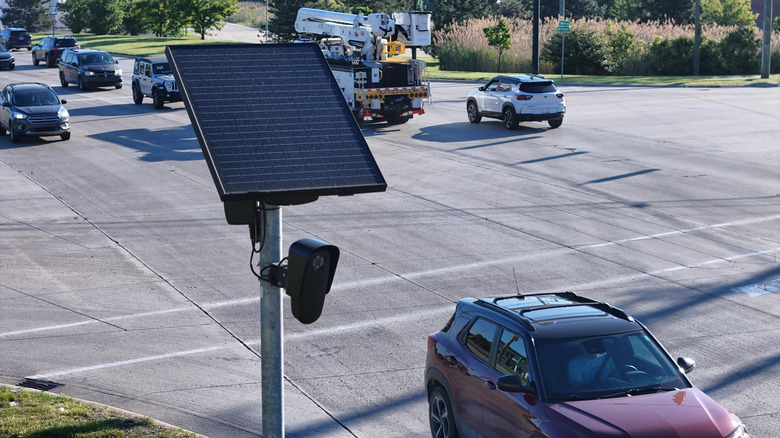
Flock cameras have been a hot-button topic recently. How could it not be when they're perhaps the most blatant evidence yet that America has devolved into the sort of surveillance state it instinctively turned its nose up at not that long ago? The supposed benefit of license plate-reading cameras is more effective law enforcement. However, the rollout reality has been riddled with gross misuse, dangerous inaccuracies, and fierce public backlash.
Officers have been caught using the technology to stalk their wives. Fellow automotive journalist Joel Feder was recently detained after a camera falsely flagged the press car he was driving as stolen (an LAPD audit once uncovered that 32% of the stolen cars Flock cameras flagged were false positives). Additionally, the town of Roseville, California, reported its Flock cameras only read plates correctly 29% of the time. Now, one cybersecurity guru is fighting back with special car wraps and clothing that apparently make Flock cameras even more befuddled than they already are.
Lifelong cybersecurity pro Bill Swearingen has been working on his noRecognition project for the past year, the core of which involves computer-generated patterns that scramble Flock cameras' detection software, or adversarial patterns. The project's Kickstarter shows a potential T-shirt with the Flock-fooling patterns, but Swearingen also brought a Toyota Yaris wrapped in one to the Def Con cybersecurity conference in Las Vegas, where it passed a demo at fooling surveillance cameras. That Yaris, by the way, was wrapped "with help from" Donut Media, the automotive YouTube channel that shares a parent company with Feder's publication, The Drive.
"His project, which he calls noRecognition, allows people to escape the automatic detection and algorithmic surveillance used across the U.S. and beyond." https://t.co/OIQNOt9B0a @TechCrunch
— Christina Ayiotis, Esq., CRM, CIPP/E, AIGP (@christinayiotis) August 10, 2026
AI vs AI
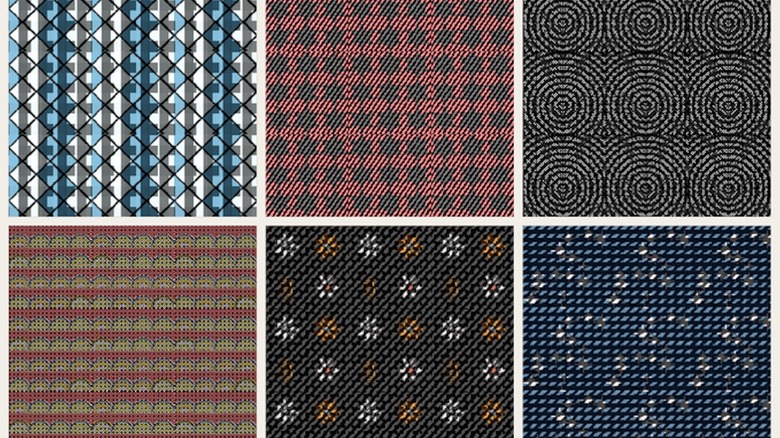
Swearingen's literature is light on the technicalities and science behind how and why his patterns throw Flock cameras off. Which, y'know, fair. I can't imagine the first guy to ever pick a lock went around telling people how to pick locks. He did say that patterns were developed essentially with a trial-and-error-style, self-training learning model.
That said, one assumes the adversarial patterns work on a loosely similar principle to those CAPTCHA puzzles. You know the ones: prove you're a real human trying to log into your banking app by identifying the letters and numbers in this vaguely fuzzy, bent image of letters and numbers. Except here, it's disguising real humans (and vehicles) by cloaking them in vaguely fuzzy, bent visual patterns the proverbial robots behind Flock cameras can't interpret. But that's just my semi-educated guess.
No matter how it works, Swearingen says his patterns defeated 11 open-source surveillance algorithms, which means they're able to fool not just Flock cameras, but also Axon body cams and devices running Clearview AI. Swearingen's model is described as creating new patterns every minute, with measurable improvements per group.