

Dreams Come First, Then The Cars In This Short 1952 Film Looking At Ford Design: What's Streaming
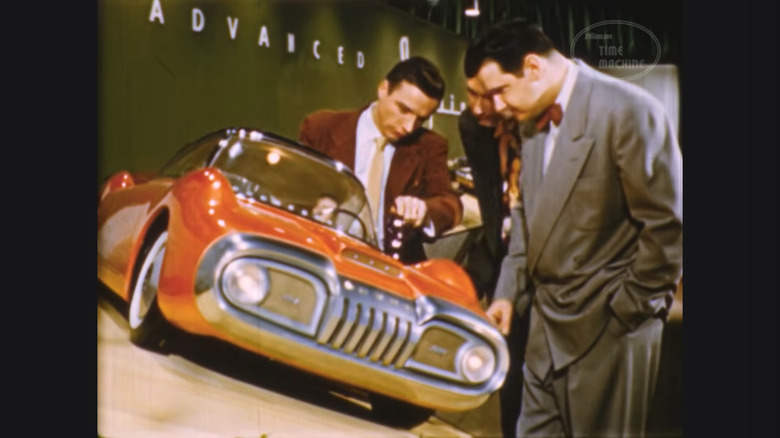
It takes the auto industry about 4 to 5 years to create a vehicle from blank sheet to finished production car. Once the public has its hands on the finished product, it doesn't put a lot of thought into what went into designing their cars; the painstaking process behind every feature, button, and "emotional" line. As the narrator of this 1952 film who takes viewers through Ford's design process puts it: "We look at the finished product. Admire it. Take it for granted. We forget that every detail of these beautiful, complex machines had to be imagined first in the minds of men and fashioned by men's hands. Otherwise, they would not exist."
One of the latest films restored and brought back to life by 16mm Time Machine, titled, "Tomorrow Meets Today" is a brief, behind-the-scenes look at Ford's best designing some of the most forward-thinking vehicles in the early 1950s. It's a fitting theme as within the last couple of weeks I hit on disappointing concept vehicles and GM's efforts to speed up the design process utilizing AI to launch cars like you would a new iPhone.
While Ford's rival in Detroit, GM, believes AI can speed up the process of car design, driving a car is such a human experience it seems a bad idea to cut them out of the designing equation. We all know Building Cars Is Hard, but you never get anywhere without putting in the work. This film takes you through most of the steps to bring a car to life. Unfortunately, this glimpse into the automotive past ends early due to what the YouTuber said was some damage.
The art of designing vehicles
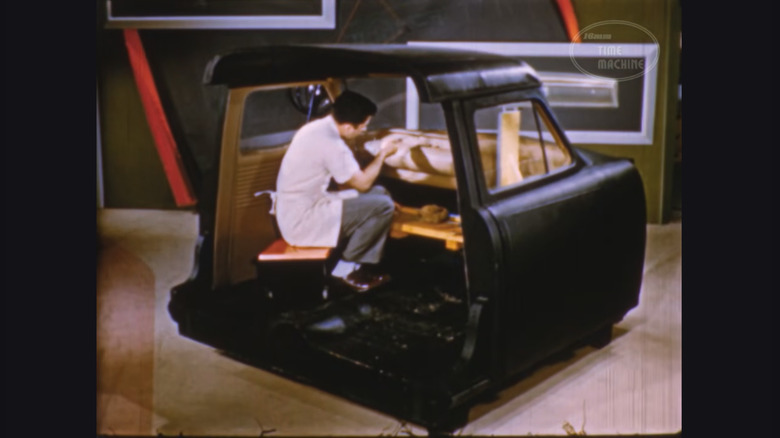
The narrator early on says "We should remind ourselves how many special skills and talents... how many millions of dollars... how much forward planning goes into the engineering of a modern car." As a start, we're brought back to 1952, and the tools to get started was an individual seated at a drafting table with a large sheet of paper, a pencil, and some measuring tools.
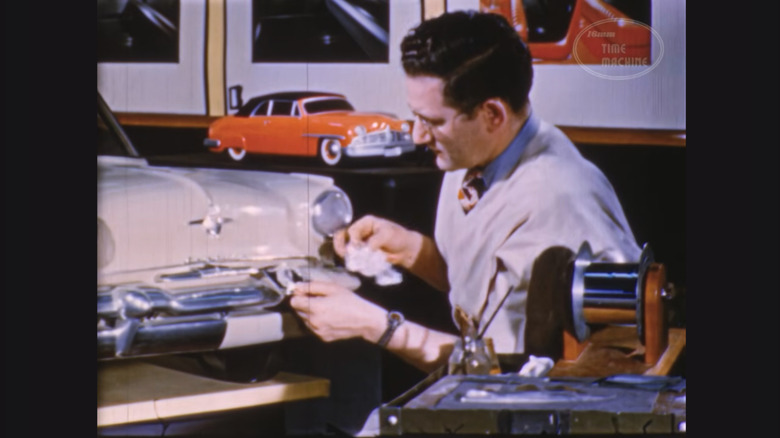
Selected designs see the next phase of vehicle design, where clay sculptors mold them into life, albeit smaller, complete with faux body panels and faux chrome accents. If a vehicle made it further into the design process it could be molded into a life-size clay model, or a model to sport interior furnishings. A design might be a serious consideration once it became a real metal prototype fitted with a powertrain that might have different componentry and engines swapped in and out to find what best works. Digital modeling today may have scaled some of this process down in modern design studios, but many of these efforts are still utilized.
Modern behind-the-scenes in automaker design labs
At GM, the famous dome at the Warren, Michigan design center was pivotal for design studies of future production models. There, the dome would be set up like a real auto show — even the lighting was made to mimic what you'd see at shows at home in Detroit, Chicago, Los Angeles, etc. Imagine it much like a science or art fair in school, but with the vehicles of tomorrow under bright lights with designers in tandem discussing models (clay or real) on display.
During the launch of the Ford Mustang, its design team brought journalists through the modern-day 2022 design process on the tails of the pandemic. COVID-19 had forced design further into a digital-laden sphere, and crucial software helped keep design teams on the same page. But when they could make things happen in-person, you'd get things like a full interior model that looked as if someone had cut into a Mustang from the top, pulled out just the interior, and gently set it on the floor. The fabrics, plastics and touch points were all what you would find in the actual production car.
The lost art of tactile design
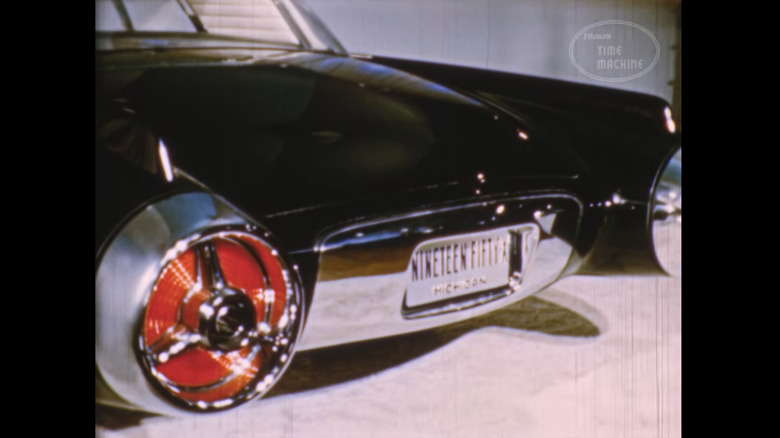
Obviously designing vehicles 30 or 70 years ago was a lot more involved in-person because technology wasn't at a point where teams could do things more collaboratively and faster via email and syncing design programs over the cloud. But what those in-person activities and models created (other than meticulously skilled jobs) was the opportunity to see a car brought to life before it was actually finished, or eventually machined into production life with actual moving components.
The film is a reminder of a time when tactile interactions with live, real product was important. And for as something as complex as a vehicle is today, it seems like it should still be. Otherwise it seems like going down a road where you order something online, and what arrives isn't really what you ordered.
Join me weekly as I introduce a new(er), sometimes nostalgic video worth adding to your Watch Later lists. Leave a note in the comments if you find an older or interesting film you'd like to see featured.