

Why Doughnut Spares Typically Need 60 PSI, Double That Of Regular Tires
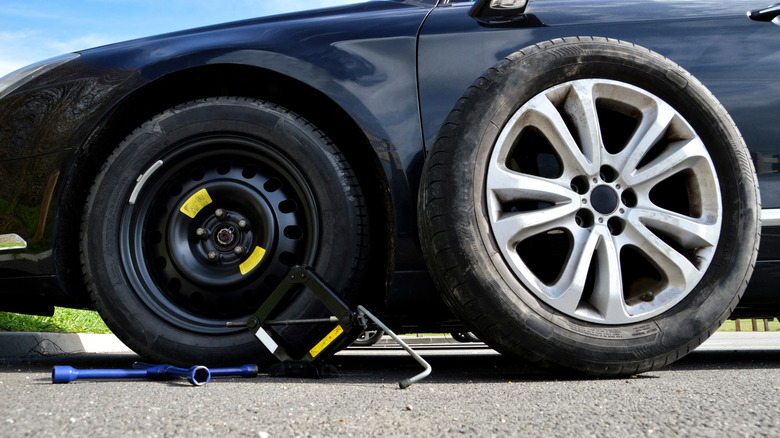
So you hit a nail and blew a hole in your tire, and now you're stuck on your spare — which is, of course, almost flat, because you never check its tire pressure. You stop at a gas station to air it up, only to find that the tire wants an absurd-sounding 60 psi. That can't be right, can it? Well, it is, and there's a very simple reason why.
The core of the question here is the type of spare tire you have. If you have a full-sized spare, you'll have the same recommended tire pressure there as on every other tire on your car. If you have a space-saving "doughnut," though, you'll find higher pressure recommendations.
This suggests that narrower tires have to be held at higher pressures, and that suggestion is borne out by math. Remember that your tire's pressure is measured in pounds per square inch, with the pounds coming from the car above and the square inches coming from the tire's contact patch below. The same number of pounds, over fewer square inches, comes out to a higher psi number.
Simple math
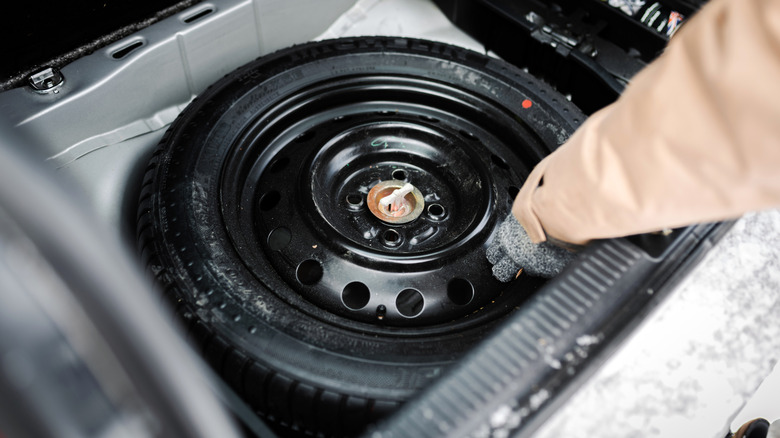
It's the kind of math that you never think about, but that makes perfect sense once you do. It's also a radical oversimplification, given the amount of structure inside a tire and variances in load and contact patch, but it's a rule that will generally play out between tires with comparable construction. Don't take the math as gospel — always refer to your door jamb and tires when figuring out your own tire pressures — but it explains the difference.
Your spare tire needs to run at higher pressures because it's smaller, and it needs to bear the same weight as its bigger siblings over a smaller contact patch. Don't be afraid of that 60 psi figure your space saver spare wants. You're not misreading the tire or filling it all the way up to its load limit. Air that tire right up, and get yourself to a shop that can replace — or repair if possible — your full-size tire.