

That Ambulance Could Save Your Life, But It Just Might Film You Without Consent, Too
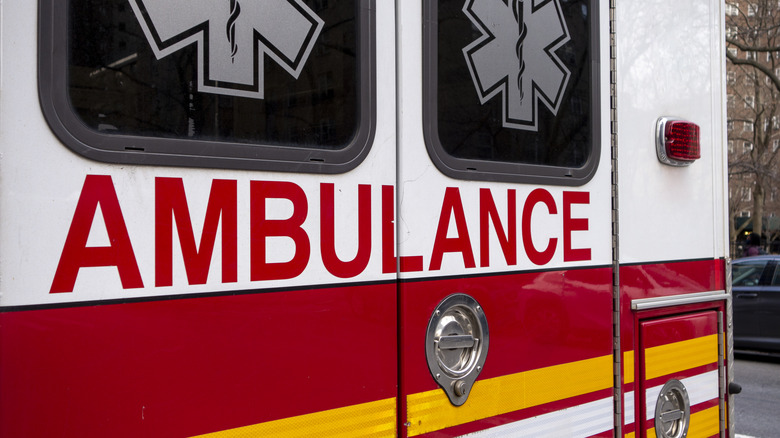
Between the proliferation of Flock cameras that can find you even if you don't have a license plate and new cars slowly becoming unavoidable surveillance devices one snuck-in app permission at a time, true privacy is becoming a rarity. One recent legal case, however, is drawing attention and debate toward whether privacy should be expected in a place where it probably isn't the first thing on your mind: in the back of an ambulance. Brittany Martin, an EMT in Oregon, was let go for disabling in-ambulance cameras pointed at patients. She's now suing her former employer for $800,000, claiming wrongful termination. Citing patient privacy protection violation concerns after doing research on local laws, she decided to disable the microphone and cover the camera after she discovered they were recording audio in addition to video, even though management said earlier that they would, for privacy reasons, only record video.
So, are ambulances recording you in 2026? According to the first responder experts at EMS1, cameras in the back of ambulances are currently "still rare, but it's an emerging trend." More common, apparently, are police-style body cameras on EMTs.
Ambulance cameras raise the issue of privacy vs. protection
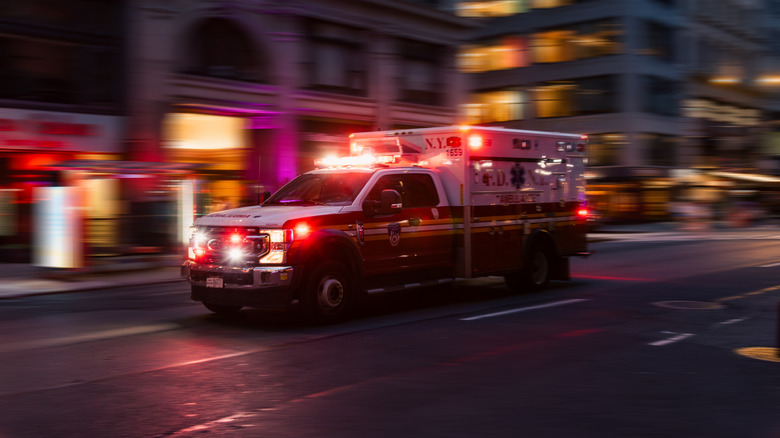
As for the actual legality of it all, the government at both federal and state levels has been "slow in really hammering out what's legal and what's not," New York paramedic and EMS lawsuit expert witness Geo Henderson told EMS1. While the powers that be take their time to hash out what's allowed and what isn't, the public seems to be divided on the issue. Per EMS1, many readers are understandably vocal in their support of privacy, especially in an inherently vulnerable medical emergency situation, claiming that any cameras in the patient compartment violate the Health Insurance Portability and Accountability Act of 1996 (HIPAA).
Others point out that cameras provide transparency, safety, and legal protection for both patients and providers in the event things go south, with one clinician claiming a reduction in false complaints since cameras were introduced. Some on the pro-camera side point out that hospitals already have CCTV, but those are usually restricted, if not outlawed by HIPAA, in patient rooms and treatment spaces. The best theoretical solution would probably be to ask every patient for consent before they're wheeled into the ambulance, but for obvious reasons, that's not really practical. Whether ambulance cams eventually become commonplace or illegal is still up in the air. But for now, if you ever unfortunately find yourself in the back of an ambulance, try your best to smile because you might just be on video. I mean, if ambulances are going to charge Disneyland prices for a simple ride to the hospital, you might as well grab a Splash Mountain-style shot of yourself as a memento on the way out.