

Here's How F1 Drivers Train To Handle G-Forces At High Speed
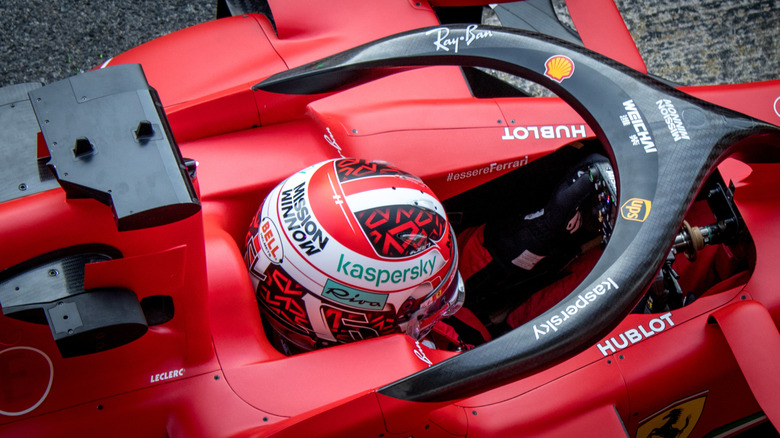
Sitting in a racing car for two hours may not sound physically demanding. But it is for the cutting edge of motorsport. Formula 1 drivers sustain heart rates above 170 beats per minute for the duration of a race, lose up to nearly 9 pounds of body weight from sweating during a single event, and experience forces on their bodies that exceed what astronauts feel during a rocket launch. The training required to handle all of this is considerably more specific — and more extreme — than most people realize.
Under heavy braking, an F1 driver can apply around 353 pounds of force to the brake pedal while simultaneously experiencing upward of 6g on their body. Besides being one of the tracks that only hosted a single F1 race, the Tuscan GP in 2020 saw Lewis Hamilton hit a max of 5.6g through Turn 7 — comparable to the peak forces sustained during a rocket launch. At those levels, an untrained body would struggle to hold its own head steady, let alone drive at 200+ mph while processing radio information and planning overtakes.
The biggest single force is felt on the neck, which is why most F1 drivers' fitness routines highlight neck training. The current F1 Champion Lando Norris exercises his neck at least five times a week, according to his trainer John Malvern. If a driver can't hold their head steady enough to see exactly where they're going, they lose valuable time each lap. Besides neck training, driver regimens include core-strengthening exercises, cognitive conditioning, and lots of cardio.
The key mental and physical demands
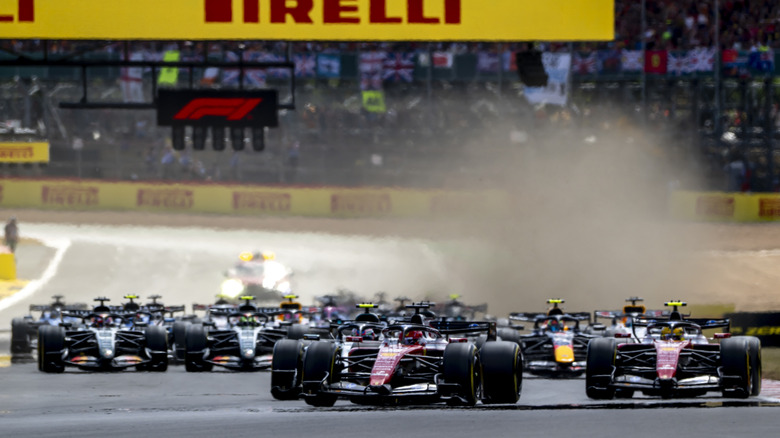
The specific exercises used to develop this strength are as unusual as the requirement demands. During gym sessions, drivers train with 15 pound weighted helmets and resistance bands around the head to simulate sustained lateral g-force. The most intense workout involves strapping 66 pounds of weight around the head and suspending it from the edge of a table. This technique builds the neck's capacity to resist forces similar to those of high-speed F1 cornering. The ever-entertaining F1 vet Daniel Ricciardo offered a useful caveat on neck progression for Red Bull's coverage of driver training: "Your neck's fragile, so you don't want to start by putting 10kg plates on the side of your head."
The neck is the priority, but it's not the whole picture. Drivers perform core exercises that copy driving positions – stability balls with weight plates rotated like a steering wheel, medicine ball rotations, and planks that reinforce the base needed to resist lateral forces. A three-minute all-out sprint covering over 900 meters is one standard cardio benchmark. Cycling, swimming, and high-altitude cross-country skiing appear regularly in drivers' off-season plans. The goal of all of it is a lean, functional physique — strong enough to withstand hours of sustained g-force or potential impacts without bulk that would weigh them down.
Mental preparation sits alongside the physical work. Cognitive training, visualization, and pressure management are structured parts of the routine, because making split-second decisions at speed requires mental conditioning, as well physical strength. During race season, drivers train around the calendar — and even their sleep is managed, with coaches coordinating with hotels in advance on room temperature, pillows, and rest supplements. At the cutting edge of motorsport, even recovery is training, too.