

Do Backup Cameras Make Driving Safer?
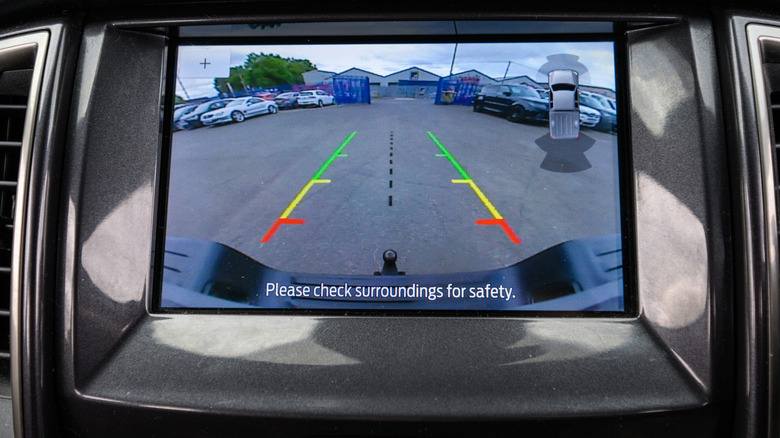
Automakers were required to start equipping their cars with rearview cameras in 2018, and the results since then have been dramatic. According to research presented at the American Academy of Pediatrics 2025 National Conference & Exhibition, the federal mandate has helped reduce the number of severe injuries caused by backovers by almost 50% among kids younger than five, while fatalities in that age group have decreased by 78%.
Meanwhile, a study by the National Highway Traffic Safety Administration (NHTSA) — albeit from the pre-mandate era — found that people aged 70 or older made up some 26% of deaths from backup accidents. There's also evidence that rearview cameras are especially effective in helping older drivers take the helm. Per research from the Insurance Institute for Highway Safety (IIHS), the cameras helped cut back crashes involving folks aged 70 or above by 36%. This compares to a drop of 16% for younger drivers.
The reasons are pretty self-explanatory. Since you don't have to look out of what could be a small rear window, such as trying to see past heads in the back rows, cameras can greatly improve your rearward visibility. Since looking at a rearview camera is much less difficult than trying to turn your head around as far as it will go, it makes driving safer for older people or those with physical challenges.
Do backup cameras have any weak spots?
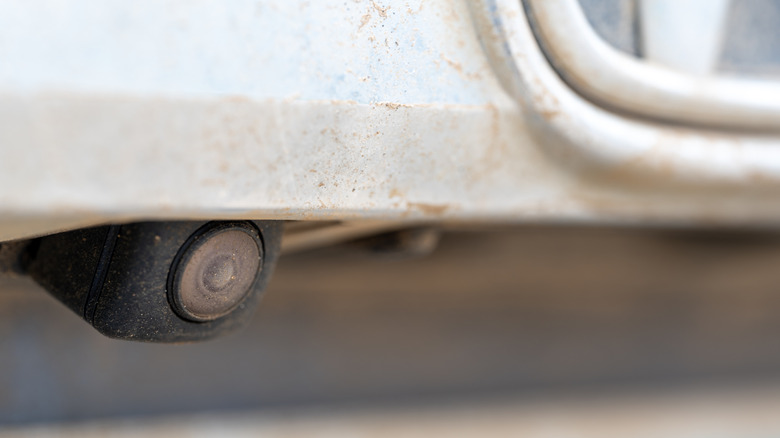
Despite those impressive safety statistics, rearview cameras can have difficulties in certain conditions. Bad weather, for one, can prevent you from getting a clear view. The cameras can easily be obscured by raindrops, snow, frost, mud due to their exterior position. The physically tiny lenses don't help either, as it doesn't take a large obstruction to impact your view — picking a Chevrolet Colorado as a random example, the camera lens can have a diameter of about 11 mm. The diameter of a U.S. dime, for comparison's sake, is 17.91 mm. Thankfully, some vehicles are now available with rearview-camera washers that can clean off a lot of that stuff.
In the real world, backup cameras can also struggle to meet driver needs in the dark. Just ask the Ford Bronco owners lodging complaints about buggy backup cameras in online forums. One issue with the Bronco seems to be reverse lights that aren't bright enough — a problem also reported with GMC Sierra backup cameras — but physics plays its part as well. You have to remember that darkness is the absence of light in the sense that there are fewer actual photons of light around. So there are fewer photons of light hitting your camera sensor. The result can be a grainy appearance as the camera tries to compensate for the limited number of photons.
Then there's an issue that's baked into the lenses themselves. They're usually wide-angle, as that's a major advantage for the camera's ability to provide an expanded field of view. The downside is that wide-angle lenses distort that view at the same time. Your backup camera's colored lines can help you compensate for that –- and also make you parallel parking master in the process.
Do common driver assistance technologies make driving safer?
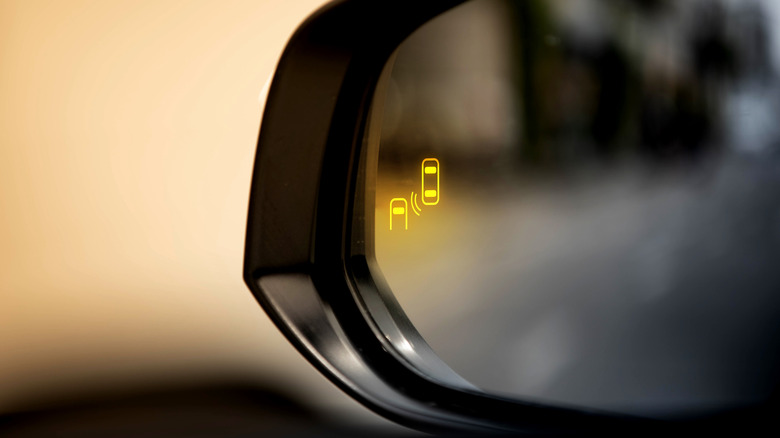
While backup cameras have their weaknesses, other advances in driver assistance technology can help make up for them, and some of those will be mandatory. Next up is a federal rule demanding that most cars and light-duty trucks come with automatic emergency braking (AEB) as standard by 2029.
NHTSA says that its new rule for forward AEB will save at least 360 lives each year while simultaneously preventing at least 24,000 injuries. One 2024 study by the American Automobile Association found that cars equipped with newer AEB technology were able to sense and avoid obstacles in a full 100% of test runs at speeds up to 35 mph, although the federal standard requires systems to work at up to 62 mph. Other notable driver-assistance technologies are also under review. While NHTSA hasn't mandated their use — yet — it has added evaluations for blind-spot warning, blind-spot intervention, and lane-keeping assistance to its New Car Assessment Program (NCAP).
Studies have indicated that blind-spot technologies – including both warnings and intervention — can decrease the number of lane-change accidents by 14%. Lane-keeping assistance, also with both warnings and intervention, only lowered the number of crashes by 5%. Finally, the results for pedestrian AEB depend heavily on conditions. In fact, one analysis available through the National Library of Medicine found that there was no evidence the system was effective in the dark, at speeds above 50 mph, or with the vehicle turning. Despite these limitations, the technology still lowered the risk of pedestrian crashes by 25% to 27% and of pedestrian injuries by 29% to 30%.