

5 British Car Brands You've Probably Never Seen On American Highways
The Brits have it going on when it comes to building high-end automobiles with character, and several of their brands have been popular here in the States. They gave us Land Rover, MINI, Aston Martin, Bentley, McLaren, and Jaguar, just to name a few. Each of those brands has its own personality, and while you may not see all of them every day on the road, odds are you've passed by each of them from time to time.
But there are several brands from the U.K. you may never have seen on an American highway. That includes Vauxhall, which started well over a century ago and is still making cars today. Morgan produces incredibly attractive 1940s-style roadsters that are sure to turn heads. Peel is credited for the smallest production car to date. Briggs Automotive Company makes amazing custom-built one-seater supercars. And Marcos is famous for making its past models with wooden chassis.
We're not saying it's impossible to see any of these cars on U.S. roads. But most of these brands have low-volume or custom manufacturing. So, in most parts of the States, it's rare to come across one of these vehicles in person. And if you're interested, we explore other U.K. brands in our post about rare British cars with killer good looks.
Vauxhall — Britain's oldest surviving car brand
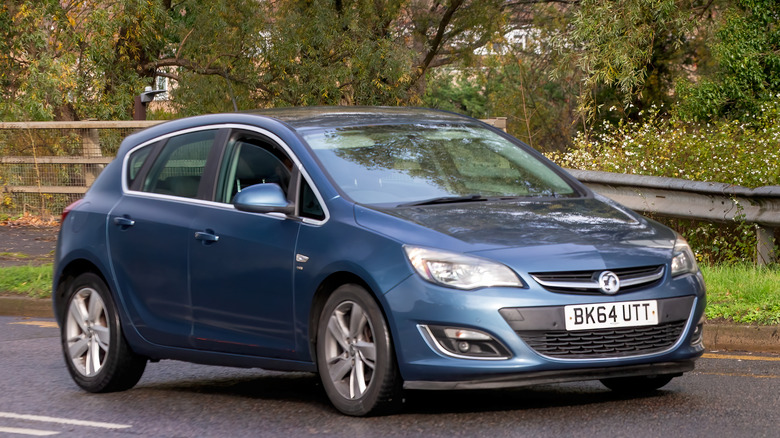
Vauxhall calls itself "the U.K.'s oldest surviving car brand," and it's not hard to believe, considering it's been making cars since 1903. Cars had been built in Britain since before then, but Vauxhall is the oldest company from that era that's still around.
The engine in that first car that rolled out in 1903 would have just one cylinder and cranked out a meager 5 horsepower. But just a few years later in 1910, the company would come out with the Prince Henry, one of the world's first sports cars. Its engine could produce all the way up to 21 hp and reach an amazing 100 miles per hour.
Of course, the company has seen a lot of changes through the years. Looking at its line of models from the past to the present day is like taking a stroll through the history of the automobile itself. Vauxhall would be bought by General Motors in 1925, but in spite of being owned by an American corporation for 92 years — until it was bought by the PSA Group (now Stellantis) in 2017 — Vauxhall has always been a decidedly British brand. It built military vehicles for Britain's military during World War I and the Churchill tank during World War II.
But this old company is not stuck in the past. Its current models employ all of the cutting-edge features found in modern cars. Every model has an EV variant, and there is a whole line of electric vans.
Morgan — bringing classics back in style
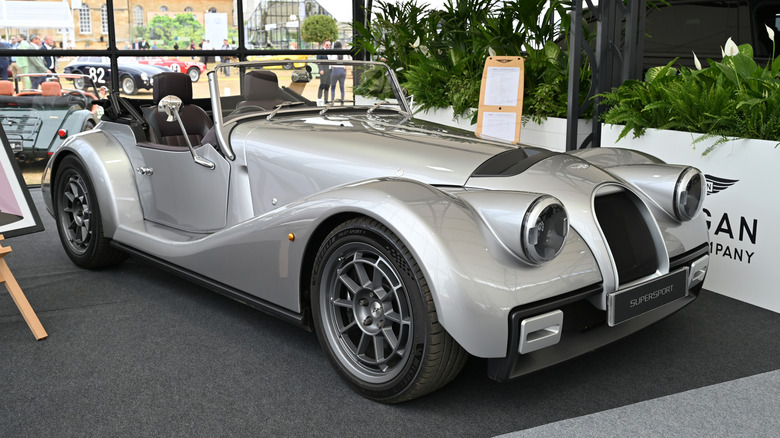
Morgan builds a line of luxury cars that look like they came straight out of the 1940s, at least on the outside. The insides of its models include modern comforts like climate control and push-button start, but the controls for these features are styled in such a way that they just kind of blend in with the vintage aesthetic. The models are mostly convertibles, which probably adds to the overall pleasantness of the ride. The Morgan Supersport is an example of how the brand blends the past with modern technology.
Don't think you're just going to test drive one of these automobiles like some kind of unwashed peasant. Instead, Morgan offers "experience drives" with a "brand ambassador," like any truly civilized carmaker would. And you can take one of these experience drives for the low, low price of £195, or $262. Want to see what it would be like just to ride as a passenger in one of these cars? Well, that's only £120, or $161. What a bargain!
Morgan does have a presence in the U.S. — but only 12 dealerships in total, so it's pretty rare to see one of their vehicles on an American highway. But just because you live near a dealership doesn't mean you have the opportunity to take one of those experience drives. Some of the dealerships don't have any Morgan models on the lot, judging from the website. Those that do have only a handful.
Peel — made the smallest production car ever
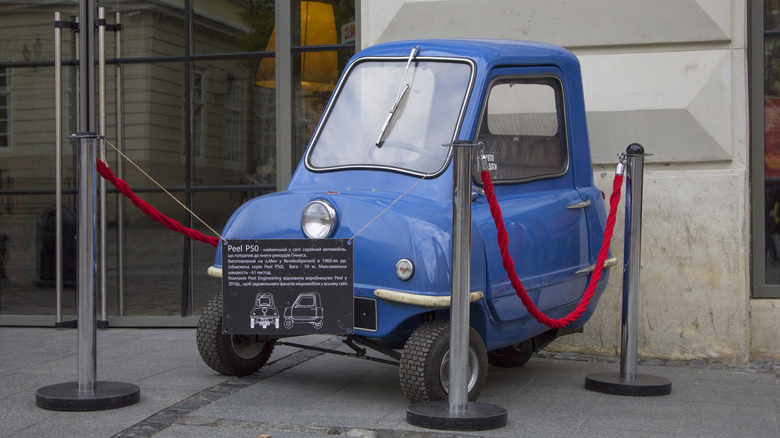
The 1960s were a weird and wonderful time in the car world, one reason being the proliferation of three-wheeled microcars — tiny cars that typically ran on moped engines and had room enough for one person. Peel launched its microcar, the P50, in 1962. It was the smallest-ever production car, and still holds that title. It was only 54 inches long, 39 inches wide, and weighed 130 pounds. It had no reverse gear, but you could lift it from the rear end. It had a 4.2 hp 49cc motor that could reach 40 mph. Only 50 were made between 1962 and 1965, and 27 of them are still around. They aren't very safe, but that didn't stop one YouTuber from speeding one around the Nürburgring race track.
Peel would launch a two-seater, the Trident, in 1964, but it looked markedly different than the P50. It still had just three wheels, but it had a glass dome for a top that puts us in mind of George Jetson's car, just with wheels. Only 75 Tridents were made.
But the story of these cars would not end with the building of the last Trident. The original Peel Engineering Ltd. closed in the 1970s, but now a company called P50CARS is taking up the mantle, building faithful recreations of both the P50 and Trident, except that electric motors are now an option. They are built in small numbers as kits or a factory builds.
Briggs Automotive Company — taking its sweet time
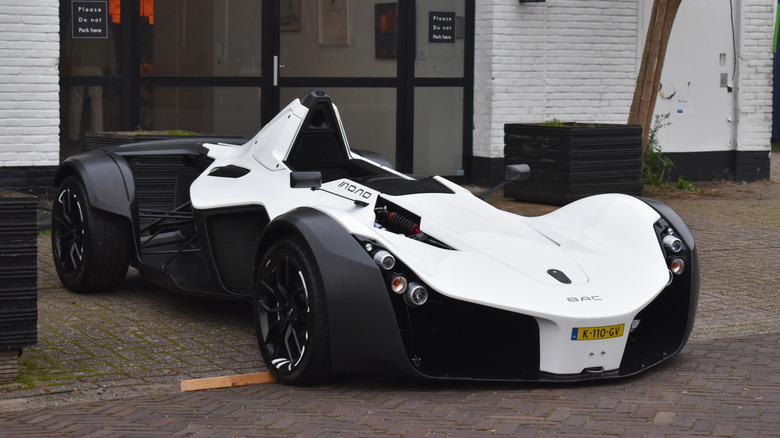
Briggs Automotive Company, or BAC, makes the world's only single-seater street-legal supercar. The Mono is built to look like one of those formula race cars, with the driver's seat the only seat in the car, making it perfect for rich introverts who like to go fast — 0 to 60 mph in 2.7 seconds, to be precise. Overall, this thing looks like it escaped from the race track, though it is completely street legal, at least in the U.K. So, if you like driving something that makes others point and stare with a mix of confusion and envy, this car is for you.
BAC celebrated the production of its 100th car in 2019, which might seem like a significant milestone after a company has been producing vehicles for a few weeks. However, BAC had been in business for ten years at that time. The slow production pace is due to the fact that every car is made to order and customized for each customer. No two BAC Monos are exactly alike. The seat and steering wheel in this car are tailored specifically to your hands and backside. The automaker will also give you a tailored racewear suit with matching boots and gloves along with a customized helmet. We couldn't find prices on the company's website, but a Throttle House YouTube video states the base price as $250,000. This is probably one of those instances where you can't afford it if you have to ask.
Marcos — racears made out of wood
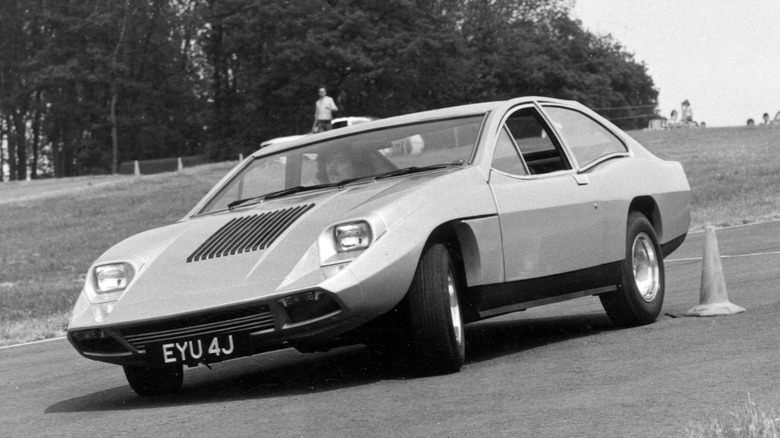
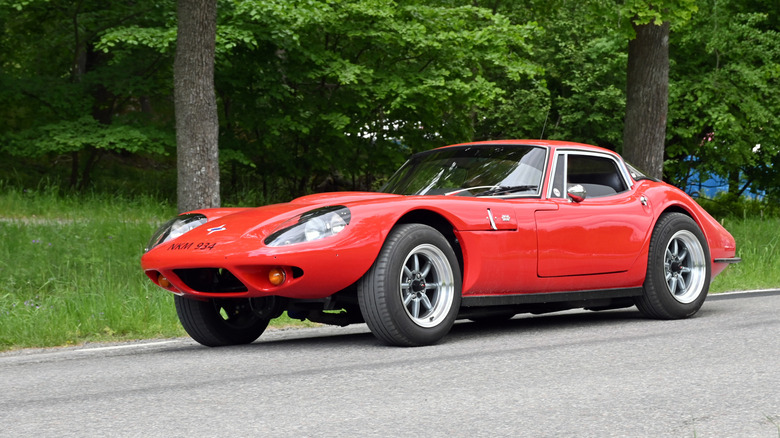
The first Marcos model came out in 1959 and, well, was a little odd-looking. It appeared to have an open-wheel Formula-1 race car body with a regular sports car top slapped on to it. But that wasn't the weirdest thing about it. Covered by its fiberglass body was a wooden chassis. That's right, the chassis was made of laminated plywood. One of the founders of the company, Frank Costin came from an aircraft design background and applied what he knew to car design. The result was a very fast lightweight little sports car. That first model was appropriately named the "Flying Splinter."
Succeeding models would look significantly cooler than that first one. But the use of a wooden chassis wouldn't be a one-time thing with the Marcos brand. It would go on to build cars that way until 1969. Apparently, some owners of the vintage models have tried to reinforce the chassis with steel. The folks over at Marcos Heritage call these "cowboy repairs" and warn against them, saying, "Do not try to improve the wooden chassis; it is a masterpiece, it works extremely well as it is."
The last Marcos produced was the TSO GT in 2007. However, the brand is back with the upcoming Manticore, due to be revealed in the fall of 2026, with a naturally-aspirated engine, six-speed manual transmission, and a targeted top speed of 200 mph.