

Starting Your Own Car Dealership Is Expensive, Let's Break Down The Costs
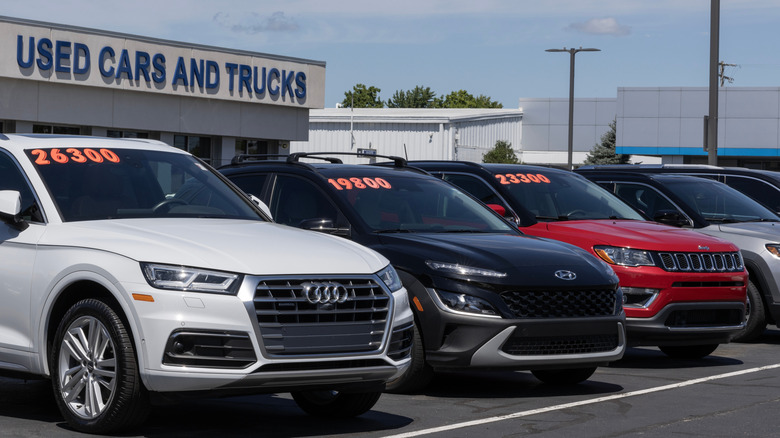
Starting a car dealership is something many gearheads will have considered at least once in their lives. While it's pretty obvious that a 1,000-car dealership with its own workshops and glossy showrooms will cost a pretty penny to operate, the hidden costs of just starting things up are quite steep, too. There's more to consider than just buying up a bunch of old cars to flip, sticking them into an old unit or on a vacant piece of land, and calling it a day. There are also licensing and registration costs, location and marketing fees, and seemingly-endless operational costs.
To put some sort of figure onto all of that, $30,000 isn't an unreasonable budget for setting up a basic dealership. This should cover cheap stock, insurance, legal fees, and some simple advertising and administration costs. It's worth bearing in mind, though, that something more substantial is likely to end up with six-figure starting costs. Of course, there are ways to scrimp and save along the way, so folks on a tight budget still have some options if they want a dealership of their own. But you'll still have to keep a few extra bucks saved for the long-term expenses that occur from year to year.
Setting up legally
Before budding car dealers can get out gathering cars, there are some legal bits to deal with first. A dealer license must first be obtained from the appropriate state's motor vehicle department. This process has varying costs depending on the state and the type of dealership being set up. For example, it's $700 in Texas to get your hands on an independent license. Meanwhile, NYC's fees vary depending on the month and even year, ranging from $150 to $600.
Next, factor in $90 or so for dealer plate fees, and look into the surety bond requirement, too. This bond is a financial guarantee that compensates both customers and the state in the case of dealer wrong-doing, and the size of that bond will vary from state to state. The total bond amount is generally tens of thousands of dollars, and you can expect to pay between 1% and 10% of that, depending on your credit score and a review of your financial information. Since a surety bond is a requirement of holding a dealer license, bond renewals also tend to coincide with dealer license renewals, be that annually or otherwise. For example, Texas tends to have both up for renewal every two years.
Following these expenses, dealers also need to consider business permits. As one example, Philadelphia charges $253 annually to acquire a permit which allows the servicing of cars. LLC or corporation filing costs (for those who aren't looking to begin as sole proprietors) also need to be factored in on top of any additional accounting costs that also apply.
Getting the premises ready

With the paperwork out of the way, it's time to focus on actually having somewhere to operate from. Naturally, the costs here can vary massively depending on the size and location of the dealership. An expansive showroom in a desirable area is going to cost an awful lot more than a 10-car setup in a rough neighborhood, for example. Numerous sources show $1,000 per month leases to be a solid starting point for smaller startups, with those costs increasing to $10,000+ for larger dealerships. Of course, buying a showroom is another avenue, but that choice isn't as accessible for those just starting out.
Starting setups can be small, though. For instance, in New Jersey, the legal minimum requirements include an office of 72 square feet which must include a working safe, desk, chair, and landline telephone. There also needs to be space to display two vehicles. It isn't much, but that also makes this sort of space relatively cheap. Dealer guidelines in Texas also allow up to four retail dealers to share the same location, lowering the cost of entry for newcomers.
Something else to consider is that car dealers are usually clustered close together. In other words, you'll have to keep nearby competing businesses in mind when scoping out an ideal spot. It's also worth factoring in the cost of improvements, security systems, and signage, as such expenses could easily run into the thousands. If the budget is small, perhaps a $50 pair of compact smart cameras and a simple $100 sign would suffice.
Obtaining inventory
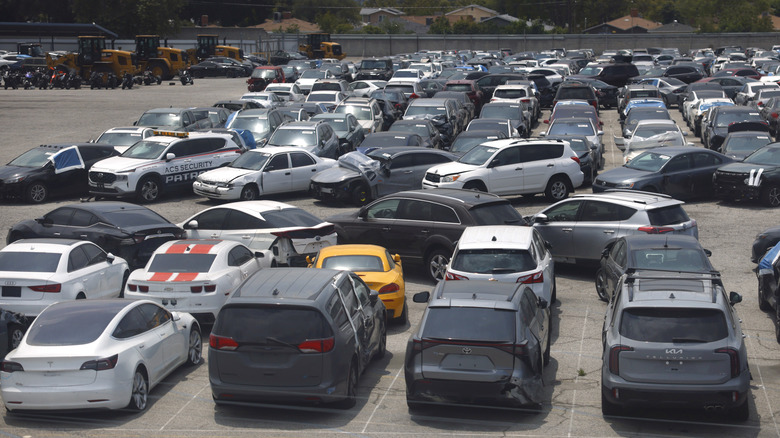
At this point, the dealership legally and physically exists, so it's time to get some cars. The approach taken here will depend on the dealership's size. If it's that little New Jersey office with space for two, then perhaps buying from a private seller is a budget-friendly option which helps dealers to escape the likes of auction fees. But for dealerships of scale, buying at auction might be necessary in order to acquire more cars at a faster rate.
Two auctions worth paying attention to are Manheim and Copart. The former has a $103 annual membership cost (through AuctionACCESS), while the latter has a starting fee of $99. The amount each dealer will need to spend depends entirely on their ideal stock. Having five cheap cars in stock might only require a shopping budget of $20,000, whereas 50 prestige cars will soon send the bill soaring into the hundreds of thousands.
Dealer financing is available, but this comes at a cost, with additional fees linked to every vehicle that is funded. Don't forget about auction fees on each car purchased, transportation costs, and prepping expenses. Each car will likely require some refurbishing; you could always check out some of our favorite AMMO NYC detailing videos for inspiration. Any mechanical or electrical repairs will need to be undertaken at this point, too. Learning to wrench would be a wise move — or, if you're going to be outsourcing those jobs, you should at least know how to spot the signs of a good mechanic.
Marketing to the masses

The cost of dealership signage, as mentioned previously, is just one small aspect of marketing. Dealers can choose modern ways of reaching out through social media advertisements, or they can rely on more traditional methods such as classifieds on specialist sites, or even local newspaper and radio ads. Different methods will be more effective for different dealers in different areas. Regardless of dealership scale and location, remember to be honest with car ads, as the last thing anyone wants is to argue with a dealer over deceptive advertising.
Large classified sites like CarGurus are good starting points. While an idea of expected costs can be ascertained from searching online, getting a quote from such sites directly is really the best step forward. This is because each advertising package will be tailored to the dealer's specific circumstances. This includes the amount of vehicles they have in stock, where they are, their expected return on investment, and whether they are eligible for any discounts. Two dealers on public forums gave their own examples; one Reddit poster mentioned they had adverts for 60 cars at $1,550 while another had 45 cars at $2,395, with both dealers advertising via CarGurus.
If those costs seem out of reach, it might be cheaper to place ads on social media. Dealers can spend as much or as little as they like on promoting their own ads throughout the web. Dealers United — a digital agency focused exclusively on the motor trade — suggests that $2.08 per click and $42.52 per lead are solid benchmarks to aim for. If you want further tips, we've posted a guide recently on how to sell a motorbike on Facebook Marketplace, and the same rules apply well to selling a car.
Insurance and operational costs

There are a smattering of different insurance policies dealers need to consider. These range from liability and property policies to worker's compensation insurance (for those with staff on board). These policies will vary from one individual to the next, but it's suggested that most dealers will pay at least $3,000 each year through various insurance plans. Dealer's open lot coverage is one such plan worth highlighting, as it protects your finances from things like vandalism, theft, and hail damage. It's typically mandatory for those with financed stocking plans, too. The price for a small dealer generally begin from around $3,000 per year, whereas a larger dealer could easily pay between $10,000 and $30,000.
In addition to insurance, there are tons of other costs that someone starting out might easily overlook. Staff, for example, can easily eat up thousands per month in profit. Office equipment like desks, chairs, and laptops can quickly mount up in cost. Dealer management software systems alone often command hundreds each month, too. Ultimately, starting up a car dealership is a very expensive venture, even on a small scale. You can go through thousands of dollars from just getting started, so this isn't something to test the waters with unless you've got cash to burn.