

How John Willys Went From Selling Bicycles To Building The World War II Jeep
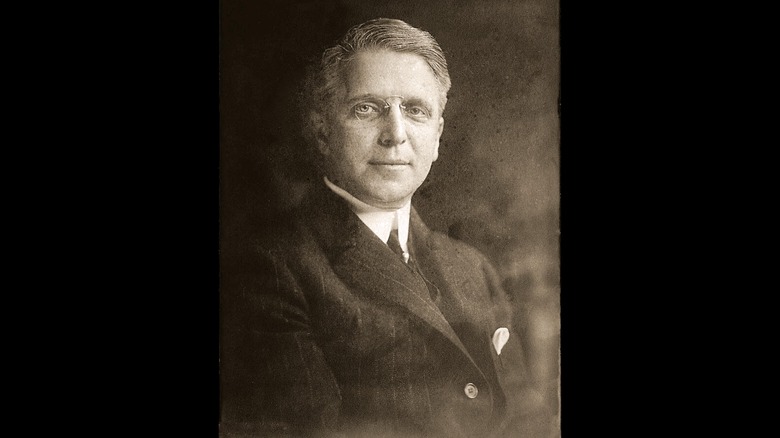
The Willys Jeep is a vehicle so thoroughly baked into global automotive culture that its name has become synonymous with rugged, go-anywhere four-wheel-drive vehicles. But the story of how that little olive box came to be isn't just about wartime production. Instead, it starts with an American entrepreneur named John North Willys.
This was the guy who started out scrubbing shirts and distributing bicycles before realizing that the internal combustion engine was about to alter the course of human history. In addition to being a master salesman and a fierce competitor who defeated a takeover bid from Chrysler founder Walter P. Chrysler, Willys was an art collector who loaded his mansion with works by icons like Rembrandt and served as a diplomat as the U.S. Ambassador to Poland. This is the chaotic, high-stakes, and unbelievable story of how John Willys went from the bicycle repair shop to building a vehicle that gave birth to one of the hottest genres of modern automobiles.
Willys' Bicycle Hustle and the Cleveland Epiphany
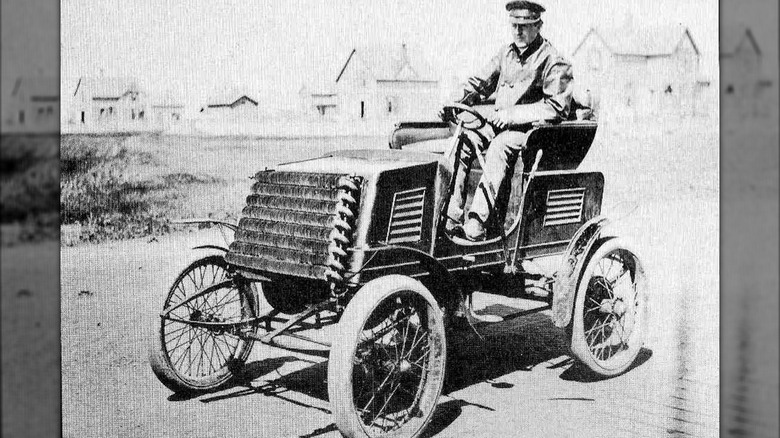
John North Willys was born in 1873 in Canandaigua, New York. A natural hustler, he bought a laundry business at 15, flipping it a year later for a clean $1,000 profit. He dropped out of law school to chase the massive late 19th-century bicycle boom, building a sprawling retail network that pulled in over $500,000 in sales by 1900.
Just before 1900, an 1899 Cleveland trip changed everything. Willys spotted a loud, sputtering mechanical contraption chugging down the cobblestone road. While others gaped at the passing fad, the master salesman realized that cars would surpass horses and bikes, and he pivoted to selling vehicles. Willys signed on as a dealer for luxury automaker Pierce, and despite only selling two cars, he picked up a franchise for Jeffrey Co.'s Rambler, one of the world's first mass-produced vehicles – scaling from 8 cars in 1902 to 20 in 1903. One of his talents was convincing nervous potential customers to switch over to the future of transportation.
The $350 miracle that saved Overland
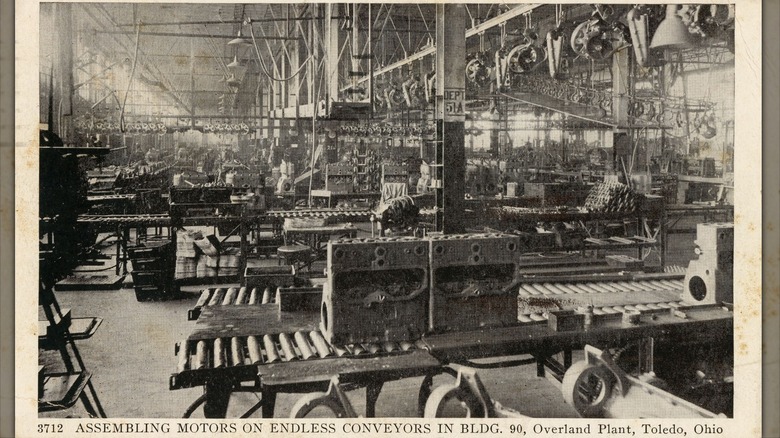
By 1906, Willys formed the American Motor Car Sales Company of New York, targeting Indianapolis-based Overland for wholesale and distribution. The entrepreneur signed a contract for their entire 1907 production run of 500 cars and went on a bullish national sales run, taking deposits everywhere. But back at the factory, the Panic of 1907 wiped out Overland's banking support. Willys rushed to Indiana to find production halted, parts scattered, and the firm one day away from receivership – short just $350 (before inflation) for worker payroll.
With banks locked down on a Sunday, Willys good intentions convinced his hotel manager to raise the required funds. Payroll was met, and Willys took full operational control. He wiped out $80,000 in corporate debt by convincing creditors to accept stock and reduced rates, then pitched two massive circus tents outside to serve as emergency assembly lines. Under the canvas, Overland built and shipped 465 cars in 1908, turning a neat $50,000 profit. By 1909, Willys bought the bankrupt Pope plant in Toledo, Ohio, moving the entire operation to its new spiritual home. The Overland went on to be the first of many companies to own the iconic Jeep brand.
The Toledo empire and sleeve valve engine disruption
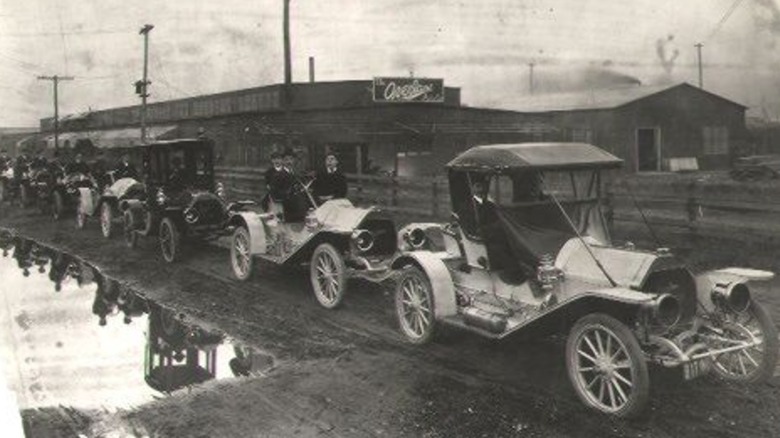
The move to Toledo transformed Willys-Overland into an industrial titan. Sales skyrocketed to 32,000 vehicles by 1912, making it the second bestselling automaker in America, trailing only Henry Ford's Model T. While Ford focused on stripped-down, ultra-cheap motoring, Willys targeted the middle market with a sophisticated sliding gear transmission and better durability. He built an entire ecosystem, convincing the Stranahan brothers to relocate Champion Spark Plug to Ohio to feed his lines.
Willys also gunned for the luxury tier. During a transatlantic voyage, he discovered Charles Knight's radical sleeve valve engine, which replaced traditional noisy poppet valves with smooth, silent gliding sleeves. Willys thrashed a test car with the engine across 4,000 miles of rudimentary English roads and launched the Willys-Knight luxury line in 1914. Eerily quiet and prestigious, they became a halo brand. By 1916, his automotive corporate empire employed over 100,000 people.
Labor wars, Walter Chrysler, and the Ambassador to Poland
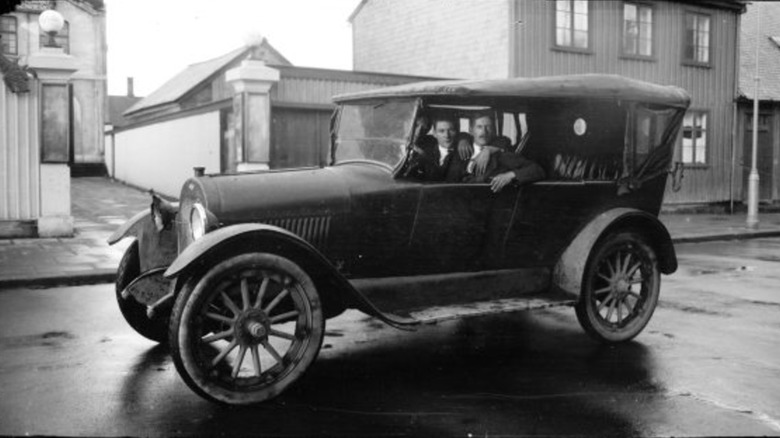
Post-WWI recession and a brutal 1919 Toledo factory strike left Willys-Overland deeply in debt. Nervous banks stepped in, forcing the hire of ruthless turnaround specialist Walter P. Chrysler at an astronomical $1 million annual salary. The corporate marriage turned out to be a high-stakes situation – Chrysler plotted a boardroom coup to oust Willys. But Chrysler underestimated the old-school salesmanship of John North Willys, relentlessly lobbying and winning over shareholders, which led to Chrysler leaving. Chrysler went on to turn the failing Maxwell Motor Company into Chrysler Corporation in 1925.
Back in control, Willys launched the affordable, lightweight, and European-styled Willys Whippet in 1926. Featuring cutting-edge four-wheel mechanical brakes and a spritely four-cylinder engine, it pushed the company back into the number three U.S. sales spot by 1928. Then, showing acute financial timing, Willys abruptly sold all his common shares in the summer of 1929 for $25 million and stepped down. Months later, the market crashed into the Great Depression while Willys was safely tucked away in Europe, serving as the U.S. Ambassador to Poland.
The rebirth of Toledo and the ultimate war machine
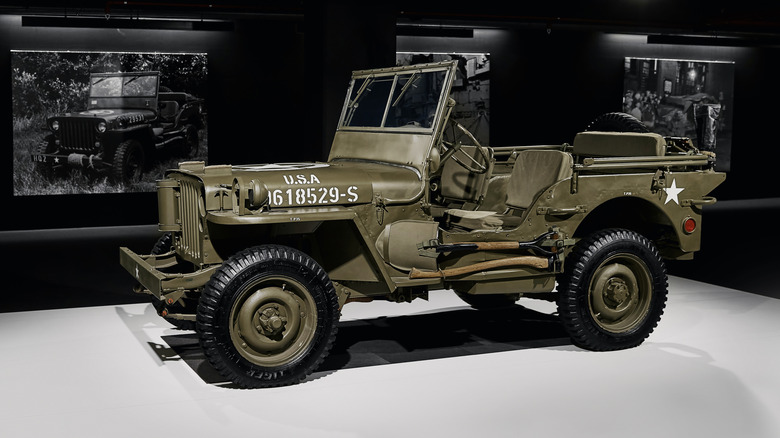
By 1932, Willys returned from Warsaw to rescue his bankrupt, bleeding company, overseeing development of the compact Model 77, but it seemed to take an immense toll; he passed away in August 1935 after being reappointed president of Willys-Overland. Reorganized as Willys-Overland Motors in 1936, the company would hire engineer Barney Roos two years later. Roos reengineered the old Whippet four-cylinder into the legendary 60 horsepower "Go-Devil" engine – a mechanical masterpiece built for maximum abuse.
In 1940, the U.S. Army needed a lightweight, four-wheel-drive reconnaissance vehicle. The Jeep Willys prototype, the Quad — collectively templated by Willys, Ford, and Bantam – and the design premiered 75 days later. Willys eventually won the Army's contract in 1941 after its Willys MA followed the Quad prototype, and 16,000 revised MB models were ordered at $738.74 per unit.
The Toledo factory ran 24 hours a day, cranking out over 360,000 Jeeps from October 1941 to August 1945 that flooded global battlefields. Dwight D. Eisenhower listed it as one of the key tools that won the war. Post-WWII, Willys trademarked the Jeep name and launched the Civilian Jeep (CJ) series, popularizing the modern recreational four-wheel-drive market among consumers. Even 80 years later, the classic Willys Jeep is still capable of producing fun.