

Trump's 'Much Better Deal' For Gordie Howe Bridge Isn't Much Better, But At Least It Has An Opening Date
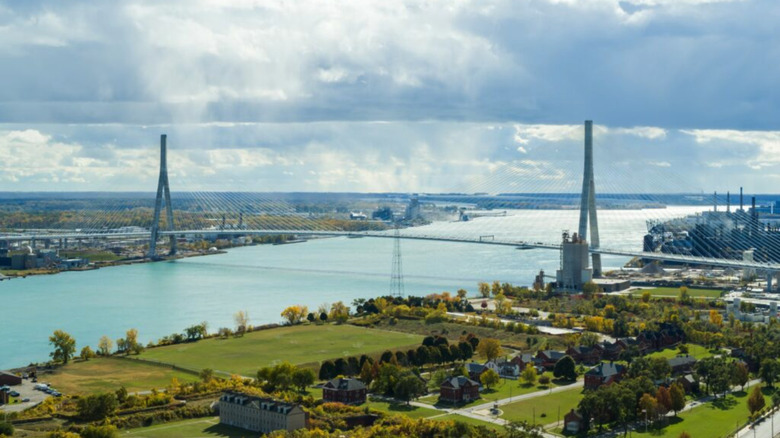
It's too early to say that the Gordie Howe International Bridge saga has finally concluded, because we have to make sure it opens on its currently-projected opening day, set to be July 27. It seems Canadian officials bent to the whims of the US.. President and gave him the better deal he so wanted. President Trump excitedly shared that his "MUCH BETTER DEAL" "is great, and fair" on Truth Social over the weekend, but if we dig further into the details of what the U.S. and Canada is getting out of it, it's honestly not that great.
The terms of the deal, as reported by The Detroit News, will have Canada and the U.S. (not Michigan) splitting toll profits, but only the net profits for the next 15 years. Canadian Prime Minister Mark Carney pointed out Sunday that the "net" portion does a great deal of heavy lifting, and he's not wrong.
To break it down, tolls collected on the Canadian side–as originally planned–will still be used to pay Canada back for the loan to build the bridge in the first place. That money will also be allocated towards bridge service and maintenance (hey Moroun family, are you taking notes?). The leftover or the "net" profit from there will be split between the two nations, with the American portion going into an economic development fund to be used towards projects on the U.S.-side. Who will decide what is done with those funds remains a mystery.
The end goal is that improvements on the U.S.-side, determined by someone, will help to drive more traffic over the bridge which would help increase that net number. Which sure, if you build up the area around the bridge on the U.S.-side, that would theoretically bring more business, which would mean more vehicles crossing to add to those profits. But what happens after those first 15 years?
Wait, what happened to Michigan's profits?
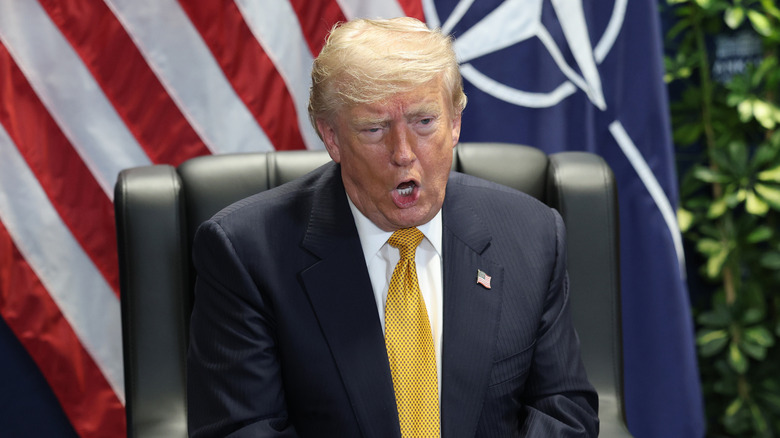
Keep in mind, in the original deal collected tolls were to go towards Canada's debt and the bridge's upkeep as well. After the loan was paid off, both Michigan and Canada were to split profits evenly, 50/50. Yes, the U.S.-side would get money and sooner with this "much better deal," but not much. Michigan isn't slated to get anything at all, now. And, if the deal is that the U.S. gets to split the net profits for those first 15 years and then Michigan has to wait for Canada to pay off the bridge to see any further profits, well that'll suck for Michigan regardless.
When Michigan and Canada first put together this deal, the initial repayment period for Canada's loan was expected to take about 30 years. The project taking longer, declining traffic at the border (likely no thanks to Trump's recent tariffs and sanctions), and inflation costs have caused that projected number to extend to potentially 70 years. And that still doesn't account for this new arrangement.
What we're seeing is a real-life example of the classic delayed gratification experiment, where you can have one marshmallow now or be patient and wait a short amount of time to receive two marshmallows. Trump, in what will probably come as no surprise to anyone, decided to take the marshmallow now, and Michigan will lose out for it.
Trump gets his CAPS-LOCK boast while everyone else has to deal
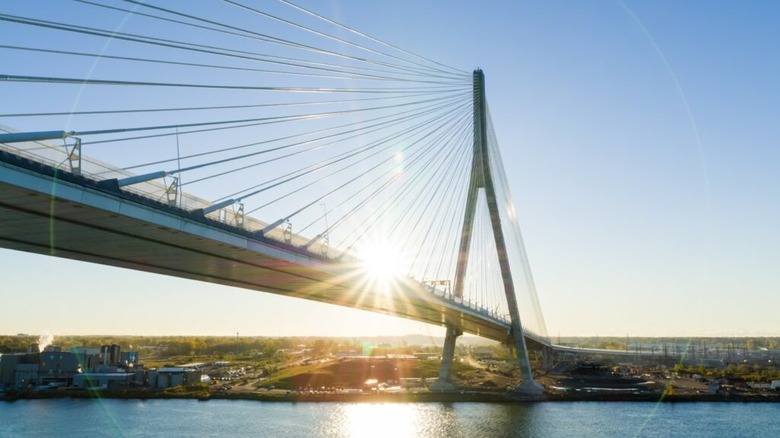
That brings us to another term of the deal. Remember that this bridge was an agreement made between Michigan and Canada, two entities that have managed to keep good relations for quite some time as it has greatly benefited both economies. It seems only when the broader U.S. government steps in does the relationship get a tiny bit sour, via tariffs, more border patrol, sanctions, and more. And in this deal, Trump has managed to wiggle the U.S. government into setting bridge tolls as well.
Going forward, Canada would need clearance from U.S. officials to increase tolls beyond 10% as well as lower them below regional values. I can't help but think that this somehow benefits the Moroun Ambassador Bridge, but I'll refrain from utilizing my great pattern-sensing abilities or going all tinfoil hat, for now.
The good news is that at least the bridge is finally set to open at the end of this month. A University of Windsor study said that this should cut as much as 20 minutes from border crossing times and save truckers over $2.3 billion over the next 30 years, a boon for a struggling industry in today's economic climate. The bridge will also truly benefit the economies of both countries, and Michigan which does play a key role in all of this despite Trump's unendingly frustrating need to "fix" [re:ruin] things. At the end of the day, it seems like the original parties both lost out a bit, and the annoying third party didn't really gain anything but that one marshmallow and nebulous bragging rights.