

What Common Issues Affect Mercedes-Benz's M256 Turbocharged Inline-6?
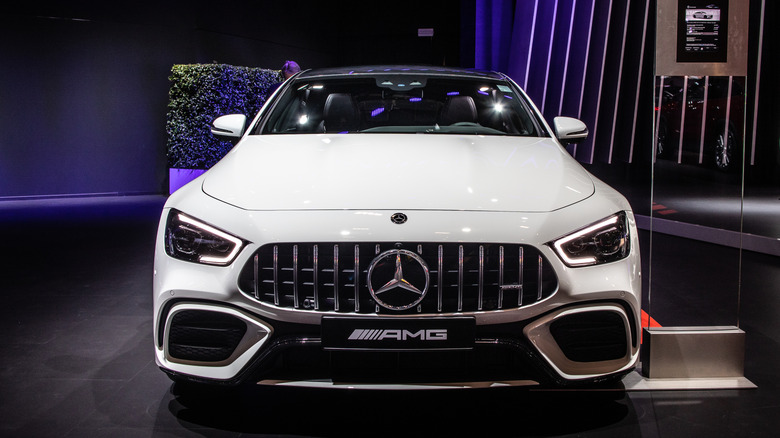
Since 1924, Mercedes-Benz has built its reputation on the refined character of its inline-6 engines. From the legendary M103 in the 300SL and the venerable M104 in the R129 SL, the straight-6 configuration was a cornerstone of the brand's identity, delivering a balance of performance and refinement that V6 engines simply couldn't match.
Then, in the late 1990s, Mercedes made the decision to abandon the inline-6 in favor of V6 engines, which were packaged more compactly. After all, inline-6 engines do have certain disadvantages — their length makes them difficult to package in transverse, front-wheel-drive layouts, and their relatively higher center of gravity compared to a V6 is an undesirable trait in performance-oriented vehicles.
For nearly two decades, the straight-6 was absent from Mercedes showrooms. That changed in 2017, when Mercedes introduced the M256. The engine represented a return to form, combining the inherent smoothness of a straight-6 with modern technology including an integrated starter-generator, electric auxiliary compressor, and twin-scroll turbocharger. But how has it held up in the real world?
Since the M256 is still a fairly new engine, there aren't any long-term track records in regards to its reliability. However, up until now, the engine has been associated with carbon buildup on intake valves, coolant pump failures, 48V ISG starter-generator complexity, and timing chain wear. Here are the most common issues affecting the Mercedes-Benz M256 turbocharged inline-6.
Mercedes M256 engine common problems
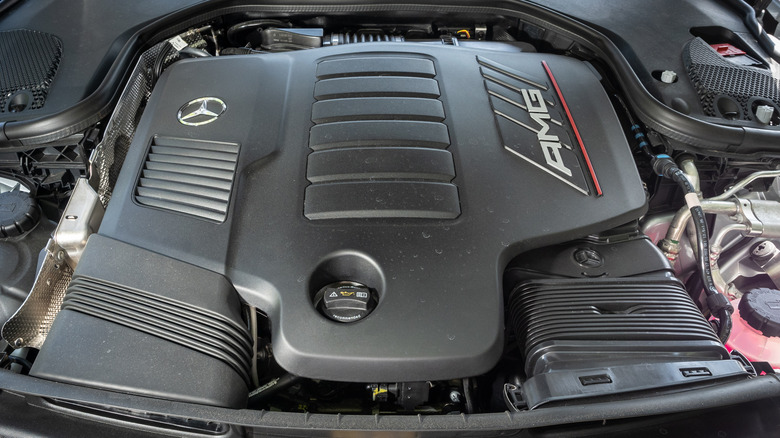
One of the M256's most advanced systems is the 48-volt mild hybrid system — but since the engine came out, this system has been the subject of a few distinct recalls and TSBs. NHTSA Recall 24V-207 covered a loose 48V ground connection under the front passenger seat on GLE and GLS 167-platform vehicles, a fault that carried a fire risk due to electrical resistance building up at the connection point.
Mercedes also issued a separate 2025070002 TSB in 2025 for 2019-2021 CLS, E-Class, GLE, GLS, and AMG GT models, after finding that some vehicles left the factory with 48V battery control unit software that didn't match current specs — in rare cases, this meant the check-engine light wouldn't turn on even when a real fault was present. Both actions were covered under warranty.
Since the M256 uses direct fuel injection, carbon buildup on the intake valves is a known risk. In direct injection engines, fuel is sprayed directly into the combustion chamber rather than through the intake port, meaning the intake valves never get washed by fuel — allowing oil vapor and combustion residue to accumulate on them over time.
The M256's electric coolant pump has also been the subject of a documented recall. NHTSA Recall 19V-605 covered 3,264 2019 CLS-Class vehicles equipped with the M256, where the power supply wire for the electric coolant pump could contact the engine fan and chafe — a fault that carried both an engine overheating risk and a 48V system deactivation risk.
Some owners have reported a cold-start rattle consistent with timing chain wear, though with the M256 still a relatively young engine, there isn't yet a large enough sample to call this a confirmed pattern the way the 48V and coolant pump issues are.
Is the Mercedes M256 a good engine?
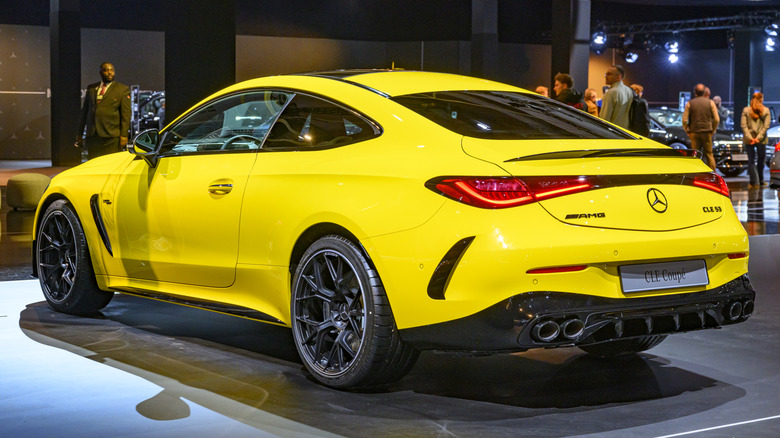
Despite its recall and TSB history, the M256 has generally been well received by both the press and Mercedes' own engineers. Hagerty called the S500's inline-6 "sublimely smooth," noting that its broad torque delivery helps push the roughly 4,800-pound S-Class without any apparent effort. The engine's role in the lineup is only expanding.
In early 2026, outgoing AMG boss Michael Schiebe confirmed that the divisive turbocharged four-cylinder C63 will be discontinued and replaced by a six-cylinder-only C53, built around the same M256-derived engine already used in the AMG CLE 53 and E53. Schiebe told German outlet Auto Motor und Sport that the six-cylinder "excites our fans" — a notable reversal after AMG had spent years defending the four-cylinder hybrid setup the M256 is now replacing.
The M256 currently powers a wide swath of the Mercedes lineup, including the S-Class (S450/S500), E-Class (E450/AMG E53), CLS (CLS450/AMG CLS53), GLE (GLE450/AMG GLE53), GLS450, and the AMG GT four-door (GT43/GT53), and, from 2024 onward, the G-Class (G500). Output ranges from 362 horsepower in its base tune up to 443 horsepower in the most recent AMG-tuned variants, aided throughout by the 48-volt system's added boost.
Reception hasn't been universal, though. The Autopian's take on the M256 after driving several versions was that it's smooth and delivers real midrange performance, but lacks the drama of the V8s it's increasingly standing in for — calling it a fitting "AMG-lite" powertrain rather than a true enthusiast's engine.