

NYC Congestion Pricing Cut EMS Response Times By Over A Minute As It's Wild Success Continues
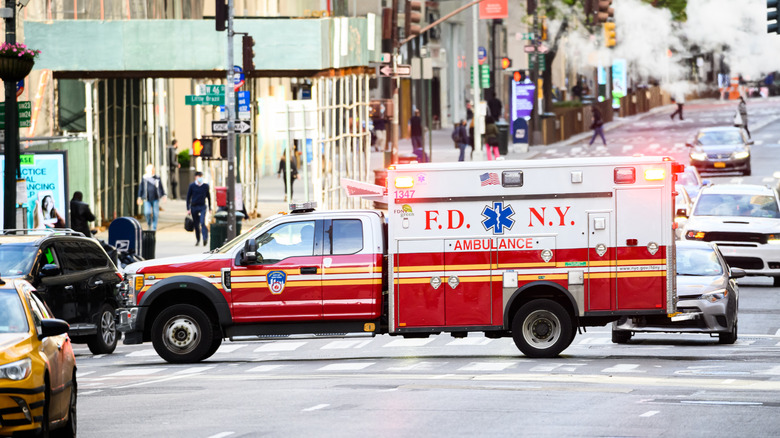
The resistance against a Manhattan congestion pricing zone was so fierce that it took New York City to implement the program. When the zone finally came into force in January 2025, the foretold doom and gloom never arrived. It's been quite the opposite, actually. A new academic paper published on Monday found that ambulance travel times within the zone have improved by 63 to 70 seconds, adding to the laundry list of benefits of congestion pricing. I hope it's not news to you that traffic moves faster when there are fewer cars on the road.
A second in New York is a minute everywhere else, but every moment matters in a medical emergency no matter where you are. The paper published by the National Bureau of Economic Research found that the travel-time savings for emergency medical services weren't evenly distributed. Pre-treatment, driving to the scene reduced times by only 7 to 9 seconds. The lion's share of time loss was in transporting patients to the hospital, 54 to 59 seconds. The time improvements were also largest near the congestion zone's northern border along 60th Street. Co-author Brad Humphreys, a West Virginia University economics professor, told Gothamist:
"Any increase in the time from the incident to the hospital saves lives and generates lots of cost savings. Congestion pricing wasn't introduced to make it easier for ambulances to get from incident scenes to hospitals, but they do."
Faster ambulances will have a measurable impact on NYC's death rate
We intuitively know that an ambulance reaching the hospital faster leads to better outcomes, but the researchers put hard numbers to Manhattan's congestion-zone benefits. They noted, in general, that every 1-minute cut in EMS response time yielded a 1% impact on mortality elasticity, a morbid statistic that quantifies a variable's influence on the death rate. A little over a single percentage point doesn't sound significant for a single incident, but it can save countless lives over thousands of EMS responses in the heart of Manhattan.
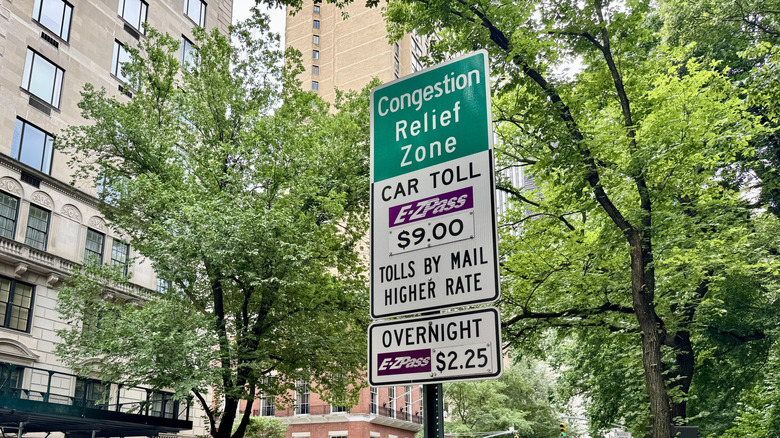
The congestion zone was implemented to encourage more people to use public transportation and to generate revenue to fund those systems. The goal was unquestionably achieved with a 21 percent reduction in passenger vehicle traffic. The other benefits, like faster ambulance response times, were largely pleasant side effects. Driving times into Manhattan from the suburbs and far-flung parts of the city have also been reduced, a time savings that might justify paying a $9 toll. Businesses with the congestion zone have also seen an increase in foot traffic. Midtown and Lower Manhattan are just more pleasant places to be without a relentless cacophony of car horns and sirens. The noise hasn't been completely eliminated. It's still New York, but it's far more tolerable.