

What The '70s Oil Crisis Can Teach Us About Living Through Fuel Shortages
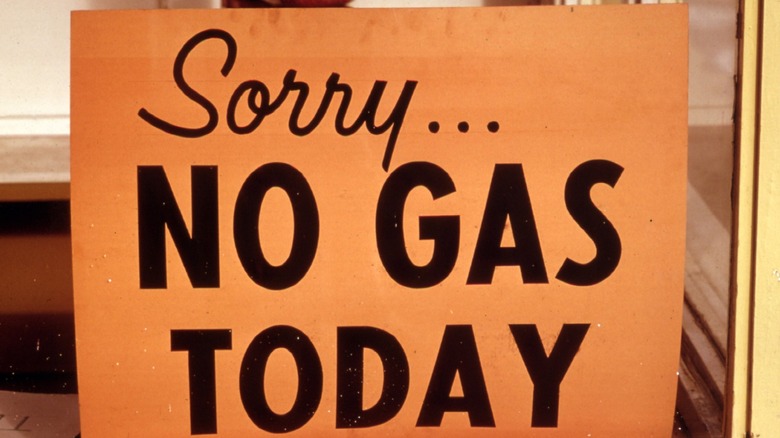
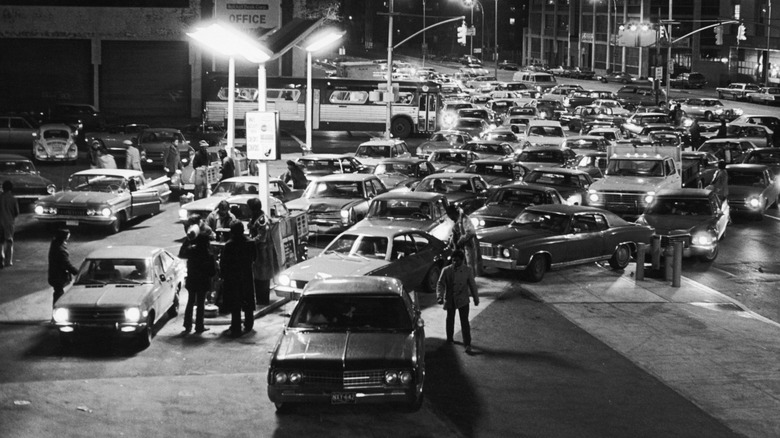
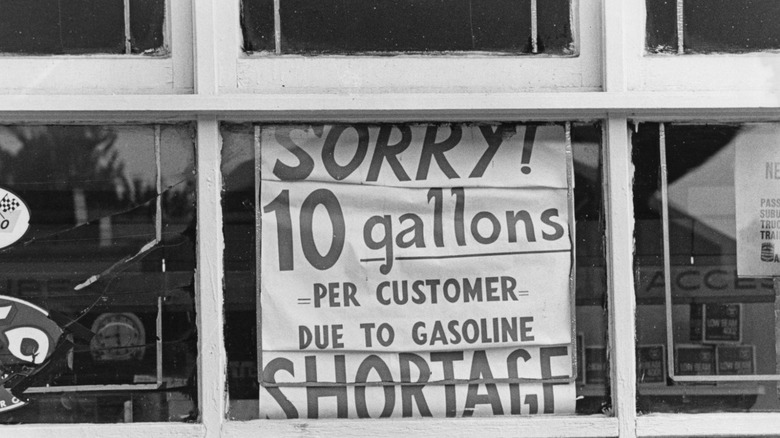
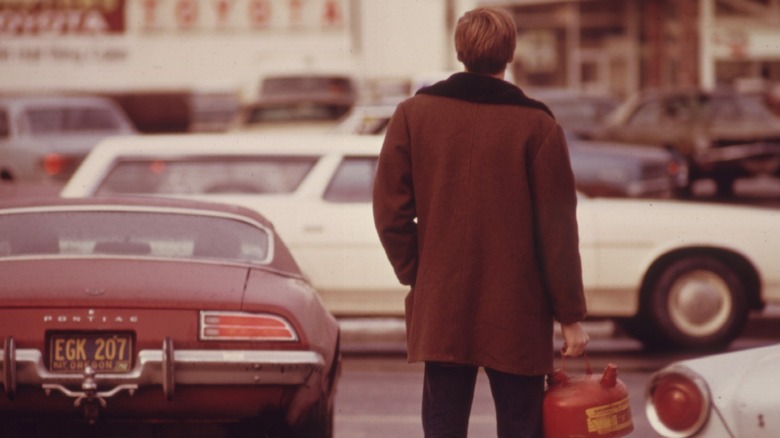
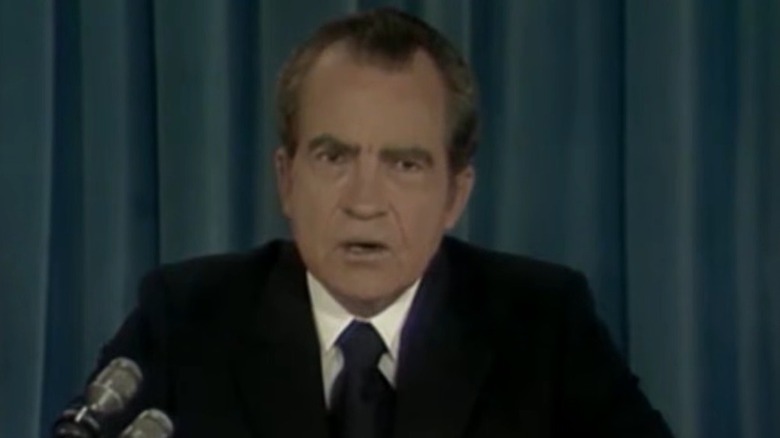
By the end of 1973, Richard Nixon was already beset by Watergate. The nation was shaken and calling for him to resign. That November, he sat down in front of cameras and addressed the country from the White House, not about the scandal primarily, but about something just as pressing: the fuel crisis. The Middle East was embroiled in a conflict between Egypt, Syria, and Israel, called the Yom Kippur War. In October, the Organization of the Petroleum Exporting Countries (OPEC) decided to stop shipping oil to nations that supported Israel, causing severe shortages in the U.S. Gas prices soared, and inflation ran out of control. Drivers would sit in lines at gas stations for hours, just to find the station had run out. It got to the point where many gas stations had to start rationing. According to the CEO of Chevron, that kind of fuel crisis might be on the horizon for us, but luckily, there's a lot we can learn from the past.
Americans got through the '70s oil crisis by driving less, owning smaller, more fuel-efficient cars, using less electricity, and throwing on sweaters while turning down the heat that winter. They endured — even though the shortage was caused by public policies and wars that were out of their control. It wasn't fair, but it was necessary, just as some sacrifice may be needed from us today. That said, permanent solutions, such as developing other energy sources, have to come from the government and big business.
Everyone has to do their part
During his address to the nation in 1973, Nixon did a rather bold thing for a president to do — he asked American citizens to make real sacrifices: "The fuel crisis need not mean genuine suffering for any American. But it will require some sacrifice by all Americans," and that, "our factories, our cars, our homes, our offices, we will have to use less fuel than we are accustomed to using." Overall, he said that all Americans would need to "tighten their belts." It probably helped that he had already started his second term and didn't need to worry about re-election.
What sacrifices did he ask for? He requested all Americans to turn their thermostats down in the winter by six degrees to achieve a national indoor average of 68 degrees. He asked drivers to carpool and to drive no faster than 50 miles per hour. He also called for working hours to be curtailed, so that offices and factories would use less power. Today, the average person can't be blamed for the current oil crisis. There are a lot of things we can all do to help mitigate the damage as our oil reserves are dwindling. We can examine how fast and how often we drive, and whether we can live with the thermostat set a little lower in the winter, depending on what fuels our furnace. Many Americans are already switching to EVs and hybrids, too.
There are limits to what regular people can do
Realistically, there's only so much Joe Q. Public can do to help the energy crisis. Using significantly less gas can require real lifestyle changes, some of which aren't possible for many Americans. A study in 1974 by the National Petroleum Council (PDF) acknowledges this reality. Carpooling is one example. At that time, it was estimated that half of all commuters were unable to carpool. The study also recognized that public transportation wasn't a convenient option for many commuters who live in the suburbs but work downtown.
The same challenges remain today. And even though a large percentage of Americans would be open to living car-free, it's simply not practical for many of us. True, it's easier for people who live in some cities like New York to take the bus and subway to work than to drive, but most cities and population areas continue to be built around the use of cars and not public transit. For example, public transportation is almost nonexistent in rural areas, where most people have to drive long distances for work, shopping, and doctors' appointments. Working from home is a solution, but only for some white-collar jobs. Blue-collar workers don't have that option, and a lot of companies that used to let their employees work remotely have been calling them back into the office again. The burden for solving the current energy crisis cannot rest mostly on the shoulders of the average citizen.
Governments need to set the example and take the lead
Nixon may have been frank about what he wanted the American people to do, but he didn't put the entire burden of solving the crisis on the common man. So that the U.S. government would practice what it preached, the president ordered that all 500,000 or so federal vehicles not be driven faster than 50 miles per hour, except in cases of emergency. He also directed that federal offices — including the White House — keep the thermostat down to between 65 and 68 degrees. Nixon called on state and local governments to get in on the act by lowering speed limits and taking other energy-saving measures, noting Oregon's example of limiting the usage of outside lighting and altering the school year.
Government legislation and policies had the biggest impact on change. In 1973, the Emergency Petroleum Allocation Act was passed, requiring the president to allocate crude oil to ensure all regions and refineries had enough. A national speed limit of 55 mph was also instituted, as well as year-round daylight savings time – a failed experiment that lasted only seven months. We can see from the current fuel crisis that government actions have a huge impact, for better or worse, and nothing will get fixed unless those in office act responsibly.
We need alternate sources of energy, and industry has a huge role to play
Nixon didn't leave businesses — big or small — out of his address. He asked them to turn their thermostats down, too — in offices, factories, and other workplaces. He also included calls to pivot to other energy sources, asking the Atomic Energy Commission to shorten the time it was taking to license and build nuclear power plants. He wanted power plants designed to run on oil to be converted to burn coal instead. He called for wider use of natural gas and more offshore drilling, as well as the construction of the Alaska Pipeline. These initiatives all required industry cooperation.
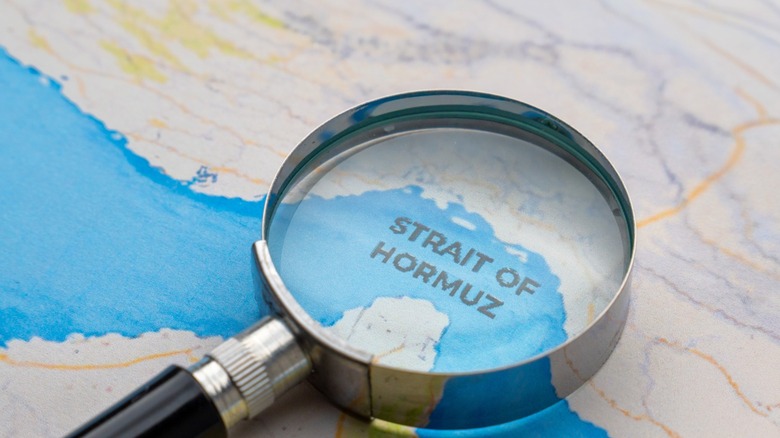
A Republican politician calling for more offshore drilling shouldn't sound like anything new to us today. Most of Nixon's proposals regarding alternative energy sources raise all kinds of environmental concerns — the kinds that still prompt heated debate between conservatives and liberals in our time. But no reasonable person would deny that we have to develop an alternative to crude oil at some point. Nixon's fuel crisis was caused by a single decision by OPEC. The world's fuel crisis today comes from control over a 21-mile-wide stretch of water. Reliance on a resource that is so shrouded in political instability leaves all of us in a precarious spot. We need options — preferably clean ones like green biofuels — and fast.
Energy management must be a priority
It's startling to see how we're still struggling with oil dependence, even after half a century. Sure, power plants don't run on oil anymore, but we're in yet another fuel crisis, and you have to wonder how well we've applied the lessons we've learned since then. At least the U.S. government began to prioritize the management of energy resources. In addition to the initiatives started by Nixon, Carter would later create the Department of Energy during another fuel crisis, giving energy its own cabinet-level organization for the first time in history.
Nixon pointed out that the fuel crisis started long before the OPEC embargo, not from armed conflict, but from peace and prosperity. He said, "Now, our growing demands have bumped up against the limits of available supply, and until we provide new sources of energy for tomorrow, we must be prepared to tighten our belts today." Like it or not, energy management should be a priority for all of us.