

How Engineers Design Tires That Can Handle The Heat Of Steel Mills
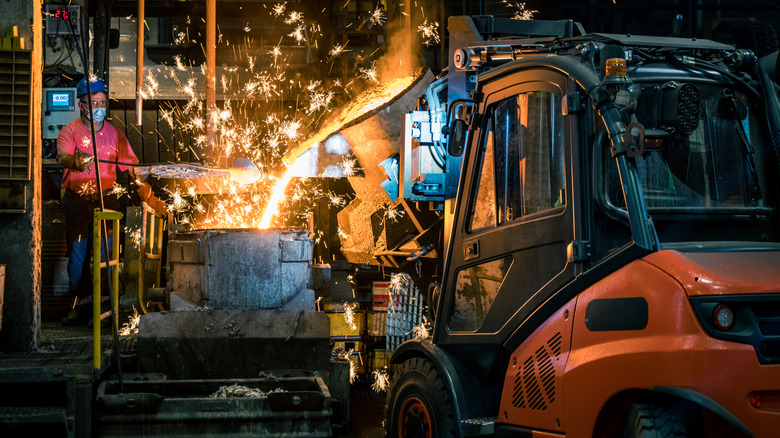
The tires of a loader, transporter, or industrial equipment in a steel mill undergo a type of abuse that will make standard tires scream in agony. Most car tires have an 185°F (85°C) threshold, and operating the tire beyond that causes premature wear, traction loss, and blowouts. As you can probably imagine, things are different inside a steel factory. The blast furnace for melting or purifying raw steel can hit a scorching 2,900°F (1600°C), while hot slag can reach a sweltering 2,732°F (1500°C).
At those temperatures, standard pneumatic tires have no chance against the extreme demands of working in a steel mill. The heat will soften and degrade the rubber to the point of failure. When that happens, tire explosions are imminent, or the tire will be highly unstable under heavy load, leading to potential accidents and costly downtime. It's why the heavy-duty equipment at steel factories is fitted with purpose-built, heat-resistant solid tires, which are aren't used in cars for any number of reasons, but are better suited to heavy-duty work.
These purpose-built tires don't need air to support the carrier's weight and are much like the solid tires of a child's bicycle. The difference is the rubber compound and construction. Heat-resistant tires are made from a mix of pure rubber, synthetic rubber, and a unique blend of additives that are concocted to withstand extreme heat. The bespoke ingredients also make the tire tougher and more durable against cuts. Steel mill tires also have a layered or ventilated construction for efficient heat dissipation, while the sidewalls are further reinforced to reduce flex and offer better stability under load.
It's all in the mix
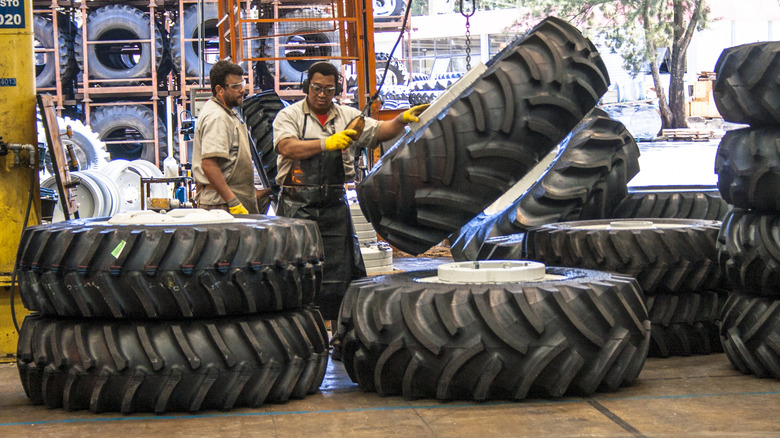
Many car and truck owners don't think much about the tires in their vehicles. They're round, black, and have treads, but modern tires are not merely circular patches of rubber. A typical tire consists of 19% natural rubber. The remaining 81% consists of synthetic rubber, fillers, steel, textile, and antioxidants, all working together to enhance a tire's durability, heat resistance, traction, wear, and rolling resistance.
Adding more or fewer additives and fillers to the mix can significantly enhance a tire's performance attributes. For instance, carbon black (a filler additive used in most tires) not only contributes to a tire's black color but also mitigates wear to make the tire last longer. Silica is another filler that improves wet grip and rolling resistance. In the car world, such differences in composition are among the primary differences between street tires and racing tires. For OTR (Off-the-Road) steel mill tires, there's a similar chemistry of mixing and matching involved.
Natural rubber is resistant to high heat. Adding synthetic rubber polymers, like styrene-butadiene rubber (SBR) and butadiene rubber (BR), can enhance a tire's heat resistance. Meanwhile, carbon black, silica, and curing additives make the rubber formula tougher and more durable. Manufacturers will tweak the recipe, test the tire, and evaluate its performance to determine if the tire can meet the demands of a particular vehicle or industry.
Chains offer more protection
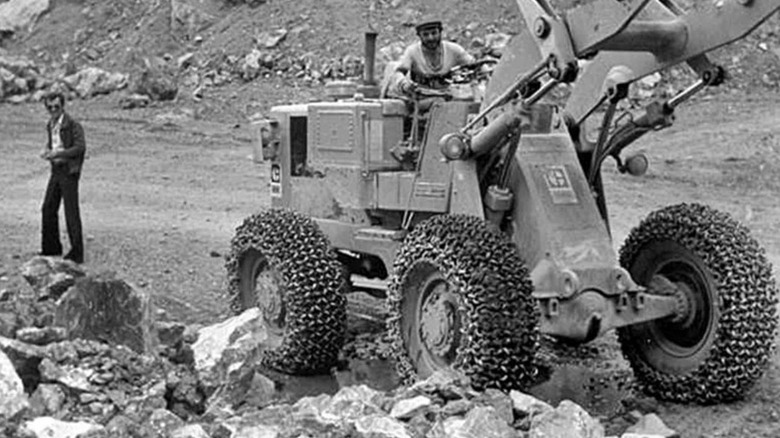
The punishing work environment puts a lot of strain on even the best steel mill tires. Tire protection chains can be utilized for added reinforcement and protection against extreme abrasion, blistering heat, and slug impact. The chains are typically made of hardened alloy steel and are wrapped around the tire, serving as a primary layer of defense to extend the tire's lifespan.
Helpfully, OTR tire chains also help enhance traction over loose, muddy, or slippery surfaces, just like the snow chains preferred by semi truck drivers in winter. They also help minimize cuts and heat damage from hot slag. Then again, tire chains are not set-and-forget. For them to work as intended, they must be sized and fitted exactly over the tire, and they must be inspected regularly by trained technicians to prevent uneven tire wear or unintentional damage due to a loose chain.