

The Contentious History Of The Term 'SUV'
The term "Sport Utility Vehicle" is a contentious one. To a purist, a vehicle needs to feature a ladder frame, a transfer case, and all-wheel drive to qualify as an SUV. But to many members of the general public, being tall and having a rear liftgate is all that it takes to be classified as one. The term has become so diluted that even the Polestar 3, a sleek electric performance vehicle, is marketed as an SUV. It's a prime example of how the goalposts have clearly shifted from utility to image building. But why is the definition of "SUV" so contentious in the first place?
In truth, the history of the SUV itself muddles the term's meaning. Back in the post-World War II era, the SUV came about as the need for a vehicle as capable as the Willys Jeep, but with more civility and comfort. But if you look at the alternatives back then, they either weren't comfortable enough or lacked the essential spice — four-wheel drive. Moving forward in history, you got lifestyle-centric vehicles like the Scout 80 and Ford Bronco. These did lay the template for the SUV term, but when viewed objectively, they were essentially trucks.
Then came vehicles like the Jeep Wagoneer, which offered customers a richer driving experience with go-anywhere capability. And its successor — the Cherokee — fully embraced the SUV label. Midway through its lifespan, the Cherokee lineage moved to a unibody style, ditching the traditional, utilitarian ladder frame, making its claim to the SUV terminology questionable. But the terminology exploded during this era, too, encompassing everything from the Ford Explorer to the Honda CR-V. Somewhere along the line, "SUV" lost its meaning, becoming a marketing buzzword to describe glorified hatchbacks on stilts.
The military connection
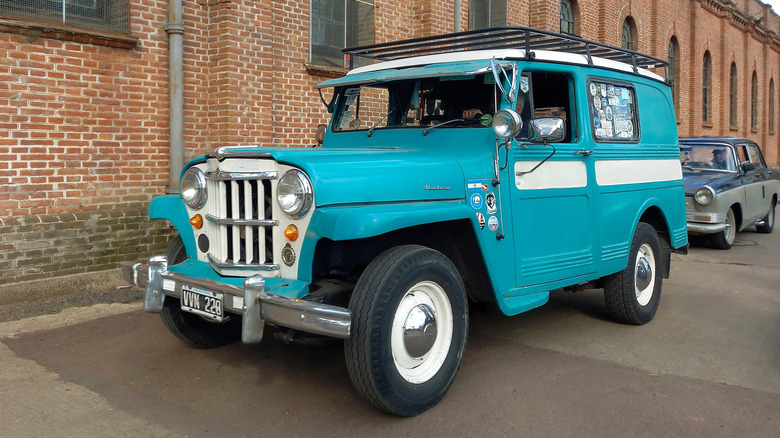
Conversations about the "first SUV" usually start with the armed forces. The World War II Jeep is arguably the patriarch of the SUV idea. Post-war, when the soldiers came home, they yearned for the Jeep's go-anywhere capability but didn't want the spine-shattering ride or the lack of doors and roof. That led to the Willys Overland Jeep Station Wagon, which came out in 1946. It was the first mass-market all-steel station wagon. It was designed like a family car, but all-wheel drive (which was available three years later) gave it go-anywhere capability.
This style didn't just start with the Willys, though. If you go further down the rabbit hole, you'd stumble upon the 1935 Chevrolet Suburban Carryall. It used a heavy-duty truck chassis with a wagon body bolted on top. The name suited the purpose: to "carry all" the passengers and luggage it could. You could easily call it the first large-scale utility vehicle, but it lacked the "sport" part of SUVs today.
The Station Wagon and Suburban were utilitarian but capable. Ranchers, hunters, and people who lived away from civilization made extensive use of them where no roads existed. And here's where the "contentious" part of history starts. Can you really call the Willys Wagon an SUV just because it's a jeep with a roof and four doors? And is the Suburban an SUV if it didn't even have 4WD until the late '50s?
The Scout 80: A template for modern SUVs
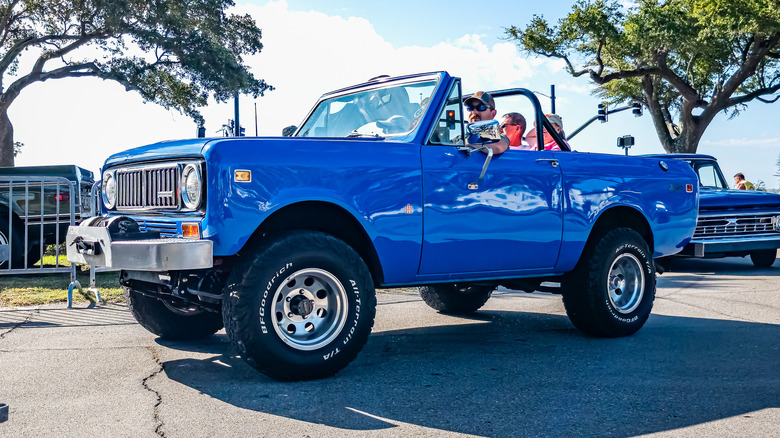
In the late 1950s, International Harvester — a company better known for tractors — realized that there was a market for a smaller and more "fun" Jeep. So, in the early 1960s, it released the Scout 80. This vehicle was designed to be more lifestyle-centric. It got a fold-down windshield, removable tops, and nicer-looking bodywork. Some call the Scout the first SUV, as it focused more on recreation while retaining utility.
The Scout proved that all-wheel drive didn't have to be exclusive to agriculture. Ford quickly followed up with the Bronco in 1966, and Chevrolet brought the Blazer in 1969. They were rugged but also stylish; the Blazer even came with game-changing options like air-conditioning and an automatic transmission. The industry realized that there were plenty of buyers willing to pay a premium to feel like adventurers.
These vehicles created the template for what's now recognized as the classic SUV: two doors, a short wheelbase, and a great deal of ground clearance. Those trends have continued today, which you can see for yourself with the highly-capable modern Bronco. However, the term itself still wasn't well accepted. Ford marketed the Bronco as "Sports-Utility," according to Hemmings, but this was more of a description of its capabilities — not a category. For many, it was still easier to classify these vehicles as trucks instead.
The luxury of the Wagoneer
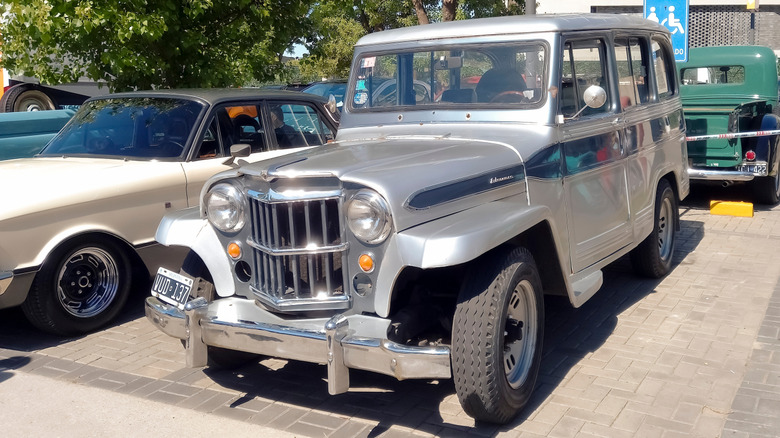
While International and Ford had similar ideas for SUVs, Willys-Overland (now boasting the Jeep name for its branding) was looking in another direction. The Wagoneer was introduced as early as 1963, and it was designed with a heavier focus on high-end features and designs. It looked like a sophisticated station wagon, but it sat on a 4WD chassis with an independent front suspension – and it offered an automatic transmission.
Although the vehicle stayed in production for nearly three decades with minimal changes, the Wagoneer was anything but utilitarian. Its luxury focus was a major part of its appeal. By the '80s, newer models boasted imitation wood siding and leather-clad interiors, the "utility" bit was a small part of the SUV acronym. The fact that people loved a high seating position and a commanding view of things, meant that the stage was set for future SUVs. But it was the Jeep Cherokee that truly hammered the term home, thanks to some creative marketing and clever classifications.
The Jeep Cherokee and the unibody revolution
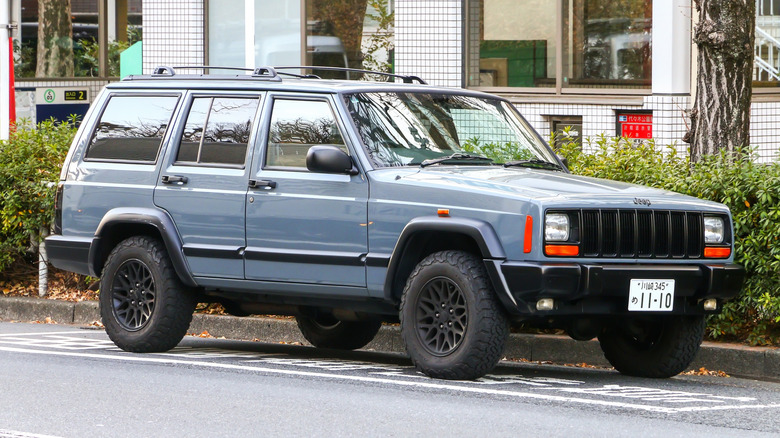
The 1974 Jeep Cherokee SJ was the first model from the brand to get the SUV marketing tag, with some claiming that this was the actual birth of the term. But the 1984 Jeep Cherokee XJ fully embraced the label's meaning – despite moving away from how traditional SUVs were constructed at the time. Most utility vehicles used body-on-frame construction, but the XJ instead used unibody construction that made it handle more like a car while retaining its off-road credibility. This was the moment when the modern SUV wasn't just for hunters or surveyors anymore; it became usable for commuters, students, and mothers. It was compact and efficient (by '80s standards), and buyers could choose between two-door and four-door models.
In the 1970s, the newly-formed Environmental Protection Industry created a set of stringent emission norms, forcing companies to spend more time and money towards adhering to regulations. But there was a loophole used by many brands at the time — including Jeep — to essentially make those new standards a non-issue. By classifying SUVs as light trucks, they weren't held to the same restrictive fuel economy rules as sedans. That's how the Cherokee eventually became a family car.
This was when the SUV shifted from a niche product to a cultural phenomenon, with every manufacturer suddenly wanting a piece of the pie. But as these vehicles started getting mainstream, the definition of "SUV" only became more questionable. For example, the 1990s brought the Ford Explorer, which initially borrowed the Ranger pickup's underpinnings — but it was sold as an adventure vehicle. In other words, the "Sport" part turned into pure marketing spiel. SUV terminology now covered everything from the massive Chevy Tahoe to the tiny Suzuki Samurai.
The crossover era that led to an identity crisis
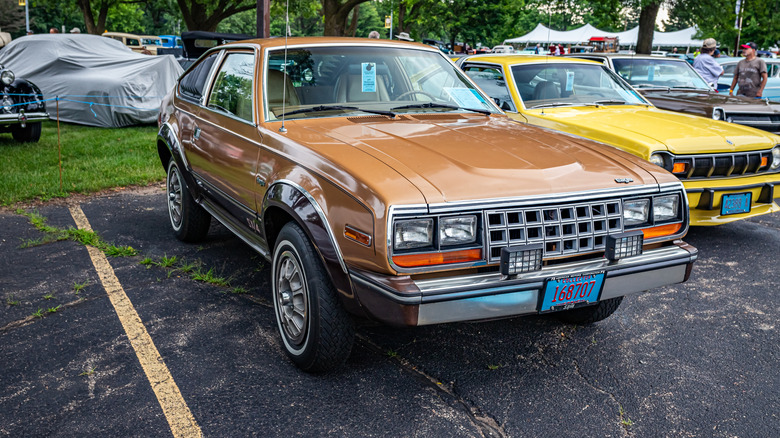
Drivers loved the styling and tall seating of an SUV but weren't too fond of its truck-like handling and abysmal gas mileage. This opened up a new avenue — the Crossover, or Crossover Utility Vehicle (CUV). It was the 1980 AMC Eagle (a car that came with 4WD in lifted sedan and wagon forms) that brought forth the concept. It was built to fulfill the need for a vehicle that could perform well both on the road and off it — and to exploit the aforementioned SUV loophole. It was followed by models like the RAV4, which featured the SUV silhouette was built on a unibody platform. These were, for all intents and purposes, glorified and tall cars that became marketed as SUVs.
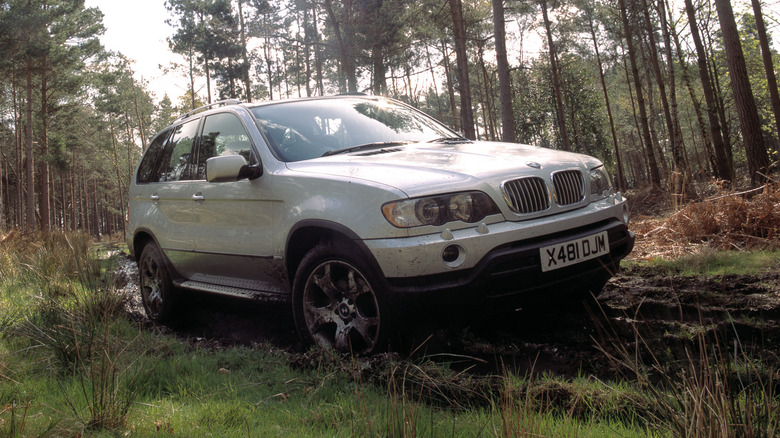
You could credit the 1999 BMW X5 with this pivot. It was the X5 that drove the "Sporty" point home with its agile handling and car-like dynamics. The second-generation X6, based on the X5, was later marketed as a Crossover Coupe. The distinction was blurred between traditional ladder frame SUVs and monocoque crossovers, and the X5 became the reference point for modern SUVs.
Today, the SUV is the most popular vehicle type on the planet, but the term itself is almost meaningless. It survived through sheer adaptability, starting from a domesticated military vehicle, transforming into a luxury icon, and finally morphing into the all-encompassing shape of a modern car. It's easy to argue over the origins of the first SUV, with the Willys, the Scout, and the Wagoneer all being strong contenders. Either way, the Sport Utility Vehicle, however loosely defined, is here to stay — partially thanks to long-lasting models like the Toyota Sequoia.