

This SUV's Reputation As Longest-Lasting Isn't Just Hearsay
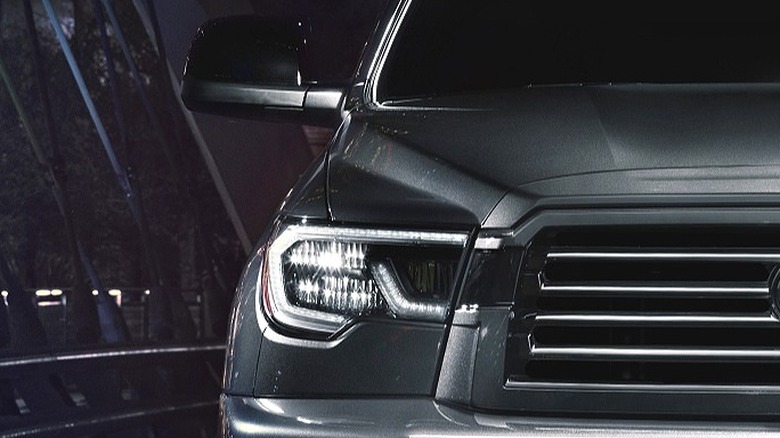
The average car on U.S. roads today is nearly 13 years old (12.8 to be exact), according to an S&P Global Mobility study. That figure underlines how durable cars have become, seeing as back in 2000, the average was just nine years. One modern vehicle that really epitomizes durability is the Toyota Sequoia. In fact, an iSeeCars study found that it is the longest-lasting vehicle in the world, with a 39.1% chance of hitting 250,000 miles or more.
This finding validates what many gearheads and Toyota aficionados have known for years: Sequoias are nearly indestructible. People have stories of their Sequoias hitting 250,000 miles with nothing more than preventative maintenance. Among the numerous highlights is a 2004 Toyota Sequoia that was posted on YouTube in 2014, having clocked 600,000 miles.
But you don't have to limit yourself to the Tundra-based full-size SUV if you're in the market for a rugged and reliable car. Close behind the Sequoia in the iSeeCars study rankings is the midsize Toyota 4Runner, with a 32.9% chance of making it to 250,000 miles. The Toyota Highlander Hybrid (31.0%) is third on the list, with the Toyota Tundra (30.0%) and Lexus IS (27.5%) coming fourth and fifth out of the 25 models in the study.
The Sequoia's reliability owes a lot to its unkillable engines
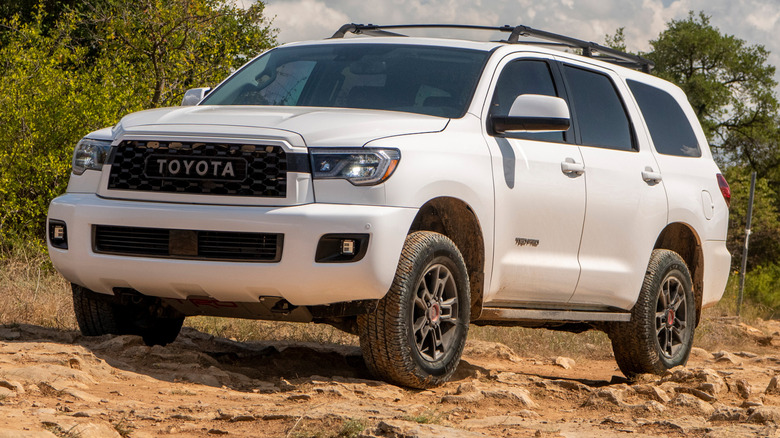
Toyota is known for manufacturing well-engineered, overbuilt engines that are made to run for a long time, and some of them have found their way into the Sequoia. The 4.7-liter 2UZ-FE V-8 nestled beneath the hood of the first-generation Sequoia is one good example. It was designed specifically for trucks and was built with incredibly strong internals to withstand heavy loads and prolonged use. Keep in mind, though, that the 2UZ is an interference engine and uses a timing belt instead of a chain, which has a much longer lifespan. If the timing belt snaps while running, it could ultimately damage your pistons, valves, and other engine components, which is why it is recommended to replace it after 90,000 miles.
For its second-generation run, the Sequoia was offered with the 5.7-liter 3UR-FE V-8 engine that became famous for its robust construction and bulletproof reliability. Where the 4.7-liter V-8 came with a cast iron block and timing belt, the 5.7 V-8 utilized aluminum. The 5.7 also featured a timing chain instead of a belt as part of efforts to improve reliability and reduce long-term maintenance costs.
For the 2010 model year, the 4.6-liter 1UR-FE V-8 was introduced as a replacement for the entry-level 4.7 2UZ-FE V-8. Although it proved to be a short-lived effort, as Toyota dropped the 4.6 after the 2012 model year, leaving the 5.7-liter V-8 the sole powertrain option for the remainder of the second-generation. The current third-generation Toyota Sequoia, meanwhile, features a new i-FORCE MAX hybrid engine in a marked departure from its predecessors, and its durability remains to be seen. Nonetheless, the iSeeCars list does instill confidence that it could be just as long-lasting as the previous Toyota V-8 powerplants.