

When Do The Differences Between 1-, 2-, And 3-Row Radiators Really Matter?
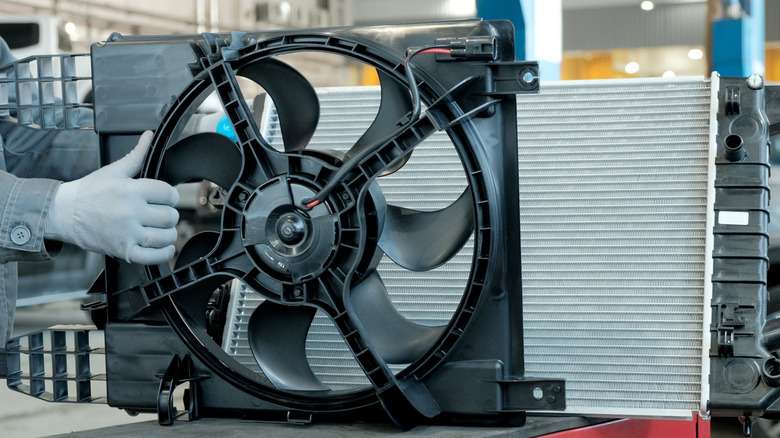
Car radiators are differentiated primarily by the number of rows. Each row has a cooling tube where hot coolant flows. Meanwhile, each row has fins to absorb and dissipate heat via airflow. More rows mean more tubes, and more tubes mean stronger cooling since more hot coolant can flow into the radiator core. More rows also mean more fins and a higher airflow capacity to cool the hot liquid inside.
From that perspective, a 1-row radiator has a single row of tubes, while a 2-row or 3-row radiator has two or three rows of tubes, respectively. Most cars leave the factory with single- or 2-row radiators, and those are typically adequate for stock applications, daily drivers, and stop-and-go traffic. You can typically leave it at that and expect no overheating issues unless the radiator needs flushing or develops rusty leaks.
Upgrading to a thicker, larger, and heavier 3-row radiator may not be necessary for stock or mild performance applications. However, performance modifications that add power, like turbochargers, aggressive camshafts, and superchargers, will also add more heat, and that's where the higher cooling capacity of a 3-row radiator shines. Then again, it's easier said than done, since retrofitting a 3-row radiator into a stock engine bay isn't exactly plug-and-play.
Do more rows mean a better radiator?
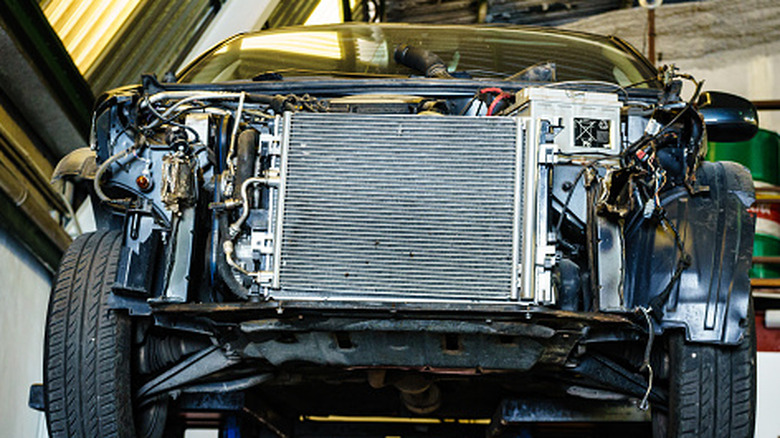
Having more rows does not necessarily make a radiator better than one with fewer rows. The rows alone do not determine if it's a better choice. Fit and functionality must also be taken into consideration. The old-school copper radiators in vintage cars are thicker, heavier, and have more rows to improve engine cooling. Modern cars now have aluminum (and plastic) radiators that are thinner, lighter, and more efficient. It is generally true that more rows are typically better for engine cooling, and there are times when upgrading makes more sense. For stock cars with single-row radiators, upgrading to a 2-row unit is a stellar idea if you're planning to take your jalopy to the track. That is, as long as you can make it fit (and find a suitable unit with stock mounting points). A 2-row radiator will have a higher cooling capacity and help the engine to dissipate heat in demanding situations. The same is true for a 3-row radiator, but the higher cooling capacity brings certain drawbacks. Adding more rows to a radiator makes it thicker, bulkier, and heavier, and it could pose fitment issues later on.
This is why it's important to take a closer look at the tube size when considering an upgrade. The size refers to the tube's width. A wider tube offers a larger surface area for heat dissipation, and this is where the core differences between a 2-row and a 3-row radiator really matter. For instance, is a 3-row radiator with 5/8-inch tubes better than a 2-row radiator with 1-inch tubes? Doing the simple math, a 2-row radiator with 1-inch tubing will have a higher cooling capacity (2 inches) than a 3-row unit with 5/8-inch tubing (3 x 5/8 = 1.875 inches). In this case, less is more.
Things to keep in mind when upgrading from a 2-row to a 3-row radiator
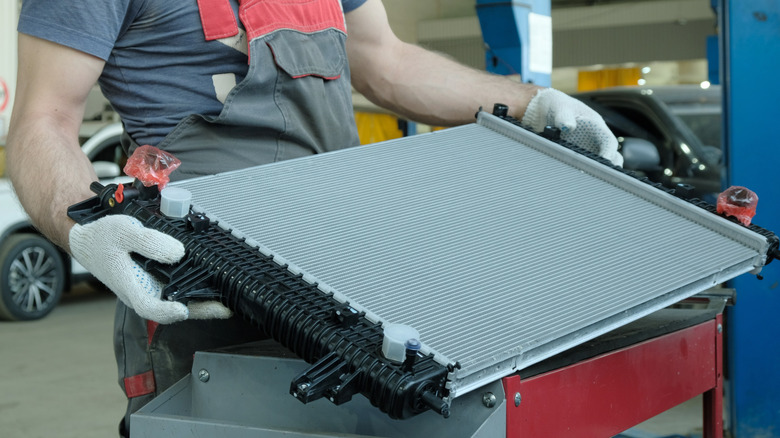
Most aftermarket radiators have larger tubing, and rows with larger tubing will make the radiator heftier and wider. Adding the shroud and fans will make it bulkier. Before upgrading, check if there's enough room under the hood. You should also consider the potential clearance issues if changing from a 2-row to a 3-row radiator.
But it's not just whether there's room to fit a bulkier 3-row unit. There's a matter of air restriction, where the passing air will be less efficient at cooling all three rows. In most cases, the rows at the front will be cooled more efficiently than the rear. To address this, you might need more powerful cooling fans with higher CFM (Cubic Feet per Minute) ratings to go with the radiator upgrade. It will help address the air restriction issue and ensure that all rows of the radiator are getting the necessary airflow.
Another thing to keep in mind is the cost. Replacing a stock radiator costs $400 to $900 in labor and parts, but upgrading to an aftermarket 2- or 3-row radiator could double or triple that amount, especially after related costs like coolant, hoses, shrouds, and cooling fan upgrades are factored in.