

5 Pretty Darn Believable Theories Why Convertibles Have Nearly Disappeared In The U.S.
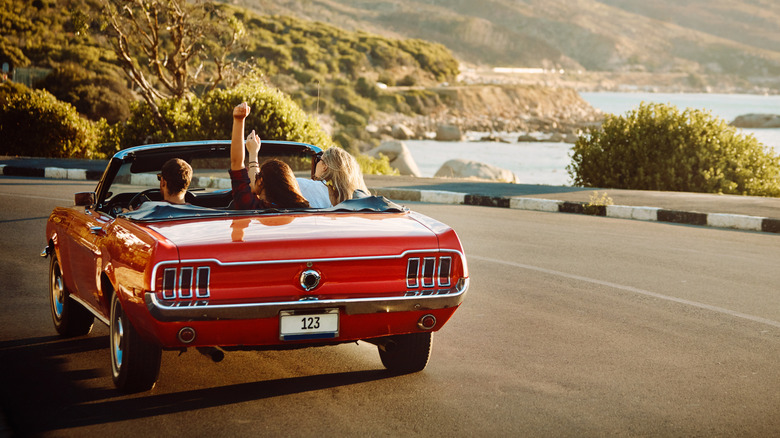
The heyday of the best convertibles in America is behind us, and has been for a long while now. Once a pretty common sight on roads and in showrooms, cars that can tuck their roofs away on a sunny day feel like rarities today, and sales figures confirm this. Back in the convertible golden age of the 1950s and '60s, America saw more than half a million sold every year. Today, most sources agree they make up less than 0.6% of all car sales in this country.
Given 16.3 million new cars were delivered in 2025, that's less than 100,000 convertibles per year, and when you factor in that there are way more people to sell cars to today compared to 1959, that number should really be higher. Why isn't it, though? There are multiple converging theories, but to boil it down, regulatory changes in the '70s knocked convertibles off the perch they sat on in the '50s and '60s, while modern economics and tastes buried them even further as viable choices for regular drivers.
Impending regulatory headaches of the '70s
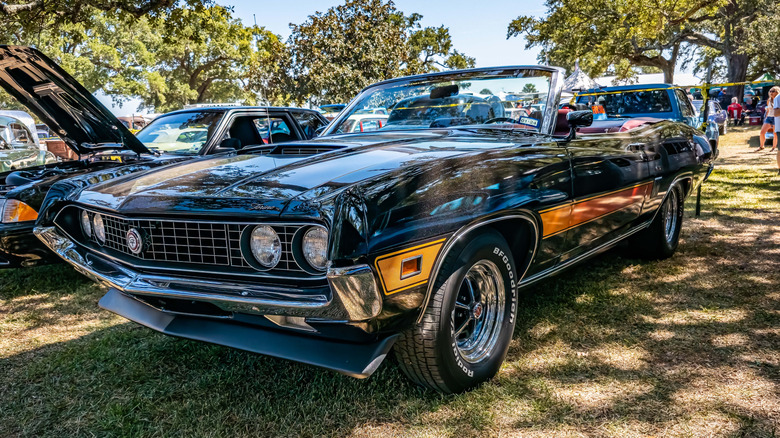
Back in the '70s, the federal government proposed — not passed, merely proposed — new rollover safety standards that would subject convertibles to the same roof-strength tests as regular cars. If passed, this would make convertible development financially difficult, and some point to this as the moment that scared the likes of Ford and GM out of the drop-top game.
It's entirely believable that impending regulatory headaches had at least something to do with the convertible's downfall, but Hemmings points out that convertible sales were already declining a few years before the safety debacle. Instead, they frame the introduction of air conditioning and sunroofs as the things that made a foldaway top unnecessary for a lot of buyers, the argument being that back then, a convertible top was a climate control device as much as it was a novelty. Either way, the '70s oil crisis hit right after this to siphon out any remaining interest America had in building or buying convertible cars. People needed cars that were smaller, lighter, and socially less flashy. In other words, everything a convertible at the time was not.
Convertibles are usually expensive
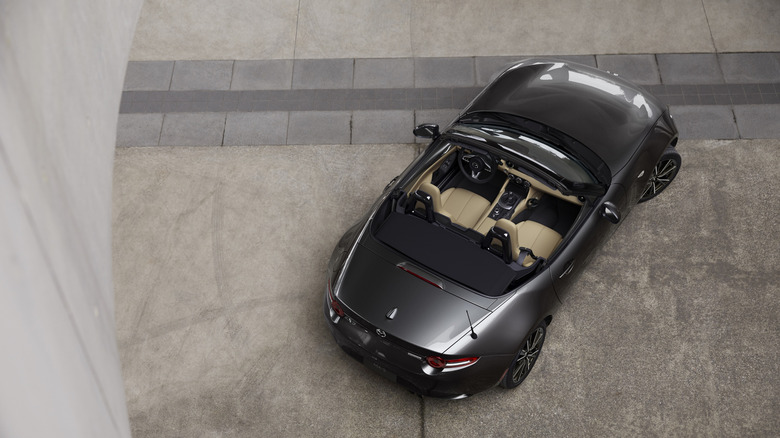
The idea of the budget convertible did make a comeback in the '90s and early '00s in the form of drop-top versions of cars like the Geo Metro, Chrysler PT Cruiser, and the Toyota Camry. Remember the Chrysler LeBaron? Of course, you do. But by the time 2008 rolled around, they were a dying breed once again, and economics was largely the cause.
Throughout the next two decades, cars got hella expensive — the average new-car transaction price today is almost $50,000. On the master list of all convertibles still for sale in America, the only ones that can be considered "affordable" are basically the Ford Mustang, Mazda MX-5, Mini Cooper, and Chevy Corvette if we stretch it — everything else is luxury, if not a supercar. At the same time, wages haven't kept up with inflation, and fewer people have money to spend on an inherently impractical vehicle like a convertible.
Are convertibles really more fun?
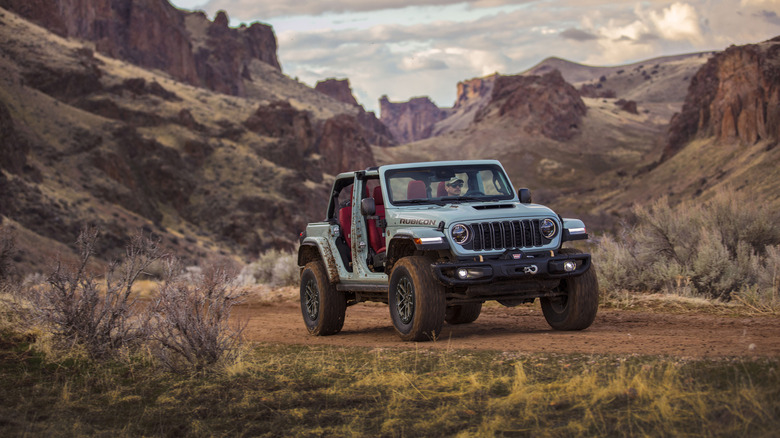
Then, there's the fact that what people want out of an aspirational vehicle these days is very different from what they used to. Ruggedness and SUVs are the status symbols of today, and perhaps one could argue that convertibles didn't actually go away — they just evolved into open-air Ford Broncos and Jeep Wranglers. But even if you have the money for a fun vehicle and prefer sporty driving over off-roading, there's also the old car enthusiast argument that convertibles are inferior as hardcore driving machines since they're heavier and structurally less rigid than a coupe would be. Nürburgring lap times became an industry-wide obsession around the early to mid-aughts, and naturally, so did chassis rigidity, an inherent convertible weakness.
So, there you have it. Five compounding reasons why no one seems to drive a convertible anymore: safety rules and tech from the '70s that would've made convertibles hard to financially justify, an oil crisis, an affordability crisis, a taste crisis, and perhaps even a little enthusiast snobbery snuck in for good measure.