

The DIN Standard For Car Stereos May Be Obsolete, But It Was Better And I Can Prove It
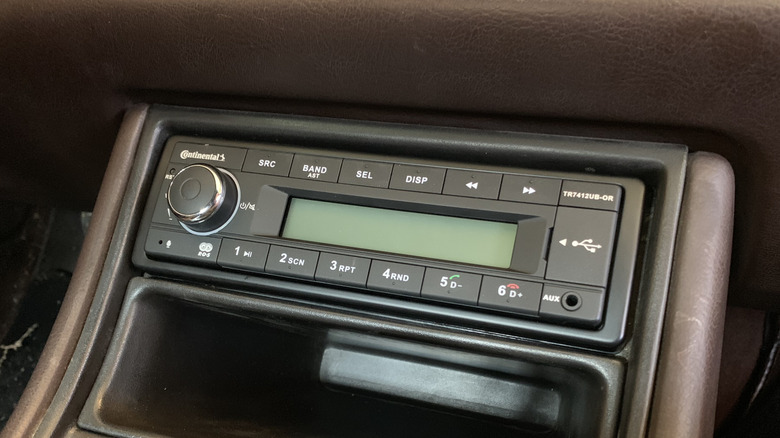
Seemingly every new car today has succumbed to the trend of integrated touch controls and bright screens covering every inch of the dashboard. Even the ones that don't now integrate the center stack into the car in a way that it's almost impossible to change your car's stereo anymore. Long gone are the days of do-it-yourselfers wiring up a head unit and jamming it into the uniform standard slot in your dashboard. We simply didn't know how good we had it.
Leave it to the Germans to have a standardization format for everything. The nonprofit Deutsches Institut für Normung (DIN, or German Institute for Standardization) developed a standard for car radio cutouts, pressuring automakers to install their stereos in a uniform 2- by 7-inch slot in the mid-1980s. Once stereo manufacturers developed larger-format screens and higher-quality audio drivers in the 1990s, it was determined more space was needed to pack it all in. Thus, the double-DIN standard was born, allowing for a 4- by 7-inch slot. By creating these uniform stereo standards, automakers could save money by building the same head units for multiple cars, or farming the development of their head units out to car audio companies altogether.
The added benefit of DIN stereo standardization was found in the aftermarket. Many car enthusiasts will spend their time and cash making their ride unique, myself included. Whether for improved quality of sound, greater usebility, or continual updates as the car ages, installing an aftermarket stereo is one of the easiest ways to make a car your own. At some time in the 2000s automakers decided to move away from this longtime standard, and push for more connectivity and stylized dashboards with ever larger stereos. That was, if you ask me, a mistake.
The doldrums of 2000s stereos
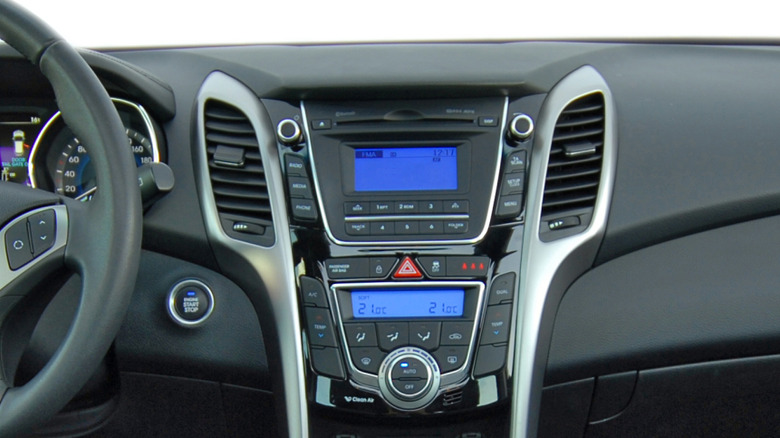
At the risk of being dubbed a Luddite, I think integrated infotainment systems were a mistake. Twenty years ago it was about design integration, which aged poorly (above). These days modern car interior design is an effort in minimalism, and automakers think tacking an iPad to the dash makes their car techy or whatever. I'll go a step further and say that integrating car functionality and information into stereo screens, well before touch screens were de rigueur, was the original sin.
These factory-installed systems of a decade or more ago are typically slow, laggy, difficult to navigate, and — most importantly — ugly. This would be forgivable if they were easy to upgrade like a DIN-standard stereo. Even worse, the tech teams at major automakers are trying to cram in more than they really know how to do well. Do you really think Mitsubishi is better at GPS and mapping than Google or Apple? Can Kia or Chevrolet build a higher-quality audio system than any of the companies that make it their entire mission? Be realistic.
I can go out right now and buy a nicer touch-screen unit from Sony (or a dozen other car electronics companies) with integrated Apple CarPlay and a backup camera and install it in a 30-year-old car without major hiccups. Trying to do the same with a decade-old Ford is met with stumbling blocks and probably means losing functionality. I would have loved to upgrade the horrible screen-and-button combination in my ancient Nissan Leaf, but installing a nice double-DIN stereo would have meant giving up access to the car's heating and air conditioning controls.
Should you get a DIN stereo?
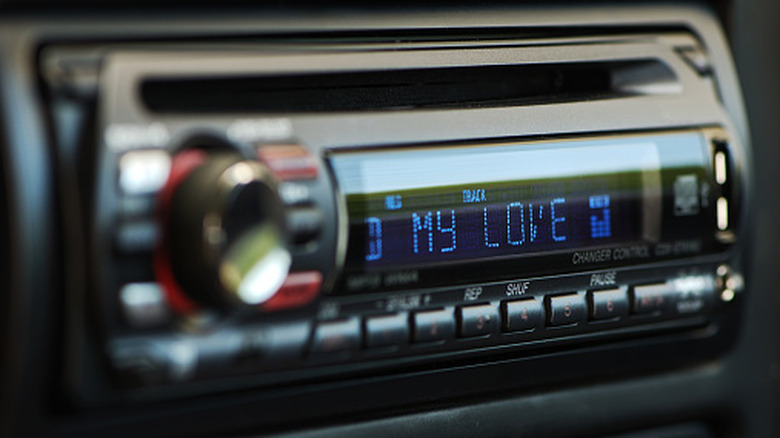
Automakers need to stick to building cars, because there has never been an in-dash "infotainment" display that worked as well as promised, and they age worse than milk. Go try to use the in-dash stereo of a car from 2009 right now and tell me how your experience went. Better yet, try to play music from your phone through that same stereo.
I'm a simple man who loves physical media, and I just want a nice quality audio sound, the ability to play a CD, and easy Bluetooth connectivity. I'm okay with using my phone for maps on a windshield mount, but if you aren't, there are plenty of single- and double-DIN options that have screens to mirror Apple or Google Maps. I can get all of that in my old cars with a simple DIN standard head unit, but it's much more difficult for anything built between, say, 2007 and 2019.
I owe at least a portion of my car enthusiasm to the DIN standard, because learning how to wire in a stereo to my cars was one of the first DIY projects I ever completed. It was the confidence earned from that easy project that let me dive deeper and deeper into the car wrenching rabbit hole of engine swaps and suspension overhauls. It was also that access to relatively inexpensive customization that gave me the appetite for my own automotive individuality. Buy an older car, put a DIN stereo in the dash, listen to CDs. You won't regret it.