

1920s Road Trip Rules Were A Bit More Serious Than They Are Now
There is a lot to consider before heading out on a bucket list road trip. Drivers need to budget for food and fuel, and factor in overnight stops. Then there are the little details, which can range from topping up the washer fluid to picking a suitable playlist as the soundtrack of the trip. Wind the clock back a century or so though, and the rules of road-tripping were very different. Drivers embarking on long journeys across the U.S. and elsewhere would have to factor in rough and unpaved sections of road, how they might rest in areas where hotels and other such luxuries are not available, and what to eat in the complete absence of fast food outlets, restaurants, and cafes.
And then there are the cars themselves. Maintenance very much became part of the trip, rather than a few quick checks beforehand, and as for creature comforts, not even windshield wipers were standard on all cars in the '20s. Naturally then, the unbreakable road trip rules of the decade focused more on car maintenance and actual survival rather than good food and comfortable travel. Here are just five of the most interesting aspects of road-tripping from a century ago that differ greatly from what long-distance drivers experience today.
Road trip acommodation in the 1920s
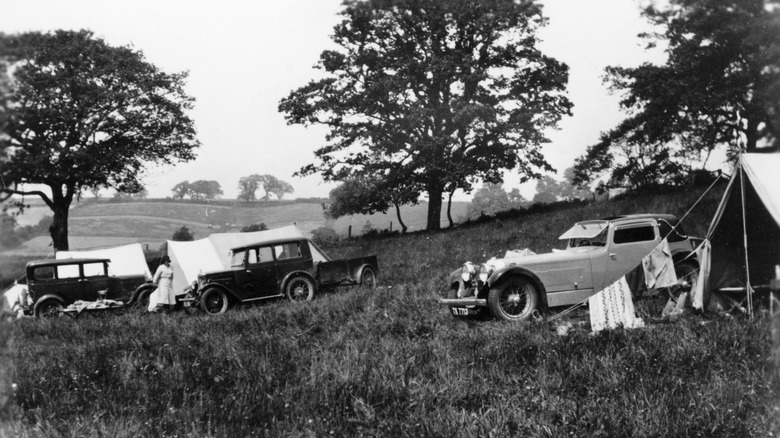
One of the biggest challenges for a road-tripping motorist a century ago would have been where to lay your head at night. Today, you might check into a cheap hotel just off the Interstate or pre-book one in advance — perhaps even an Airbnb. Back in the '20s, the realities of rest were quite different indeed. A diary of a young woman travelling from Long Beach, California to Chagrin Falls, Ohio in 1920, shared by the University of Notre Dame, documents this perfectly. In it, she describes traveling with her parents in their Ford. To begin with, the trip took around seven weeks in total, and while campgrounds were the resting places of choice back then, that wasn't always possible.
The woman details how, when close to Niland, California, they traveled 100 miles and saw not so much as a single building. The roads were rough, and they hardly saw a single soul all day. At night, they stopped to rest beside a well, totally alone. Meanwhile, journal entries from the Heyer family, who ventured across America for four months in the summer of 1921, tell similar stories of camping under the stars. The family documented how they camped out in the Wyoming desert, with nothing but shrubbery and coyotes for company (via Montclair History Center). So, while today's road trip rules for accommodation might include packing a phone charger and finding that saved email with self-check-in details, the rules 100 years ago would have focused more on how to spot safe camping spots, perhaps how to start a campfire, and how to pitch a tent reliably.
Maintaining a car on a 1920s road trip
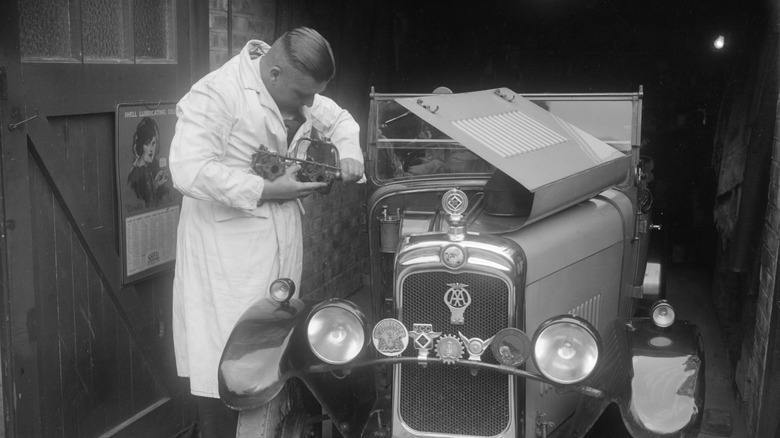
While finding a suitable place to sleep was certainly a challenge for 1920s road-trippers, maintaining the car was an even bigger hurdle for many. Modern cars can easily cover over 20,000 miles without needing so much as an oil change, while over-the-air software updates make maintenance even more convenient. But back in the 1920s, things were dramatically different. Take the Ford Model T as an example. By 1927, Ford had already sold 15 million examples, mobilizing the American masses, so it was no doubt a solid road trip candidate. However, even the ubiquitous Model T required a rigid servicing schedule. The oil would have to be changed every 750 miles, or 500 miles in cold weather. Our journaling young woman and her family managed to cover up to 185 miles in a day in their family Ford. If that 1920s Ford had adopted a similar servicing schedule, that could mean an oil change as frequently as every few days.
Adding to that is the fact that cars like the Model T also require chassis lubrication, with various points requiring oil between every 200 and 500 miles, and greasing at less frequent intervals, too. As such, undertaking a serious road trip in the '20s would have required at least one passenger to be a fairly competent mechanic, or for the route to factor in numerous cleverly timed stop-offs at established repair and service shops along the way.
There was no antifreeze keeping car refrigerators safe
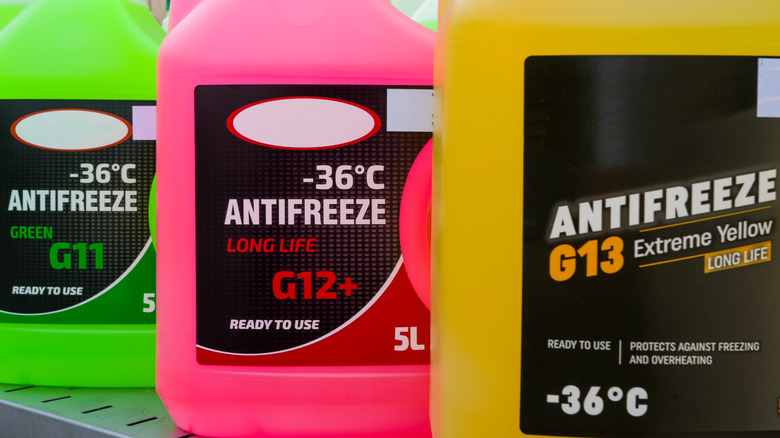
If 1920s car maintenance didn't sound complex enough already, consider the fact that motorists did not begin using commercial antifreeze until 1923, and even that wasn't the formula we commonly use today. As such, road trips posed a serious risk — especially for those traveling through winter or in colder climates. For 1920s motorists, the answer was to drain the radiator after each day of travel to save the coolant from freezing and prevent the radiator from cracking on cooler nights, before refilling in the morning. If they were fortunate enough to schedule stops near garages, they may have been able to park indoors to escape the cold, but otherwise, it would be a case of draining and refilling the radiator each night if the temperatures called for it.
Those who were better-equipped may have been able to pack a paraffin-fueled sump heater, which was typically hung within the engine compartment or slid beneath the car overnight. This would have kept heat circling the engine, negating the need for draining the radiator. That lingering heat would have also made early motorcars easier to start in the morning, so it was actually a wise investment for anyone looking to venture on longer trips frequently in the early 1920s.
Road tripping without creature comforts
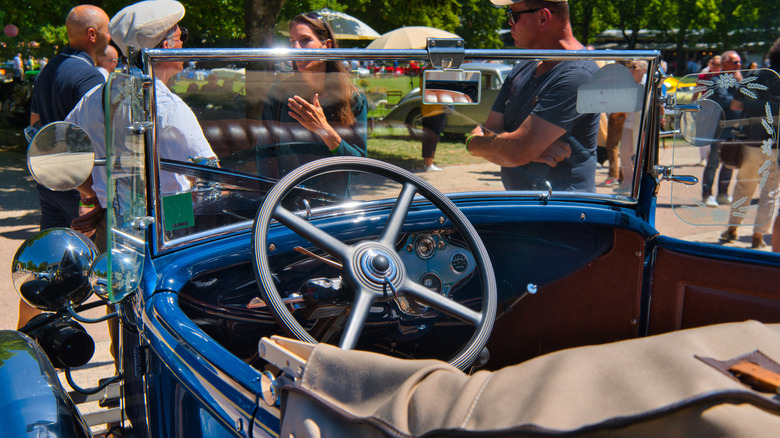
By definition, road trips are usually time-consuming and call for features such as air-conditioning, heated seats, and clever infotainment systems with the latest Apple CarPlay updates. But naturally, such things were not available in the 1920s. Even the most luxurious cars from that era, such as a Rolls-Royce Silver Ghost or the big Cadillac V-63, were relatively spartan places to spend days on the road when it comes to features and amenities, which were largely limited to leather trim and polished wood veneers. Instead, most upgrades during the '20s were more closely focused on ease of maintenance and drivability, rather than enhancing occupant comfort.
Creature comforts don't just come in the way of massage seats and Apple CarPlay either. Revisiting our friend in the family Ford traveling from California to Ohio, she details how food wasn't always readily available. On occasions, her father would have to hunt birds or rabbits for their dinner, whereas today, we might simply opt for a drive-thru or grab a quick snack from a vending machine to keep us going. With more and more motorists embarking on such trips, though, the availability of roadside diners and motels was expanding considerably, but there were still vast areas of America that didn't have the road network to support such growth.
1920s roads looked nothing like they do today
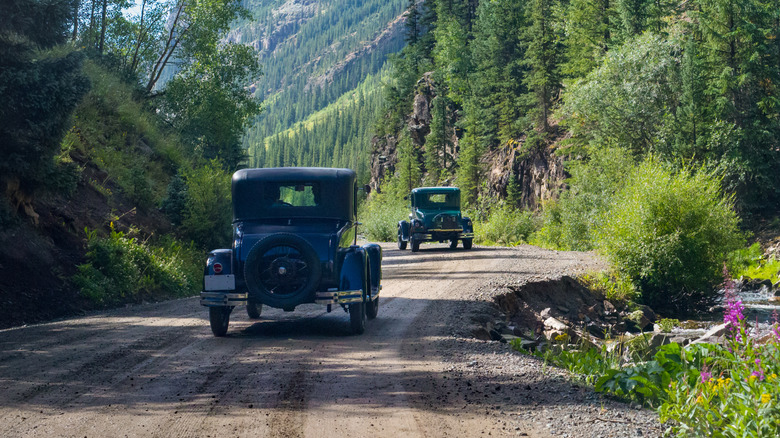
The 1920s saw the American road network expand dramatically, from rough and unpaved to reliable and accessible. Perhaps most famous were the formation of Route 66 and the Lincoln Highway, some of the oldest U.S. highways still in use today. Not only did such routes provide an obvious economic boost to the towns and states that boasted them, but the ever-growing number of cars actually sold and on the road quickly dictated the desire and need for an improved road network, too.
Still, this approach was not rolled out universally across the U.S., with upgrades coming in at different times in differing states. According to the National Park Service, Kansas' section of Route 66 was entirely concrete by 1929, whereas it was 66% paved in Missouri, and 25% 'improved' in Oklahoma. In other states, such as Texas, New Mexico, Arizona, and rural sections of California, only a combined 64.1 miles of the road were paved at all, demonstrating the inconsistency of progress at the time. No doubt, these would have dictated where motorists would have traveled on such trips in the 1920s, whereas today, we can pretty safely pick out almost any destination in the U.S. and know that a dependable road network will be in place to take us there.