

That Top-Tier Safety Rating On Your 10-Year-Old Car Might Not Equal Modern Standards
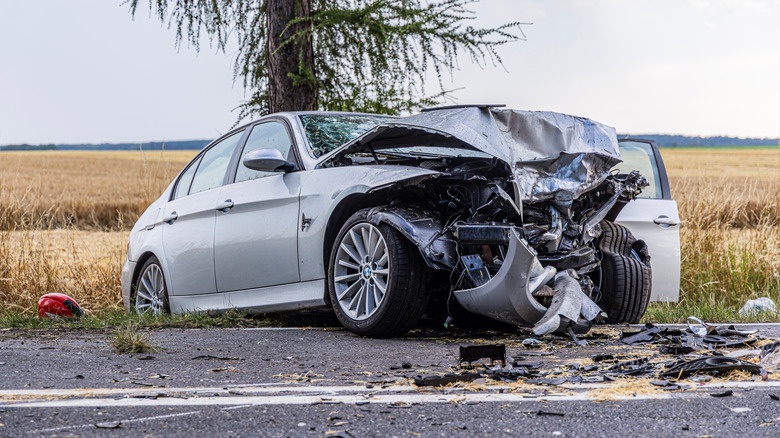
Watching this YouTube video of a head-on collision between a 1996 and a 2026 Chevy Blazer is enough to tell you that car safety has improved dramatically over the years. Sure, your 10-year-old car may fulfill your motoring needs and be a perfectly functioning piece of hardware just like any 2026 vehicle, but the car's then-glitzy safety ratings — whether a five-star score or a Top Safety Pick — don't necessarily mean it would earn those same ratings today. Take the 2016 and 2026 Mazda 3 hatchback, for example. Both cars won the IIHS Top Safety Pick+, but if you look closely, you'll realize that the eligibility criteria for the award itself have changed drastically in that 10-year period.
Two of the five crashworthiness tests required for the 2016 Top Safety Pick+ have been discontinued. While the 2026 Top Safety Pick+ requires the vehicle to receive IIHS' Good or Acceptable headlight ratings, there's no mention of headlight visibility anywhere for 2016. You'll also notice that the small front overlap test is split into the driver-side and passenger-side for the 2026 Mazda 3, while the 2016 model is strictly rated for its driver-side only. That's because the IIHS only introduced the passenger-side crash test in 2017.
Although both 2016 and 2026 cars require earning good ratings in the side impact and moderate front overlap tests, the IIHS made changes to these in 2021 and 2022, respectively, with updated dummies, faster testing speeds, and a heavier, more realistic testing rig. Something else that's missing from the 2016's eligibility criteria is pedestrian crash prevention, a rating that all 2026 Top Safety Pick+ contenders must score well.
Pushing the safety limits
You may not know this, but the IIHS made it a lot tougher for manufacturers to get the Top Safety Pick in 2026. This was partly because, to get the award, the IIHS now requires certain front crash-prevention features, including some advanced driver-assistance systems, to be standard equipment for 2026. To be fair, the IIHS did evaluate the safety tech in its 2016 Top Safety Pick+ awards, but the testing procedure is not quite as comprehensive as the one required for 2026 cars. A side-by-side comparison of our two Mazdas on the IIHS's website shows how different and more elaborate things are now.
It's not just the IIHS that's been evolving over the years. Even the NHTSA has a historic timeline of introducing several updates to its safety program, and has proposed more changes to how it rates new car safety. According to the organization, pedestrian automatic emergency braking, lane keeping assist, blind spot warning, and blind spot intervention are among the advanced driver-assistance technologies now included in its five-star rating update, which was supposed to roll out this year. Though pressure from automakers has forced the NHTSA to push the updated safety program to 2027, reports Autoweek.
The situation isn't any different across the pond. Euro NCAP has seen massive changes in how it tests and rates car safety. According to the organization, the safety requirements of the program are updated every three years. However, 2026 seems to have brought along quite a few important changes, including post-crash measures and a 100-point scoring system covering occupant monitoring, driver engagement, and vehicle assistance, according to AVL.
In short, safety ratings aren't timeless. They evolve, just like our cars.