

What's The Difference Between Hydroboost And Vacuum Brake Boosters?
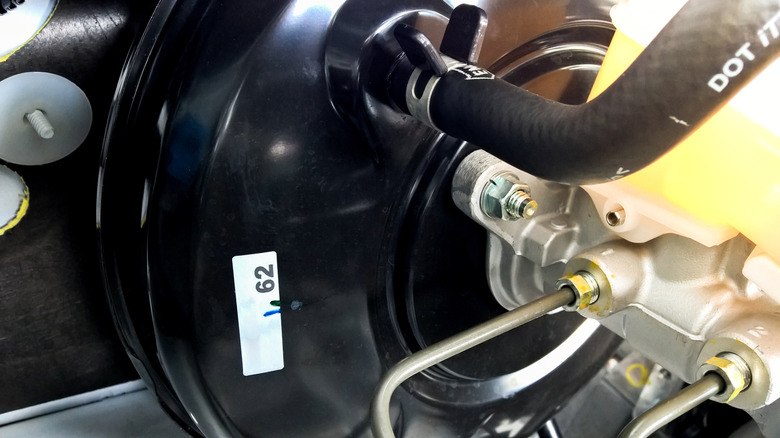
Having the ability to depress the brake pedal with any degree of force, from light taps to full-on emergency shoves, depending on what's ahead of you, is of utmost importance. There are more than a few components to a car's brake system to ensure, with proper maintenance (including an awareness of when you need new brakes), that it always will.
Take common brake power-assist systems, for instance. A vacuum booster is the most prevalent type of power brake booster, using engine vacuum to multiply applied brake pedal force, reducing driver effort. Then, there's hydroboost, which utilizes hydraulic fluid pressure to do the same. In other words, the difference between hydroboost and vacuum brake boosters is what powers them, with the former utilizing the power of hydraulic pressure, and the latter running on one of an engine's most helpful byproducts. Both have their own pros and cons, so let's dive into how each system works and where each is used.
How vacuum boosters and hydroboost function
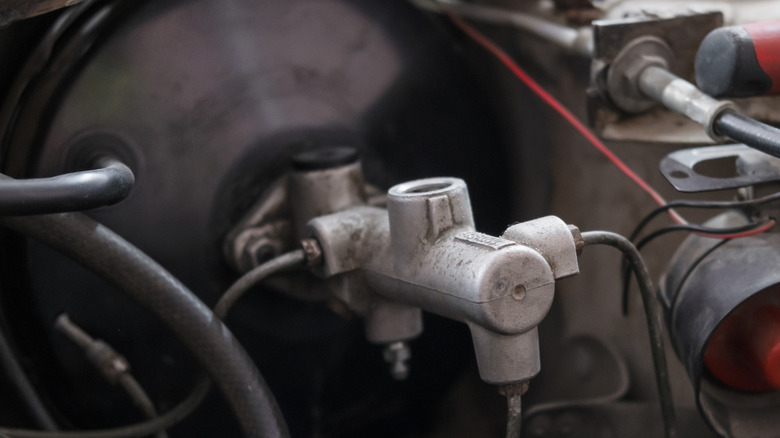
A vacuum brake booster is very basic in its design but fascinating in its operation. Without digging too much into each component's role, in essence, it works as such: vacuum is fed into one chamber of the booster, whereas the opposite chamber is exposed to atmospheric (meaning, outside) air pressure, specifically on the pedal side. When the motorist pushes the pedal, the pressure difference between the two is what multiplies braking force. Brake pedal force pushes on the brake master cylinder piston to then send brake fluid to each corner of the car, actuating the calipers or drums.
Hydroboost utilizes hydraulic fluid pressure instead of engine vacuum. In many applications, it's connected to the hydraulic power steering system and installed in line with the power steering pump and steering rack (or box). Hydroboost utilizes this fluid pressure to push on a piston that multiplies braking force and decreases the motorist's effort, with assist controlled by an internal valve actuated by the brake pedal input rod.
The pros and cons of vacuum boosters and hydroboost
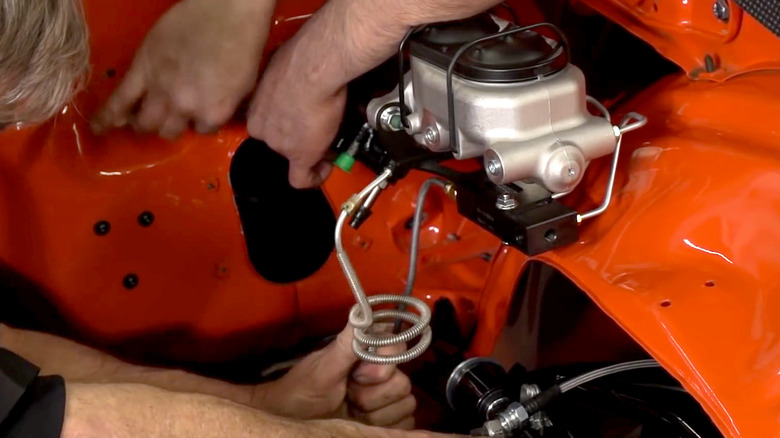
Vacuum brake boosters have been around for about a century and are generally very reliable, as long as its vacuum lines, check valves, and more, that feed it are leak-free. Vacuum boosters themselves can wear out, so if brake force decreases while pedal effort increases, it's a good idea to investigate further. One way to diagnose a leak in the system is by listening. Atmospheric air or vacuum escaping from the booster is indicated by a light hissing.
Vacuum hoses, which are part of the vacuum supply system, degrade, so it's important to inspect them. In diesel, there is no vacuum due to the absence of throttle restriction, so they have a vacuum pump if they're equipped with a vacuum booster.
Hydroboost has been around since the 1970s and can provide greater braking assist than vacuum systems, making it well-suited to track laps or off-roading. It is also common in diesel engines and in the aftermarket among hot rodders running V8s with aggressive aftermarket camshafts and/or superchargers. These engines can have reduced vacuum pressure, which is why hydroboost systems are often used since they rely on hydraulic pressure instead of engine vacuum. Hydroboost systems are also more compact than vacuum brake boosters.
It's important to have leak-free hydraulic lines to the hydrobooster itself, and the entire hydroboost-assisted braking system. In some cases, a more powerful power steering pump can be helpful to maintain adequate hydraulic pressure for steering and braking.