

You Can Paint Carbon Fiber Car Parts Yourself, But You Have To Do It Right
We may receive a commission on purchases made from links.
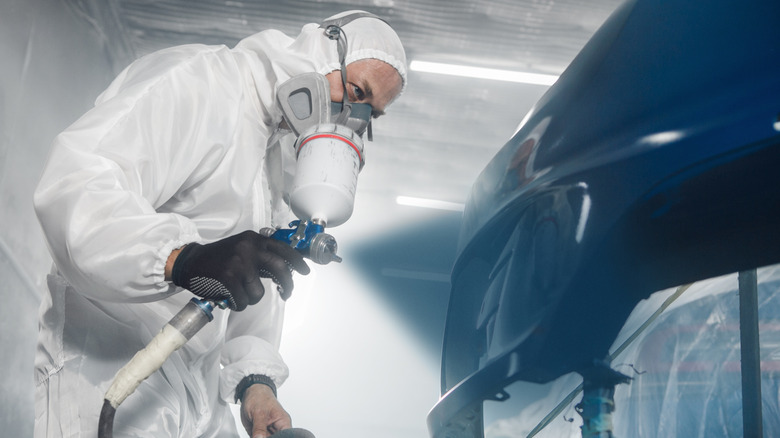
Carbon fiber is lighter and stronger than steel, and the material's exposed weaves bring an exotic flavor to it. However, Europe is looking to classify it as a hazardous material, while BMW is testing natural flax fiber as a more suitable alternative. Despite the potential hurdles, car lovers can't get enough of carbon fiber, and painting it opens a new world of customization options. The good news is that it's entirely possible to apply paint over carbon fiber car parts. Then again, it wouldn't take much to mess it up.
It's more nuanced than grabbing a can of store-bought spray paint and starting. Painting carbon fiber parts is a bit different than applying color to metal or plastic. For starters, you're not actually painting the carbon fiber weaves when doing so, since carbon parts are infused with epoxy resin to make the part stronger and more durable. The resin leaves a smooth and somewhat glossy or semi-gloss finish that paint won't adhere to without thorough prep and sanding.
In short, the processes involved in painting carbon fiber are comparable to those of painting over metal, with slight differences in materials, primer, paint type, and clear coat. However, the cleaning, sanding, and painting are universal and apply to whether you're refinishing metal, plastic, or carbon fiber.
Clean and sand thoroughly
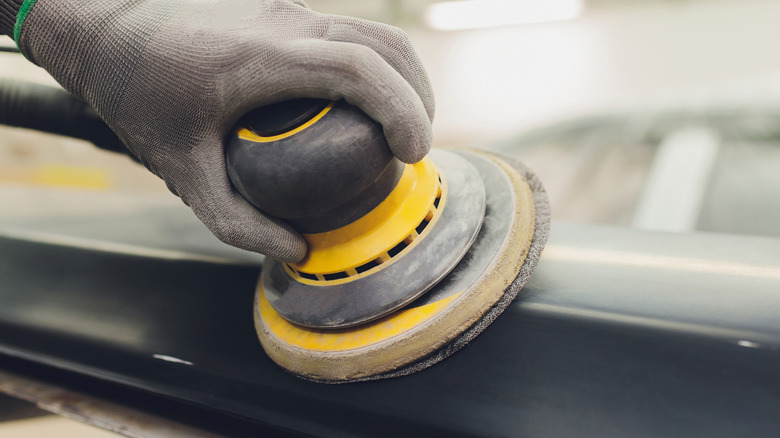
The more effort you put into cleaning and sanding, the better the results. For the surface prep cleaning portion, you don't need specialized cleaners, despite some professionals swearing by the effectiveness of Simple Green or Red Juice all-purpose cleaner. Washing or spray-cleaning the part with mild dish soap and water is an excellent alternative. After washing, wipe the part dry with a lint-free microfiber towel. Next, use 70% to 90% isopropyl alcohol on a clean rag, and wipe over the entire surface in straight-line motions to remove any excess oil and dirt.
Then comes the sanding part, and this is where most DIYers get it horribly wrong. The goal is to abrade the epoxy layer of the carbon fiber and not remove it entirely. Gentle sanding will enable the primer to "grip" the surface. For this, use 320 to 400-grit sandpaper for the initial wet-sanding process and finish with 600-grit. Remember to be gentle when sanding carbon fiber and apply light pressure. Overdoing it might burn through the carbon fiber weave.
At this point, if sanding burned through the resin (fibers start to feel exposed or appear frayed rather than smooth), the part should be refinished with epoxy before applying primer, since painting over exposed fiber strands is bad news. Clean the part thoroughly again to remove sanding dust before priming.
Primer, paint, and clear coat
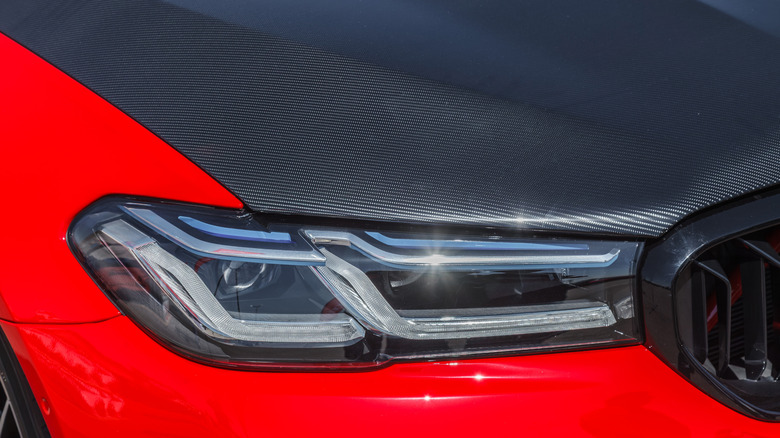
Primer comes next after cleaning and sanding. For carbon fiber composites, a two-part (2K) automotive epoxy or urethane primer comes highly recommended over rattle-can spray primer or those for wood or ordinary plastic. Epoxy or urethane primers will enhance paint adhesion and help deliver a smooth, flawless finish later on. Apply a very light coat, wait 5 to 10 minutes, and follow it up with a heavier coat. Two to three primer coats are enough, but the trick is to allow each coat to dry before applying the next.
As for the base coat, you can opt for a solid color to match your car's OEM paint or a tinted clear finish. Urethane base coats are best for solid colors, while 2K tinted clear coats are recommended for visible weaves. Either way, 2 to 4 thin coats of color are typically enough, and wait 10 to 15 minutes before applying the next coat. Follow the paint manufacturer's guidelines for curing.
Last but not least is the clear coat. For carbon fiber, experts recommend using a two-part (2K) urethane clear coat with UV inhibitors to combat fading and yellowing. Apply 2 to 3 layers of clear coat and allow to dry. The final step is to wet-sand the freshly painted surface using 1500 to 3000-grit sandpaper and polish to a high gloss. Like painted metal or plastic, bird droppings and tree sap are just some examples that can ruin a nice paint job, so regular waxing of painted carbon fiber parts will go a long way in preserving their look and shine.