

The Difference Between An Old Car And An Obsolete Car
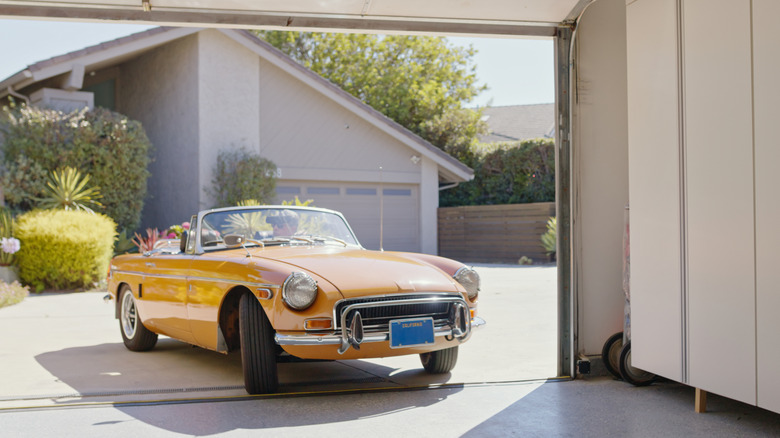
There have been many wonderful innovations and technological developments in the auto industry throughout the years. From the first car to give us disc brakes as standard, to Volvo providing the world with three-point seatbelts, the evolution of automotive tech has pushed the boundaries of just how safe, useful, and efficient a car can be.
The problem that arises here is that, as technology leaps ahead, older cars are left looking outdated and perhaps even obsolete. It comes down to what car buyers want the most when shopping around for a replacement daily driver — a vehicle that is safer, faster, and better-equipped than the one they currently own. Naturally, newer models offer such improvements, but aging doesn't automatically make a car obsolete.
See, there is a very clear difference between obsolete and old. Merriam-Webster defines obsolete as "no longer in use or no longer useful," and usefulness and age are two entirely separate matters. A simple analogy would be that of a mechanical watch from decades ago and a floppy disk. The watch can still tell the time, be serviced, and function just as it did when it was new, so it's useful to the user, and far from obsolete. The floppy disk, however, has been replaced by better technology and modern computers can no longer even accept floppy disks, rendering them obsolete for the most part. We see this same pattern with cars — some old models are still perfectly usable, reliable, and enjoyable, whereas others have become obsolete.
What makes a car obsolete
Not all old cars are not obsolete. To illustrate the point, there are companies out there recreating iconic old models like the Cobra and the original Corvette Grand Sport, so despite being decades old in design, the world clearly still finds a use for them.
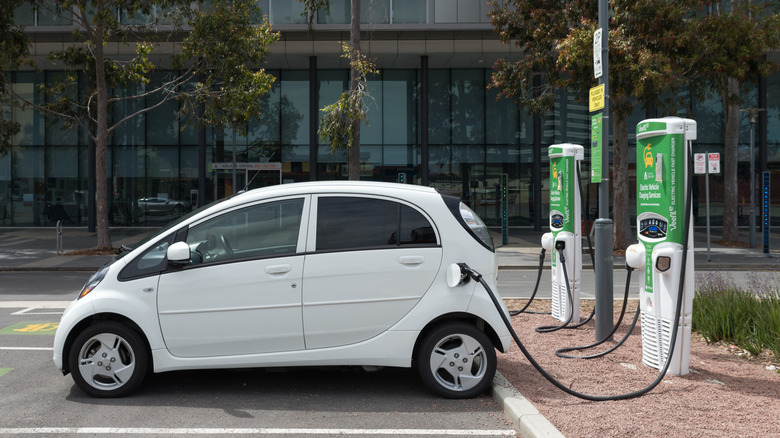
For a car to entirely lose its usefulness outside of diehard enthusiast circles, it needs to become largely impractical to maintain or use, and some early EVs are now beginning to align neatly with this description. They may not have been offered in the U.S., but a trio of tiny EVs from the early 2010s make for excellent examples of cars becoming technologically obsolete. We are talking, of course, about the Peugeot iOn, Citroen C-Zero, and Mitsubishi i-MiEV — coincidentally, some of the dumbest names ever given to EVs. When new, they were among the first mainstream EV models, sporting dinky 16 kWh battery packs. Officially, range estimates sat at 93 miles, but with mixed real-world driving, most owners were getting between just 45 and 80 miles.
That range may be fine for short-distance commuting, but with battery degradation and extreme weather factored in, it could plummet. Couple the impractical ranges with early-generation charging systems, and these aging EVs quickly look obsolete to modern motorists. The progress of technology has simply rendered these early EVs no longer useful — an electric bicycle could out-range one nowadays.
Old and obsolete are two entirely different things
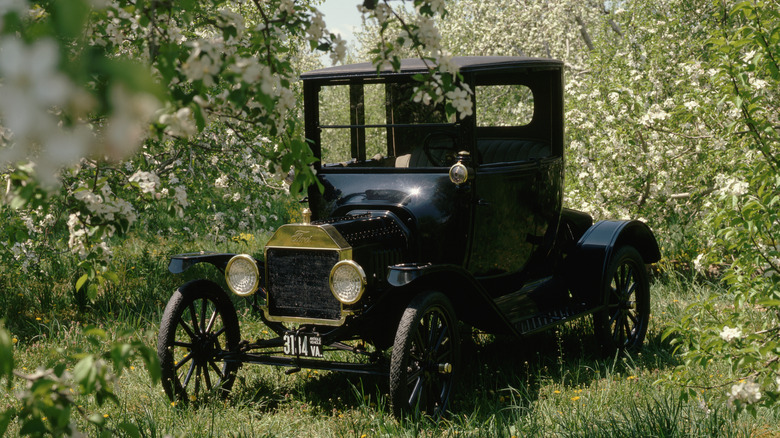
So if a modern EV from 2011 can be obsolete already, what about cars that are over a century old? Well, perhaps one of the best examples of old still being useful is the Ford Model T.
Between 1908 and 1927, more than 15 million Model Ts were produced. While they might not be ideal for daily driving — they sport a top speed of 40 mph and have nothing in the way of safety aids — Model Ts do still make for immensely capable off-road vehicles. In 1911, a Ford dealer's son took one to Ben Nevis, the highest peak in the U.K. Even today, enthusiasts love tackling tough trails in them.
Even "regular" old cars can still be considered useful. Take the W123 Mercedes or original Lexus LS400 as examples. Their powertrains are underpowered by today's standards, inefficient, and their infotainment is incredibly basic. On paper, they sound like the auto industry's floppy disks, but that's far from the truth. Cars like these are immensely reliable, and some enthusiasts actually relish the analog charm they offer. Plus, they're easy to repair and maintain from a DIY perspective, unlike tech-laden modern machines. Provided this remains true into the future, it's likely many old cars will avoid the trappings of obsolescence.