

What Are The Main Differences Between Factory-Installed And Aftermarket Turbos?
We may receive a commission on purchases made from links.
The difference between manufacturer-installed (OEM) turbos and aftermarket turbos runs deeper than simply pointing out that one came equipped on the car from the factory, and the other one did not. There are pros and cons to going OEM vs. aftermarket due to the inherent differences between the two, and even hidden costs to consider. When it comes to the main differences, quality control plays a big part, as does warranty and after-sales care. Naturally, an official factory turbocharger that came supplied with the car from the factory is covered under the automaker's warranty based on age and mileage. On the other hand, aftermarket parts come with varying warranties and build qualities.
Of course, price also comes into the equation. Regardless of whether the part in question is a turbocharger or not, the price of OEM parts is a typical downside. As a general rule, heading over to the aftermarket side will save you money, but there are other costs to consider here also, which we'll dive into as well. Finally, customization plays a role. Failure is not the only reason to swap out an old turbocharger — sometimes owners are chasing higher power outputs from their turbo, and this is where aftermarket options really shine.
OEM vs. aftermarket turbos: cost, warranty, and longevity comparison
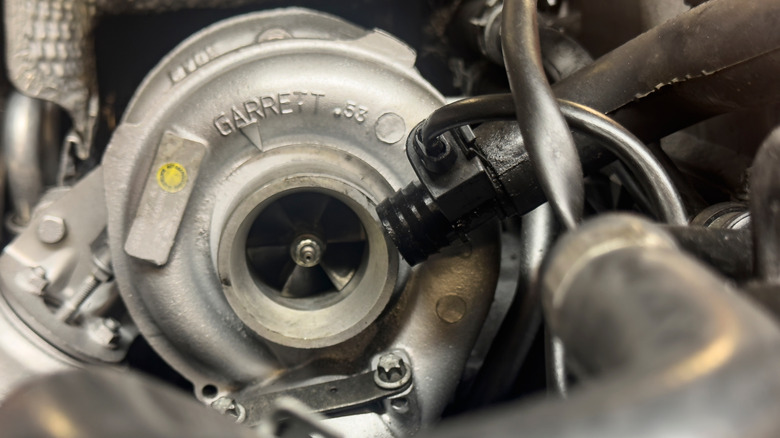
Typically speaking, an aftermarket turbocharger will be cheaper than buying one directly from the automaker. As an example, Ford sells the right-hand turbocharger for a 3.5-liter EcoBoost-powered 2018 F-150 for $1,167.83. On eBay, though, an aftermarket variant can be had for just $279.97. That's a nearly $900 difference. The cheaper aftermarket turbocharger is Chinese-made, but advertised as a direct replacement, and it comes with a 12-month warranty.
Here's where going for a factory-supplied unit could make sense. On the one listing, Ford's Motorcraft turbocharger is advertised as having "a minimum of" 12 months of warranty, whereas elsewhere, Ford advertises that same unit with a 3-year Motorcraft Service Parts Warranty. Those Chinese eBay turbochargers might seem tempting at such a discount, but a quick look online at reports from those who have tried them suggests they might be best avoided.
One forum user says a customer of theirs had a pair fitted, and while one provided no boost, the turbine in the other failed, entered the exhaust, and dumped a load of oil into the catalytic converter. Another says they tend to last around six months before problems start occurring. On the flip side, enthusiasts online generally claim that the factory turbochargers are good for 100,000 miles or more, so long as the oil is of the correct grade and changed regularly — one of our top tips for avoiding premature turbo failure.
Aftermarket turbochargers make sense for those chasing extra performance
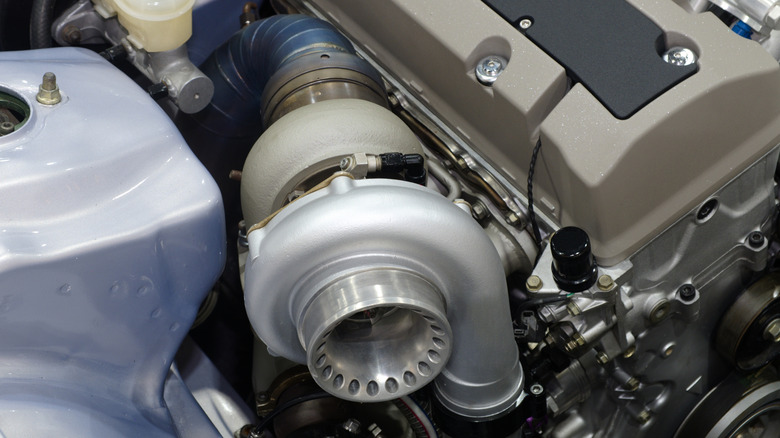
For peace of mind, factory-supplied turbochargers still make a lot of sense. Many aftermarket options might be cheaper, but with the quality of such items being so inconsistent and the units being prone to early failure, they certainly pose a risk. However, not all aftermarket turbochargers are built the same — many often come from the same established manufacturers that supply units to automakers. Here, buyers are more likely to find performance-oriented parts such as dual ceramic ball bearings, as opposed to a factory turbo's single plain bearing. The ceramic units are significantly lighter, which leads to reduced centrifugal forces, less vibration, and in turn less heat buildup.
Similarly, factory turbos typically feature a cast aluminum compressor wheel at their core, whereas high-performance aftermarket units will boast billet items. The former is cheaper and easier to make at scale, while the billet item will be pricier, but far less prone to defects and inconsistencies, which may disrupt how it spins at extreme rpm. Ultimately, they are more durable, more efficient, and more effective at controlling airflow. Some tuners may also opt for hybrid turbochargers, which are turbos that use a combination of parts from various turbos, such as OEM housings with aftermarket internals to improve performance while fitting in OEM engine bays. However, only the finest aftermarket turbochargers will feature a level of engineering that surpasses a typical factory turbo, and they naturally come at a higher price.