

Can Anything Be Done To Save The Raceways Closing Around The Country?
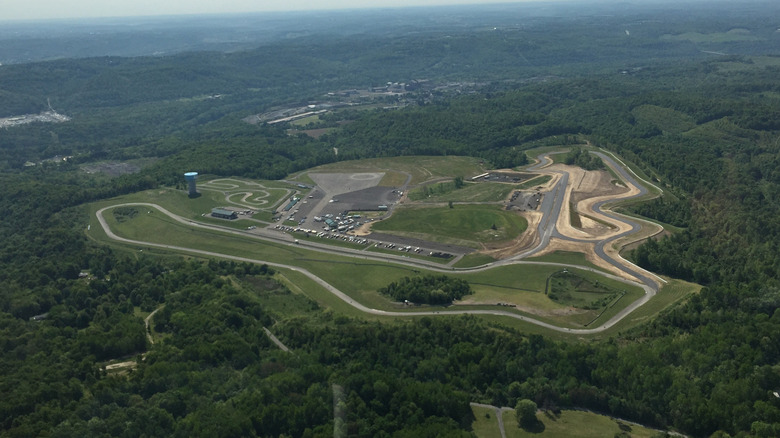
Western Pennsylvania's famed Pitt Race facility, formerly BeaveRun, was a fixture of professional and amateur motorsports calendars for 24 years, right up until it closed to the public last October. This is just one recent track closure that exemplifies decades of legendary automotive temples of speed shutting down. America invented hot rodding, and revolutionized motorsport, but we're losing some of the most important sites of technological innovation and enthusiastic diversion at a rapid pace over the last few years.
In a $50 million deal to buy Pitt Race, Wampum I, LLC became the new owner of the facility and presumes to convert the track into yet another massive data center. What once was a paragon of humanity, a playground built purely for the emotional dedication to the temple of go-fast, has been deconstructed for the purposes of moving around ones and zeroes. Motorsport is about more than just setting a fast lap time or winning races; it's about human-to-human interaction, camaraderie, and community building. Race tracks are also safe places for maniacs like me to get our fill of vroom vroom in a safe, controlled environment.
Race tracks around the country are closing, largely because the real estate they sit on is growing exponentially in value, and developers are looking to cash in on new commercial and residential projects. Unchecked American suburban sprawl, politically-bent zoning practices, and perhaps most ironically, a forced car-dependent social structure is speed-running the collapse of American motorsport.
With some serious collective effort, we enthusiasts could come together to at least stem the tide of dying tracks. We need to support our tracks, support politicians who disincentivize these large corporate developments, organize political and legal battles against them, and more.
What can we do about it?
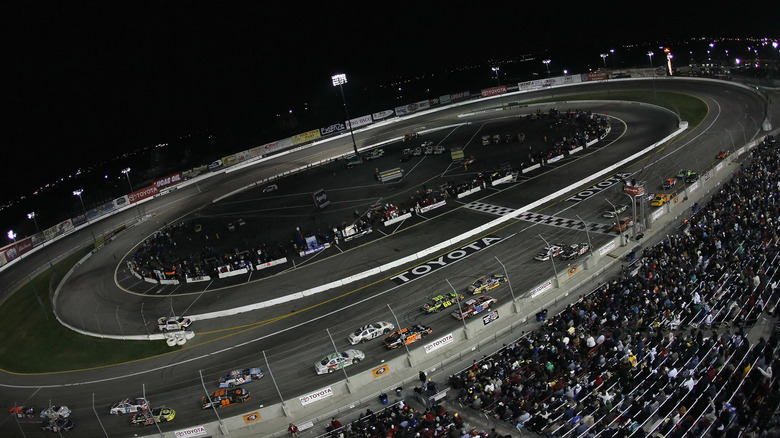
Race tracks require cash, land, and passion in equal measure. To save your local track, you're going to have to invite your friends along, or make new ones along the way—which is the point of having hobbies in the first place. The best way to ensure your nearest track sticks around is to support it. Get your project car finished and sign up for a track day, buy a ticket for the next race on the calendar, and order some merch. Push the oil, tire, and parts companies you buy from to support the tracks through sponsorship.
When the fight comes to you, however, you need to fight back. These billionaire-backed developments require local quelling efforts. Automotive enthusiasts who want to keep tracks alive need to support down-ballot political candidates who fight against the likes of data centers and suburbia hell. The other side of that coin is promoting urban housing density, multi-family and mixed-use zoning, and public transit in cities as the best way to help keep our race tracks around.
It's a stretch, but if the track owners are set on selling, maybe you can convince the regular track rats and event-goers to come together with a creative buyout, with potential collective ownership. The easiest thing to do might be to convince a local rich guy that the safe place he uses to exercise his hypercars is in jeopardy, and he needs to save it for himself and others.
This isn't a new problem
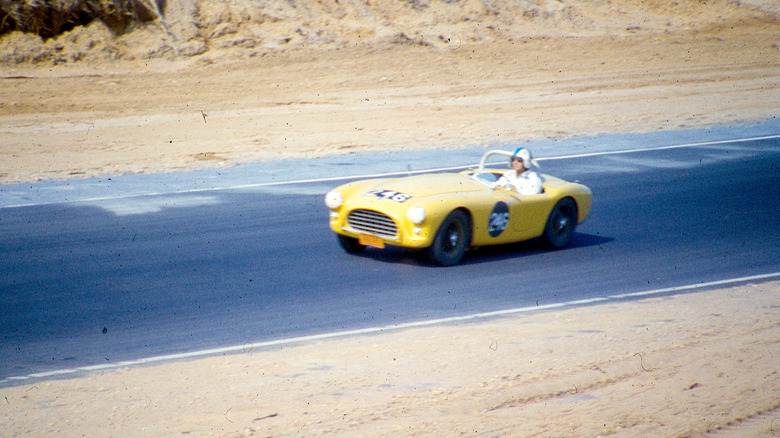
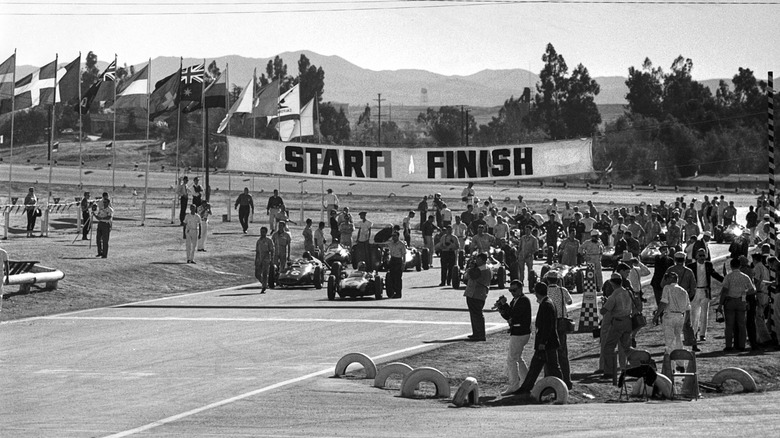
Unfortunately, the Pitt Race closure isn't a new problem, as internationally famed racing facilities have been closing across America for decades now. Some of the greatest tracks in America, like Continental Divide Raceways, Ontario Motor Speedway, Riverside International, and Bridgehampton Race Circuit (above), met their demise at the intersection of encroaching residential sprawl and exponential growth of real estate demand. Each of these tracks hosted pro-category events from NASCAR and Can-Am to USAC and Formula 1, not to mention the thousands of amateurs who set their sights (and wallets) on glory and a cheap plastic trophy every year.
It is a fact of life that the hobby of motorsport requires a lot of wide open space to operate, particularly road course racing. Many of the greatest racing facilities in the country are situated on huge tracts of land, and developers are looking for their next big paycheck. Combined with the destruction of the working middle-class and the explosive nature of inflation and a growing housing crisis, these issues all link together.
It isn't just road courses affected, either. Drag racing tracks are getting closed by the dozens as the sport becomes increasingly out of reach (culturally and economically) for most of America's youth. Small grassroots tracks can't survive if they can't attract more people. Decreasing ticket sales, pressure from municipalities, and encroaching developments threaten the livelihoods of American racers.
Changing national priorities

This is a cataclysmic situation for American motorsport, as our fender-to-fender, adrenaline-fueled combat fields are turned into office parks and little boxes. The loss is more than just an issue of real estate and money — it's a shift in priorities. Americans are increasingly moving their lives inside and online, shirking their cultural responsibilities to participate.
Homes are fashioned in an effort to avoid leaving, building home bars, large home theaters, and bowling alleys as those cultural touchstones and important third spaces face ruin. Once totemic shopping malls and grocery stores have been hamstrung by Amazon delivery and using an app to do your shopping for you. If you can't be bothered to leave your house to buy dinner, why would you want to go to all the effort to build a race car? Why race it against other real-life, in-person humans when you could just hop on iRacing and compete in a dozen different races tonight?
Aaron Robinson for Hagerty had this to say about it
"Once upon a time, a bolder America accepted and even celebrated these facilities as proof that the world's greatest economy produced vital and thrilling pursuits that enriched our lives and supplied a creative outlet to our energy and industry. Now, a more flaccid nation that prefers to sit at home streaming and shopping foreign-made junk online sees nothing in these venues but noise, pollution, and risk. They are unwittingly being stoked by gimlet-eyed developers who are salivating over the land and willing to fund legal teams and sympathetic council candidates."
Can the Willow Springs method work?
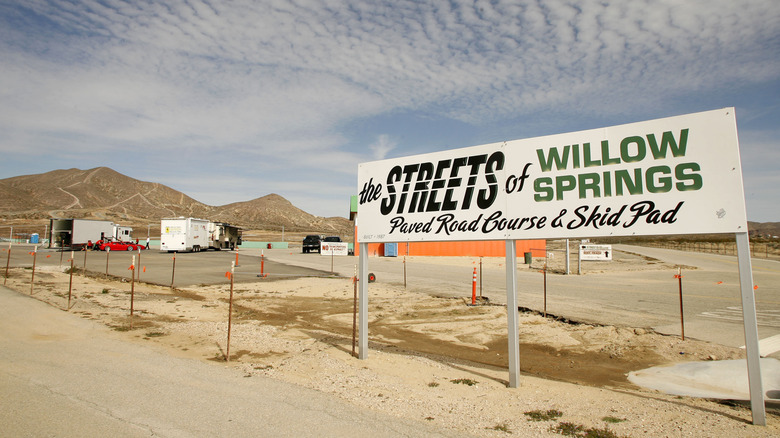
One legendary California racing facility, Willow Springs, may have found the best way to stay alive in these changing times. The track, located in Rosamond, California, among the deserts north of Los Angeles, was facing all the same issues we've covered, even after decades of operation as an icon of racing. The long-time owners, the Huth family, listed the facility for sale, and it was purchased outright by private equity firm CrossHarbor Capital Partners in a partnership with Singer Vehicle Design. CrossHarbor specializes in "property turnarounds," and the result, just over a year later, has been impressive.
Once home to SoCal's on-track cheap thrills, Willow Springs is being transformed into a high-end world-class automotive country club, car condo, and rental facility for wealthy enthusiasts. Cheap weekend track days couldn't keep the track alive forever, but with the move to service a richer demographic, the owners clearly want to turn a large profit instead of maximizing access for all enthusiasts.
The track, which has been open since 1953, is a fixture of Southern California motorsport history, and it would be an absolute travesty to lose it. Having it change hands and be operated by wealthy venture capitalists is certainly a better outcome than never having Willow Springs again, but for many enthusiasts the increased cost of entry is pushing them out anyway, so the resulting loss of access is basically the same story, told a different way. It's difficult to say for certain how expensive a weekend at Big Willow will get in the near future, but costs have risen significantly in 2026, and local enthusiasts are bracing for impact as rumors of the track's daily rental rate tripling settle in.
Is this the end?
Concludes Robinson, "But the relentless demand for more housing drives cities to flatten anything in their path that appeals only to a minority. And like it or not, we are a minority. Unless we fight, unless we write letters and go to council meetings and support candidates who believe there should be recreational room for everyone, we will end up like the misfits in medieval times, hounded out the city gates and banished to the countryside so that we can continue enjoying activities that were once popular in an earlier, more energetic age."
As car and track enthusiasts, we need to restructure, reconnect, and rebuild. So much of this industry is based around a me-versus-the-world mentality of personal improvement, but in order for it to survive, we're going to need to band together. We need to be as open and welcoming as possible at the track, which means providing inclusive spaces for women, LGBTQ enthusiasts, and minorities. The more enthusiasts push others away, the quicker this hobby will die off. If we all come together to support our race tracks and welcome everyone into the fold, race tracks might not have an incentive to sell their land for development.
Even if you don't have the capacity or financial capability to save a race track all on your own, you can still make a difference. Talk to your local track owners and get involved in keeping it running; maybe start a volunteer campaign to help maintain the facilities you use. None of this is easy, but you have to show up, get involved, help promote events, bring friends along for the ride, and get them hooked on it too. These places are important to us, and we need to treat them like they are.