

5 Reasons It Might Be Worth Switching To More Expensive Insurance
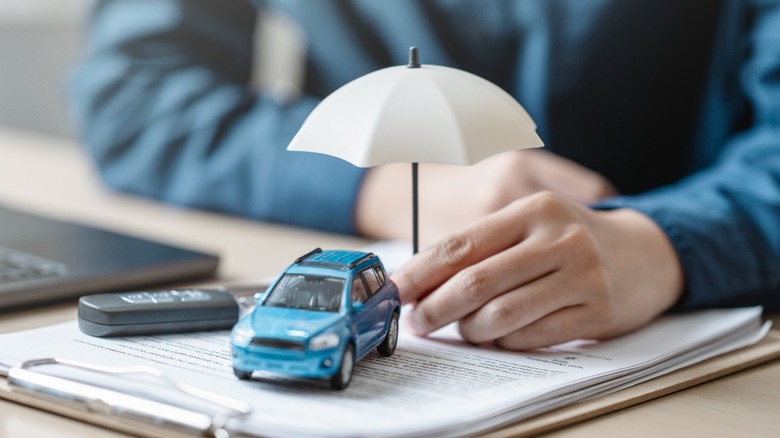
We don't have to tell you how bad inflation has been, especially in the last few years. And since wages haven't kept up, many of us have found ourselves trying to figure out which bills we can lower before we have to start pawning furniture to pay for groceries. Maybe that's a little bit of an exaggeration, but the fact is a lot of us are looking for ways to lower our expenses, and one of the first targets of that search is often the car insurance bill. Some drivers are even canceling their insurance entirely, which isn't wise.
The state requires us to have at least some liability coverage. If we're making car payments, the finance company requires us to have collision and comprehensive insurance, too. The impulse may be to go with the least amount of coverage required so we can have lower monthly payments. But that may not always make the most financial sense.
The lowest premiums could result in having the highest deductibles. We may find ourselves having inadvertently caused an accident (it happens) without having enough coverage to pay for damage to the other car or the medical bills of the other driver. On the flip side, we could be in an accident caused by another driver, but they don't have insurance. What then? Or we could total our car and find out we don't have enough coverage to pay it off. And then there are optional add-ons which could save us money when we're in a bind.
You could lower your deductible

So you shopped around and found the lowest premium, or monthly payment, you could find. Maybe it was for the same amount of coverage as another plan with a much higher premium. Before patting yourself on the back too hard for your smart shopping skills, did you check what the deductible on your plan is? A deductible is how much you have to pay out for repairs before the insurance company starts to pay. In other words, if your deductible is $2,000 and you crash your car, you will have to pay the first $2,000 to fix it, and the insurance company pays the rest. And you'd best not think about what can happen if you crash into a really expensive car.
Unfortunately, it is usually the case that the lower the premium, the higher the deductible. If your deductible is so high that you can't afford to pay it should you ever get into an accident, you may wind up with a car you can't fix, even though you've been paying to insure it. But by raising your premium, you could significantly lower that deductible. According to Insurify, the most common deductible is $500. Most people could probably scrape that much together if they had to. The good news is that some companies have "vanishing" deductibles, where they take a little off your deductible amount for every year you don't file a claim.
You don't have enough liability coverage
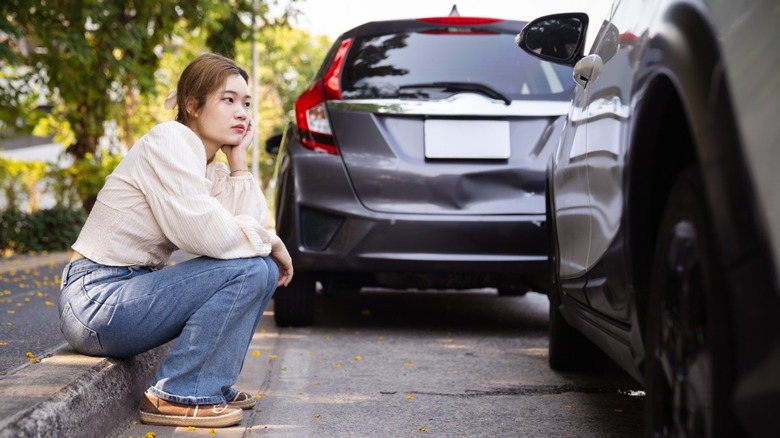
Times are tight, so you opted for the minimum coverage you could get and still be street legal. We understand, and good for you for being responsible and making sure you're covered. However, state-mandated minimums on liability insurance coverage are usually not enough to cover the damage to someone else's vehicle or their medical bills if you cause a bad wreck. Take Florida, for example. The Florida Bar Association notes state minimum coverage there is $10,000 in personal injury and $10,000 in property damage liability insurance. The problem is that the average accident costs anywhere from $5,000 to $60,000. If you cause $60,000 worth of damage or injuries, and only have coverage for $10,000, you're on the hook for $50,000.
That $60,000 figure is not unrealistic, considering all the things you could end up paying for if you're liable in an accident. There's lost wages, car rental fees while the other driver is getting their car fixed, emergency room bills, ambulance bills, towing, and of course, repairs on the other car. So, how much liability coverage should you get? The Insurance Information Institute recommends getting $100,000 of personal injury protection per person and $300,000 per accident. Forbes calls that amount of personal injury coverage "good" and $250,000 per person/$500,000 per accident "even better." It also recommends the same amounts for property damage coverage.
You may not be covered if you're hit by someone without insurance
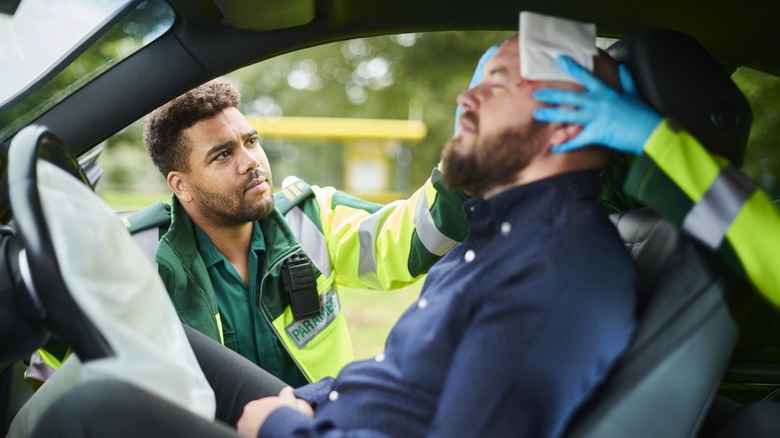
Think about all the people out there who only have the state-mandated coverage. Now, imagine they've crashed into you and you have six-figure hospital bills or your car is totaled, and it was worth a lot more than the minimum coverage. And just because the state requires insurance doesn't mean that every driver on the road has it.
Again, take Florida as an example. Even though the state requires that every vehicle be insured in order to be registered, almost 20% of drivers in Florida are uninsured, according to the Florida Policy Project. When you add those irresponsible drivers to people with only the state-mandated coverage, the odds are pretty good that if you get hit by another driver, they may not have enough insurance to cover you. You could sue the other driver, but if they're so broke they skipped out on paying for insurance, collecting may be like squeezing blood from a turnip, as the saying goes.
That's where an uninsured/underinsured policy comes in. Should you be hit by such a driver, you will be covered up to your policy limit, minus whatever is covered by their insurance. How much should your coverage limit be for this policy? Forbes recommends at least $100,000 per person/$300,000 per accident to $250,000 per person/$500,000 per accident for both personal injury and property damage.
You could be stuck making payments on a totaled car

Just because you have full coverage doesn't mean you're fully covered. Why? First of all, "full coverage" isn't really an insurance industry term. There is liability, which covers damage or injury you cause to others, as well as collision and comprehensive coverage, which pay if you damage your car, it's stolen, or it's damaged by means out of your control. But the thing about collision and comprehensive policies is that, at most, they only pay for the value of your car minus your deductible. Therein lies the problem.
Some drivers end up owing more on their car than what it is worth. This can happen in a number of ways. Maybe you opted for a loan with a long term, like 96 months, because you wanted the lowest monthly payment. The car market could have fluctuated or perhaps at the time you purchased your car, you rolled what you still owed on your trade-in on to the loan for your current car. These scenarios can lead to being underwater on the loan. For example, at the time your car is stolen, you still owe $10,000, but the insurance company will only pay $6,000 because that is what it's worth.
The way to avoid being stuck making payments on a car you no longer have is to get gap insurance. This type of coverage will pay what's left on the loan after collision or comprehensive pays out.
Some optional riders are worth considering
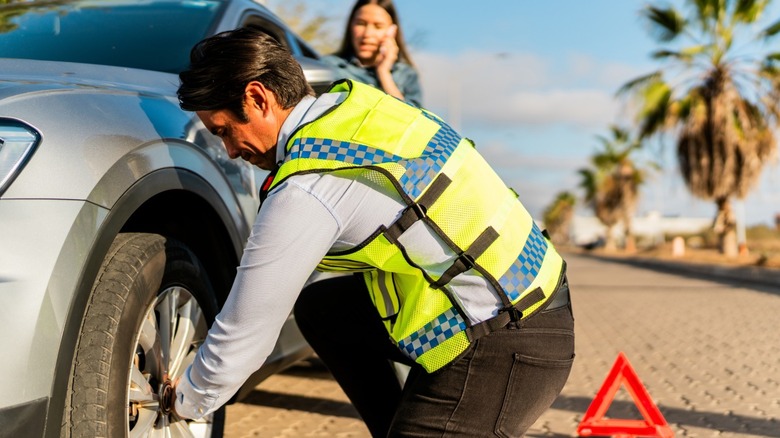
Going for the bare-bones cheapest policy the law will let you get away with often means opting out of coverage you'll wish you had when bad things happen. Collision and comprehensive policies aren't required by law, but you'll be glad you have them if you crash your car into a pole or it gets stolen. Some insurance companies offer a roadside assistance rider as an addition to your policy. This can be good to have if your car breaks down while you're on the interstate, miles away from the nearest garage.
The average tow bill costs around $100 and you can easily be looking at a bill for over $200 if you're far enough away from that shop. As one of its complimentary perks, Costco offers roadside assistance to some members. Another optional add-on is rental car reimbursement. If your car is in the shop for several days, you'll need alternate means of transportation. Over time, rental costs can add hundreds of dollars to the cost of an accident.
We've talked a lot here about the benefits of increased coverage. You may reason, though, that you don't need increased coverage, because you're a careful driver. But no one plans on getting into an accident, which is why they're called "accidents." In the end, it's better to have the coverage and not need it than to need it and not have it.