

The Pros And Cons Of Sealing Your Concrete Garage Floor
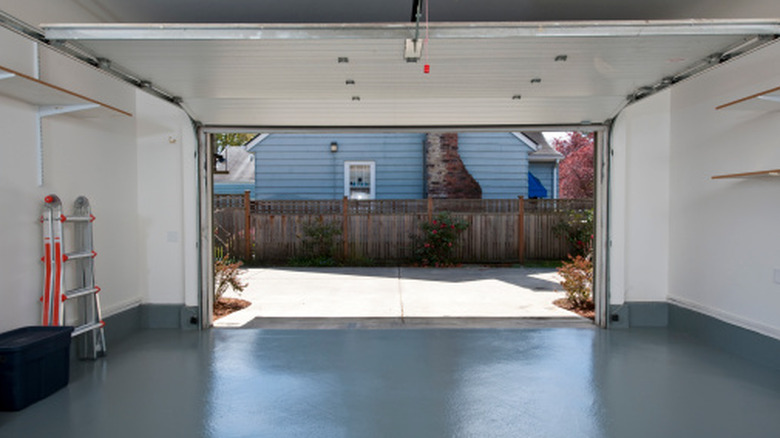
For car enthusiasts and handy DIYers, the garage is as important as any other room in the house. It is a place where one can spend hours on end wrenching, building, and tinkering. For some people, all it takes is four walls and a roof. For others, it's a complete workshop setup with workbenches, proper lighting, tool storage, and insulation. Going all in on a full garage setup is something most gearheads would appreciate, but it can cost a serious amount of money.
Because of that, one of the first and most impactful steps to making a garage look and feel more purposeful is sealing the concrete floor. It's a project that has been done countless times by homeowners across the country, and it is a fairly straightforward process that some people can tackle over a weekend without professional help. However, like most home improvement decisions, it isn't quite as simple as just picking up a bucket of sealer and going to town.
There are real advantages to sealing a concrete garage floor — and there are real drawbacks, too. The type of sealer, the condition of the existing concrete, the intended use of the garage, and the budget all play a role in determining whether sealing makes sense for a given situation. After all, having the right tools to complete a garage setup matters just as much as having the right garage to work in. Before grabbing a roller and getting to work, it's worth understanding exactly what you're getting into on both sides of the equation.
Protection and durability
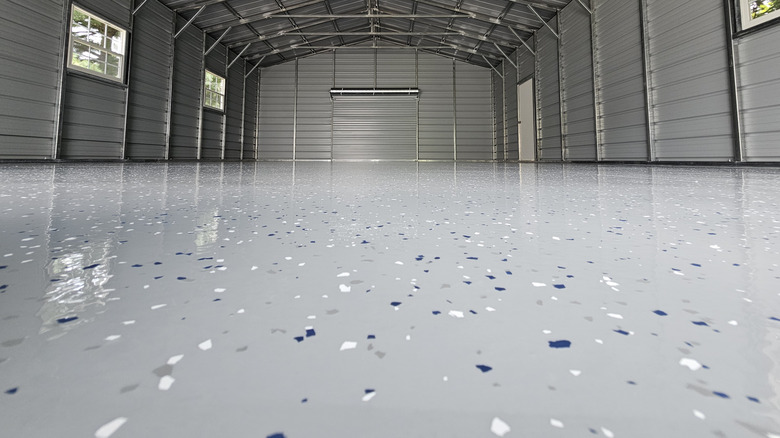
If you leave your floor unsealed, oil, moisture, and various chemicals can lead to stains, cracks, and deterioration of the surface. Moreover, if you live in an area that regularly sees the use of road salt, that can also damage it. Because of this, people decide to seal the concrete – it keeps damaging elements out and helps the floor hold up against years of punishment. Since most garages regularly see thick oils, grease, fuel, and similar chemicals, a sealant is going to help the surface resist staining.
For instance, an acrylic sealant is often recommended for car garages because it keeps stains on the surface and does not let them seep into the concrete. This makes them easy to clean. Besides just spill and stains, a properly applied epoxy sealant is going to help by making the floor more durable. So, if your garage experiences heavy traffic and you often drop stuff, a thicker layer of epoxy is going to help keep your concrete in one piece.
As one Jalopnik writer found after epoxy coating his own garage floor, cleaning up oil spills becomes easier once the floor is properly coated. Although standard concrete can last 50 to 100 years, how long it actually holds up depends largely on how well it is maintained. Sealing the surface is one of the most straightforward ways to extend that lifespan and make sure your garage floor can take a beating for years to come.
Aesthetics and reflection
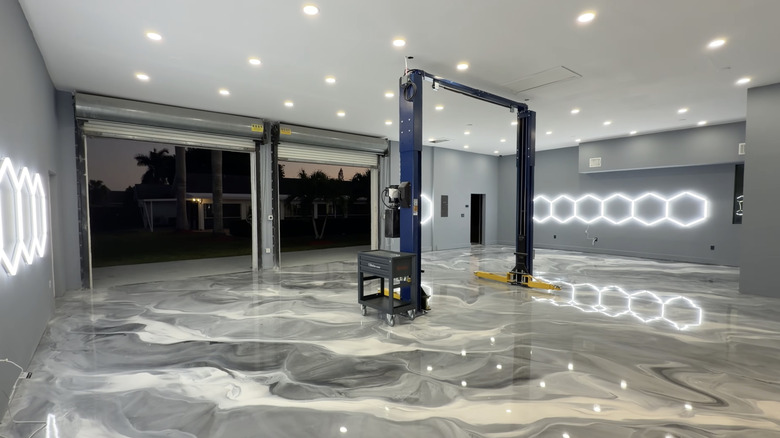
Beyond just protection, sealing a concrete garage floor has a meaningful impact on how the space looks and feels. Although beauty is in the eye of the beholder, a bare concrete slab is purely functional — dull, grey, and prone to looking dirty even when it isn't. A properly applied sealant can change that, and there are many different ways it can look.
If you like the way pure concrete look, you can add a clear coating that will darken it slightly, available in either glossy or matte finishes. If you want something bolder, colored epoxy or polyurea coatings open up a wide range of options, from solid colors to multi-colored acrylic flakes and patterns. Regardless of what suits your preference, there are endless customization options to choose from.
Another very important step in renovating a garage is lighting, and if you combine a glossy epoxy surface with good lighting, it will increase the reflectiveness of the garage and make it a more pleasant place to work in. The floor will look shiny and clean, especially since many of these coatings allow you to simply wipe off spills without the risk of permanently staining the floor. Additionally, if you already have colored or stained concrete, a sealant will prevent that color from deteriorating over time.
Maintenance and cost
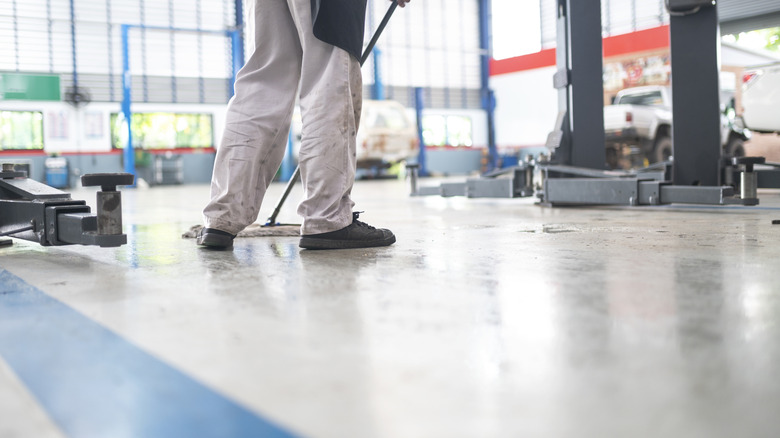
One thing most people don't think about when sealing a garage floor is that you need to redo it regularly. Acrylic sealers, for instance, have a reapplication window of 1 to 3 years. You need to keep in mind that garage floors take a beating unlike almost any other surface in the home. Hot rubber, vehicle weight, dropped tools, and chemical drips can shrink that reapplication window even further.
You're cleaning the surface, potentially stripping the old coat, and putting in a full day of work — the kind of upkeep any serious gearhead who has renovated a garage or workshop space knows never really stops. The math gets worse the bigger your garage is — more square footage means more product, more labor, and a bigger check every time it comes around. Epoxy sealants are known to last a lot longer, sometimes up to 20+ years if applied properly. Still, regardless of the sealant type, it will always require some form of maintenance.
Tim Seay, owner of Decorative Concrete of Virginia, noted in one video that the biggest complaint he hears about solid-colored epoxy garage floors is that dust and dirt show up very easily on them. This means you need to worry about cleaning them, and that adds more time and money. He also noted that using a flake finish can help hide dust and debris.
It's not just cleaning you need to think about — the finish itself can introduce safety issues. Once water hits a high-sheen sealed floor, traction drops fast, which is not ideal in an environment where condensation, oil drips, rain, fuel, and other liquids often live. Anti-slip additives exist, but they cost extra and can dull the finish you paid for.
Application risks and limitations
Before getting into more of the downsides of sealers themselves, it's worth remembering that concrete can also be a limiting factor here. Fresh concrete needs roughly 28 days to fully cure before any sealer can be applied, and jumping the gun can cause the sealer to fail prematurely, no matter how good the product is.
One of the inherent downsides of epoxy sealers is that they trap moisture underneath, meaning that once the sealer settles, moisture can not escape. If the sealer is applied over moist concrete, that trapped moisture builds pressure over time and causes bubbling, blistering, and delamination. If your floor already has water coming up through it, sealing it is only going to make things worse.
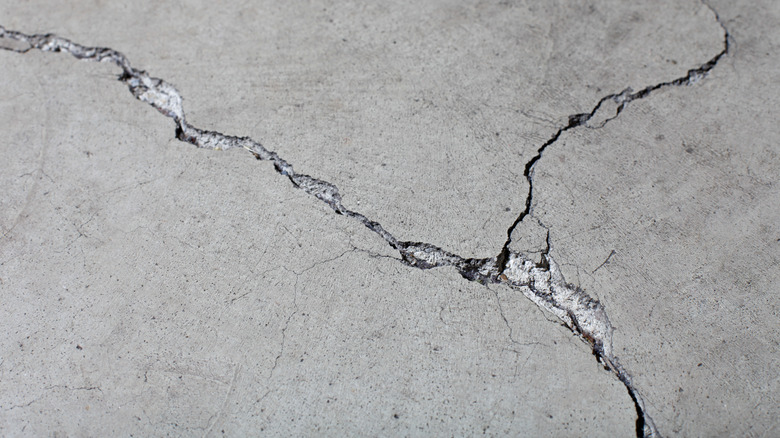
It is also worth being clear about what a sealer simply cannot do. If your concrete has cracks or structural damage, no amount of sealer is going to fix that. As Hayden Slack of G.L. Hunt Foundation Repair told Family Handyman, "filling a crack won't stop others from appearing or this one from opening back up" if there's an underlying structural issue. Fix the unsightly concrete first, then seal — anything else is a temporary Band-Aid and a waste of money.
One more thing worth factoring into your decision is what you're breathing in while you work. From an environmental perspective, it's important to differentiate between solvent-based and water-based sealers. Solvent-based sealers (certain acrylics and epoxies) release nasty fumes during the application that can carry long-term health risks, while the fumes themselves add to the broader pollution problem. Water-based sealers, in contrast, barely release any of these compounds at all and are the safer choice if this matters to you.