

Are New Semi Trucks Better Than Old Ones? Here's What Drivers And Fleet Owners Say
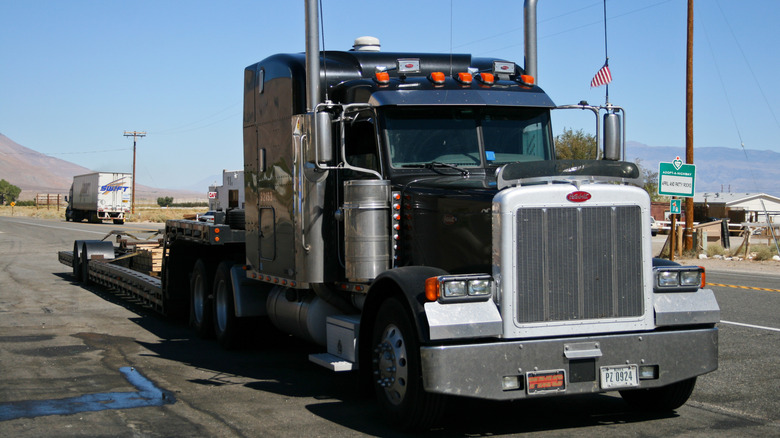
Truck drivers are quite literally the lifeblood of American capitalist society, transporting everything from the cheap treats we by on Temu to the gasoline we put in our cars. Every year semi trucks change to improve fuel economy, driver comfort, and technological connectivity, but a whole lot of drivers still prefer to keep their old semi trucks on the road, for a variety of reasons. It's a hotly debated topic in the world of trucking, and one I don't think will ever come to a unanimous answer.
Fuel is one of the largest costs in trucking, with many older flat-nose trucks struggling to achieve 5 or 6 miles per gallon, while modern aerodynamically haped tech-packed rigs are chugging along at around 9 mpg. If any business can reduce its variable costs by 50% — say, by pulling three trailers instead of one — it would be silly to avoid doing so, right? Those who choose to operate older trucks might disagree, as they have their own reasons for keeping a decades-old hauler on the road, and they're paying more per mile for the privilege, despite the tough conditions semi drivers face.
I don't expect everyone to sit down and watch this hour-long video, but it is definitely packed with insight from a fleet operator who is purely looking at driving trucks from an economic standpoint. This is a business, after all, so there are no considerations to be made for style or driver freedom. If technology can solve an issue, the operator will absolutely adopt that tech. I think it mostly boils down to a driver wanting to look cool versus an owner or driver wanting to save money on fuel costs. Pick which one is more important to you and drive that.
Luddism and nostalgia
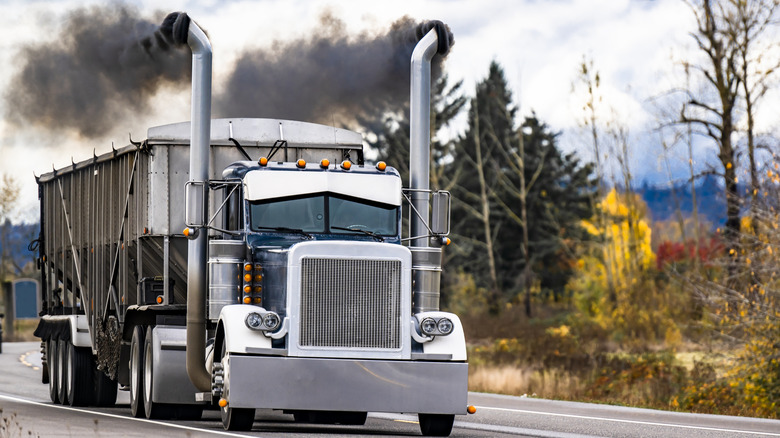
10-4 Magazine published a soliloquy regarding the joy of driving old trucks that puts everything into perspective. Much like old car enthusiasts, some truckers have a desire to go back, even for a moment, to a time that doesn't exist anymore:
"Driving a classic rig down the open road just takes me to my happy place. ... The old truck might be taking me forward, physically, but more importantly, it is doing its intended purpose of taking me back."
Not only are we living in a culture of nostalgia, which helps drive this kind of sentiment, but the trucking industry is in a state of upheaval. Retrenching into the familiar is a reliable coping mechanism.
Many truckers contend that older tractors are better because of what they lack. Modern trucks are packed with technology to reduce their massive diesel engines's tailpipe emissions. Particularly the older road dogs dislike the tech as a rule, claiming that modern rigs are less reliable as a result. As discussed in Heavy Duty Trucking, much of this stems from an awkward emissions control era in the mid-2000s that saw rapid, chaotic adoption by engine manufacturers and lengthy, expensive repairs for operators. Even if trucks have made reliability inroads across the last two decades, many drivers had their view of emissions controls tainted by a string of breakdowns and anecdotal evidence that may not still apply.
Drivers talk on Quora about how modern tracking means they're micromanaged for grabbing a bathroom break or taking too long to park for the night (despite the difficulty of finding a parking place). Truckers have also recently seen huge downward pressure on their per-mile wages thanks to the rise of gig-economy-style "Uberized" truck freight rideshare apps pushed into their trucks.
Because they're cool
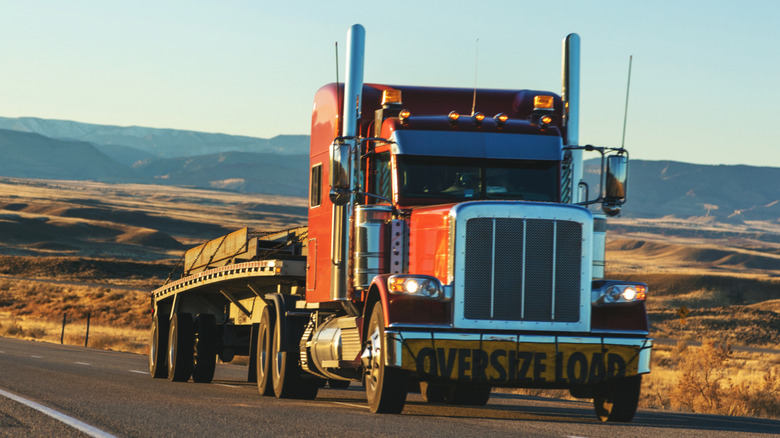
There are very few things humans won't do for the cool factor. Old models of the Peterbilt 379, a truck that hasn't been built since 2007, are retaining their value incredibly well as they become sought-after trucker go-tos. These trucks are comparatively simple by 2026 standards so they've earned a reputation as the reliability kings of the road. More than that, though, these trucks are immensely customizable with aftermarket components and they just plain look cool. There's something about a big flat nose, big chrome stacks, and a traditional doghouse look that a modern aerodynamic truck can't match.
Much like vintage cars, old-style truck just brings something to the driving experience that a modern machine can't hope to replicate. Every sense is lit up when you're behind the wheel of something old, and you can just feel the history in your bones. You can't really put a price on that, can you? Well, with diesel at $5.21 per gallon on average, per the U.S. Energy Information Administration, it looks like you can put a price on it, and looking cool is costing drivers money on every mile driven.
From a purely analytical standpoint it hardly makes sense to keep driving these old trucks. But if you're factoring in sentimental reasons, personal freedoms, and at least the perception — if not the reality — of better reliability without exhaust gas recirculation and diesel exhaust fluid injection, you can see why some truckers are sticking to their old faithful tractors.